Researchers found that galaxy frogs, a rare species belonging to the group of the “world’s most unique species at risk of being lost forever,” had disappeared after groups of photographers visited the area.
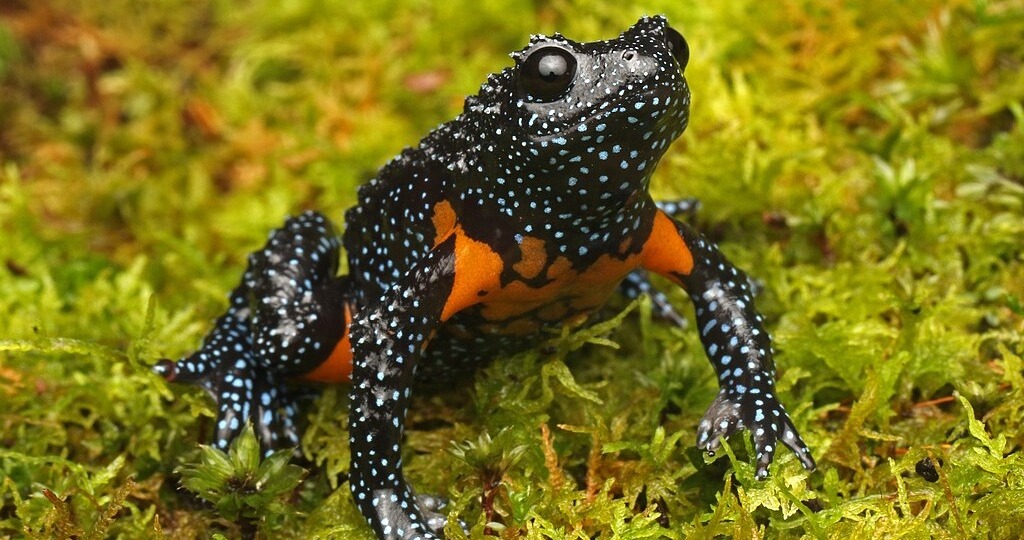
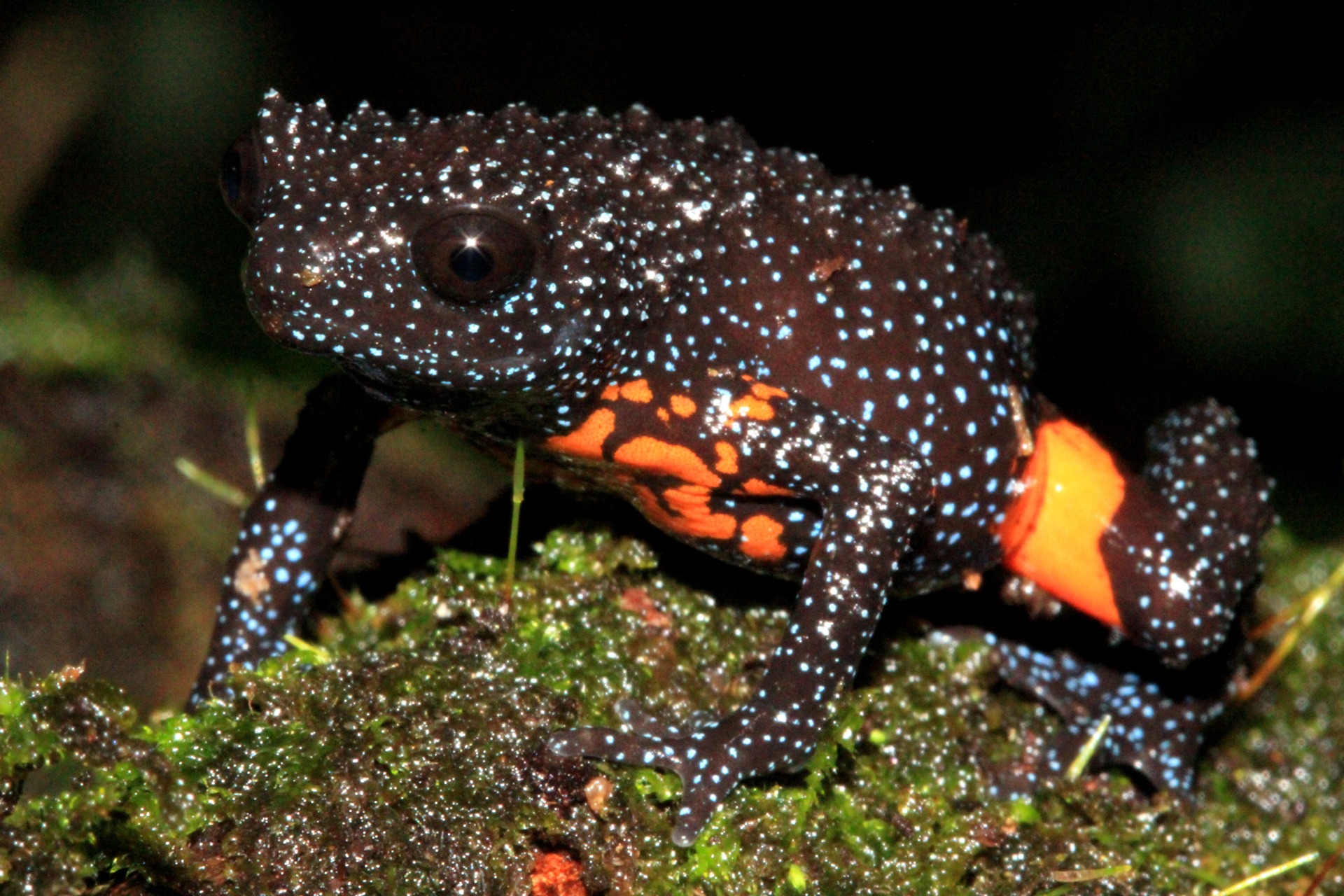
A rare frog species has seemingly disappeared from India’s Western Ghats rainforest. The frogs, known as galaxy frogs, are visually striking, with pale blue dots and small patches of electric orange covering their skin. The reason for this disappearance: photography tourism.
Meet the Galaxy Frog, One of the World’s Rarest Amphibians
Melanobatrachus indicus, the only species in its family, lives deep in the Indian rainforest. Seeking shelter under mossy logs, these tiny, finger-sized frogs are only 2-3.5cm in length. They were rediscovered in 1997 and have been a flagship species for the Mathikettan Shola National Park in Kerala State since 2021.
Galaxy frogs are classified as an Evolutionarily Distinct and Globally Endangered (EDGE) species, a group of some of the world’s most unique species at risk of total extinction. They were added to the IUCN Red List after much of their habitat was converted into agricultural land, specifically for tea and coffee crops. Now, as a result of further human activity, the endangered frogs are nowhere to be seen.
What Happened to Galaxy Frogs?
In a paper published in Herpetology Notes on December 17, researchers highlighted the damaging consequences of photographers on the microhabitats of these amphibians. The lead author of the paper, Dr. Rajkumar K P, first discovered the frogs in the rainforest in Kerala, India, in early 2020.
“I fell in love with these frogs after seeing them. You feel like they’re jet black in colour, but when you put them under light, you can find all the stars – like galaxies on their bodies. It’s just magical,” Rajkumar, a researcher and fellow at the Zoological Society of London (ZSL), told The Guardian.
When he revisited the forest in April 2021, following the COVID-19 pandemic, he was shocked to find the state of the microhabitat. Vegetation along the forest floor had been trampled, logs had been broken and overturned, and the galaxy frogs had disappeared.
An anonymous source reported seeing several groups of photographers enter the forest from June 2020 until Dr. Rajkumar’s return in 2021. The source also claimed that the photographers handled the vulnerable frogs with their bare hands, moving them around for the perfect photo opportunity and increasing the risk of disease transmission. The use of flash by these photographers also increased stress on the amphibians.
For Rajkuma, the loss of the galaxy frog carries a troubling lesson:
“This sad event is a stark warning for the consequences of unregulated photography. While their colouring and rarity makes the galaxy frog a sought-out subject for photographers, it’s vital that those wishing to photograph these unique frogs don’t inadvertently contribute to their extinction. It would be a tragic irony if a drive to capture their likeness on camera today turned them into a thing of the past.”
Photography Tourism: The Bigger Picture for Conservation
More than 2 billion photos are posted daily on social media. Many of these photos depict wildlife and nature. While photography is a valuable tool for educating the public and fostering further exploration and conservation efforts, it can also destroy habitats and endanger wildlife species. Unregulated photography tourism is causing more harm than building awareness. What is happening to the galaxy frogs in the Western Ghats is proof.
“Done correctly, photography can be a huge asset to helping conservationists build our understanding of areas such as animal distribution or behaviour – plus, the resulting pictures can help educate others about these incredible species,” Dr. Rajkumar K P said. “However, irresponsible photography can turn this asset into a hazard.”
Related Articles
Here is a list of articles selected by our Editorial Board that have gained significant interest from the public:
India has enacted several regulations to prohibit unethical photography, particularly involving birds. This year, in Pune, India, the forest department banned photography in the Supe region forest due to the unethical practice of bird call playback.
In 2012, India’s Ministry of Environment banned photos of the Great Indian Bustard during the endangered birds’ breeding season from April to October. A statement by the ministry said, “Unethical photography during breeding season often acts as a constant source of disturbance to the bustards and disturbs breeding patterns.”
Dr. Benjamin Tapley, Curator of Amphibians and Reptiles for the ZLS, said,:
“A picture can inspire someone to care, to learn more, to take action; but that picture-perfect moment should never come at the cost of the animal’s wellbeing or its home.”
As the number of nature photographers increases, the environmental impact is growing. It is more important than ever that photographers, both amateur and professional, respect the wildlife they photograph and adhere to ethical photography standards. Taking only pictures, leaving only footprints.
Editor’s Note: The opinions expressed here by the authors are their own, not those of impakter.com — In The Cover Photo: A galaxy frog on the lush rainforest floor. Cover Photo Credit: Wikimedia Commons