Impakter
  • Environment
    • Biodiversity
    • Climate Change
    • Circular Economy
    • Energy
  • FINANCE
    • ESG News
    • Sustainable Finance
    • Business
  • TECH
    • Start-up
    • AI & Machine Learning
    • Green Tech
  • Industry News
    • Entertainment
    • Food and Agriculture
    • Health
    • Politics & Foreign Affairs
    • Philanthropy
    • Science
    • Sport
  • Editorial Series
    • SDGs Series
    • Shape Your Future
    • Sustainable Cities
      • Copenhagen
      • San Francisco
      • Seattle
      • Sydney
  • About us
    • Company
    • Team
    • Partners
    • Write for Impakter
    • Contact Us
    • Privacy Policy
No Result
View All Result
Impakter logo
No Result
View All Result
Companies emissions targets

Over Two-Thirds of World’s Leading Companies Don’t Have Emissions Reduction Targets

Finds the World Benchmarking Alliance, calling on these companies and their shareholders to act

Matt DaviesbyMatt Davies
January 24, 2024
in Business
0

At the start of every year, the World Benchmarking Alliance (WBA) updates its SDG2000 list which spotlights the 2,000 most influential companies globally.

“While governments around the world are responsible for achieving SDGs within their borders, business action is voluntary.”

These companies play pivotal roles in industries our societies depend on: food, energy, housing, internet, transportation, and finance. Their collective revenues ($45 trillion) are equivalent to 42% of the global GDP.

“With this influence, they could significantly accelerate sustainable systems transformation and deliver progress towards the UN’s Sustainable Development Goals (SDGs), but they are currently falling behind,” WBA writes.

The situation revealed by the WBA’s latest SDG2000 update, published last week, is alarming to say the least: Less than a third of these companies, 29% of them, have submitted greenhouse gas emissions reduction targets to the Science Based Target initiative (SBTi).

The companies include Apple, Samsung, Coca Cola, Ørsted, Alibaba, and Barclays. Among the top 10 revenue-generating businesses, only Apple and Walmart have SBTi-recognized emissions targets.

We published an updated list of the 2,000 largest and most influential companies in the world – the #SDG2000. Find out why you should care about the sustainability performance of these companies👇https://t.co/YOdSdHYTfI #AllAtOnce #CorporateAccountability pic.twitter.com/ecwTdAMe4k

— World Benchmarking Alliance (@SDGBenchmarks) January 22, 2024

Another worrying finding is that, while “[a]ccountability requires transparency from leading companies,” as the WBA writes, only 122 of the 2,000 companies disclose all relevant data. Over two-thirds of these are headquartered in Europe and North America, while over half of all SDG2000 companies come from these two regions.

Gerbrand Haverkamp, Executive Director of the World Benchmarking Alliance, stressed the importance of accountability:

“We have passed the halfway mark on the deadline to achieving the SDGs and only 12% of the targets are on track. We are not delivering what the world requires. Without accountability, businesses will not take the action both people and planet desperately need — which is why the SDG2000 list is essential to ensuring transparency and scrutiny of the world’s most significant companies. We must strengthen corporate accountability and make the impact of companies consequential to their success.”


Related Articles: Pace of Decarbonization by Public Companies Set to Decelerate | Only 26% of Most Polluting Companies Aligned With Paris Agreement Goals, Investors Say | All SDGs Seriously Off-Track

The WBA also found that “[a]lmost all companies disclosing all information are publicly listed but there were also four privately owned companies (Cargill, Charoen Pokphand Group, Elsewedy Electric and Ferrero).”

This, the WBA notes, shows that “private ownership does not need to be a barrier.”

Highlighting positive strides, the WBA showcased two Nordic energy companies leading the way in emissions reduction targets and committing to reaching Net Zero by 2040: Ørsted and Neste.

Ørsted, for example, is “taking actions such as committing 100% of its CapEx to low-carbon technologies, and aiming to reduce its scope 1 and 2 emissions by 98% by 2025, compared to a 2006 baseline,” the WBA writes.

“While governments around the world are responsible for achieving SDGs within their borders, business action is voluntary. And yet there is no way we can reach these goals without the might of the corporate world,” Gerbrand Haverkamp said. “With the clock ticking, businesses must get back on track.”

In light of this, the WBA is urging these companies to act and calling on their shareholders to hold them accountable.


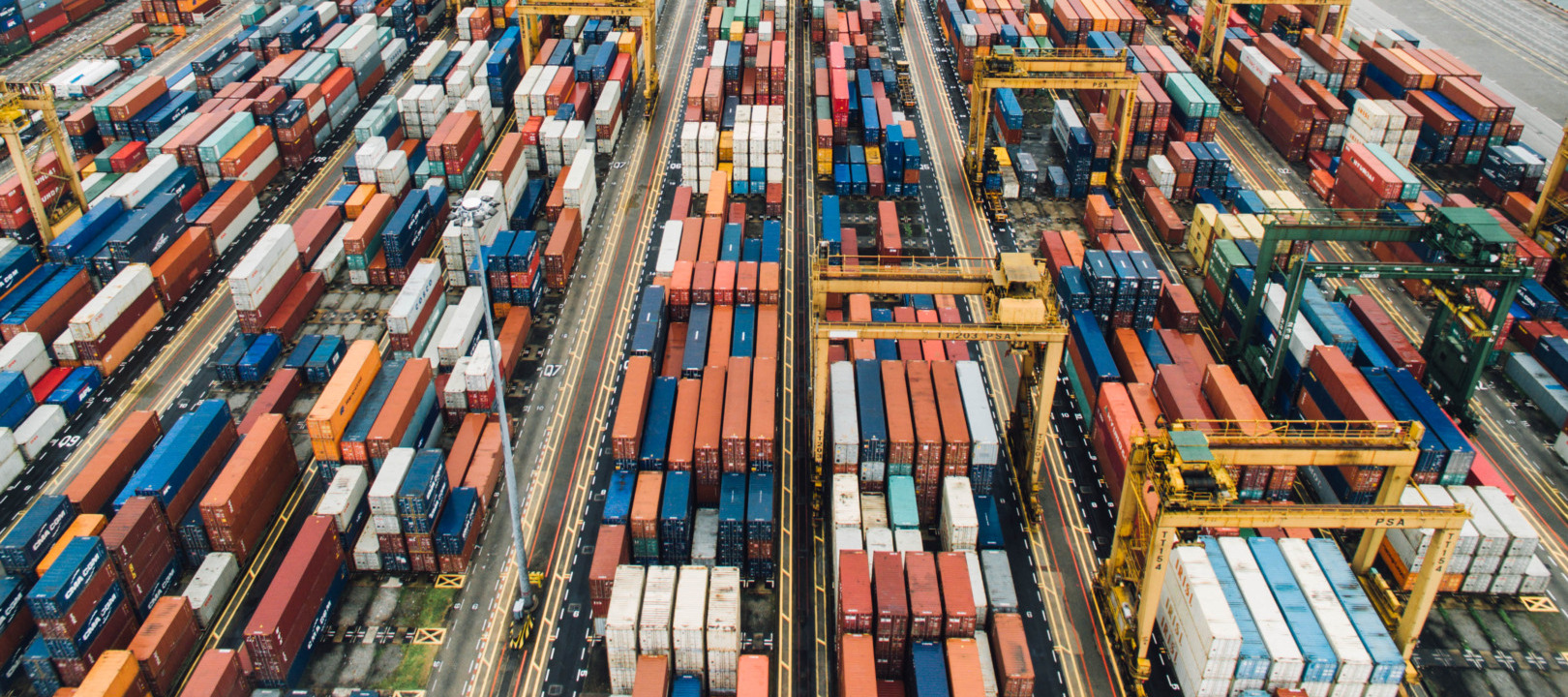
Editor’s Note: The opinions expressed here by the authors are their own, not those of Impakter.com — In the Featured Photo: Shipping containers in a busy cargo port. Featured Photo Credit: CHUTTERSNAP.

Tags: companiesCompanies' emissions targetsEmissions targetsGHG emissionsGHGsGreenhouse Gas EmissionsSDG2000SDGssustainable development goalsWBA
Previous Post

Companies Are Hiding Their Climate Progress. A New Report Explains Why.

Next Post

Paris Fashion Week: How Sustainable Is Louis Vuitton?

Related Posts

Physical Bitcoin on top of other crypto currencies.
Business

Can blockchain help track and reduce global supply chain emissions?

If you thought blockchain was limited only to supporting digital tokens, you might need to rethink. In fact, according to...

byHannah Fischer-Lauder
February 5, 2026
GHG Protocol Establishes First Global Agricultural Standard
Business

GHG Protocol Establishes First Global Agricultural Standard

Today’s ESG Updates GHG Protocol Launches First Land Sector Accounting Standard: The GHG Protocol unveiled its new Land Sector and...

bySarah Perras
February 2, 2026
News regarding the environmental impact of dog food
Environment

The Environmental Impact of Dog Food — and How to Reduce It

Our pets are our family: we love them, play with them, cuddle them, and feed them. They influence our lives...

byAnastasiia Barmotina
January 28, 2026
Animal Health
Biodiversity

Better Animal Health Is the Low-Risk, High-Reward Climate Investment We Need

Imagine if there was a way to reduce emissions from the meat, egg and dairy sector by nearly a quarter,...

byCarel du Marchie Sarvaas
November 26, 2025
Fewer Than 1% of Listed Companies Align Spending With Net-Zero Goals
Business

Fewer Than 1% of Listed Companies Align Spending With Net-Zero Goals

Key Takeaways Fewer than 1% of listed companies align capital spending with decarbonization goals Companies are collectively set to overshoot...

byLena McDonough
October 2, 2025
meat climate change
Environment

Fighting Meat With Emotions, Not Facts

Meat production is one of the main contributors to greenhouse gas emissions, deforestation and water consumption, leading to calls for a reduction in...

byPatrizia Catellani - Professor of Social Psychology at the Catholic University of Sacred Heart, Milan
July 2, 2025
ESG news regarding global hotspots facing starvation, EIB’s Bay of Biscay interconnectivity project with Spain, Morocco expanding water infrastructure, US-China relations hindering battery manufacturing
Business

Thirteen Countries Face Starvation, UN Warns

Today’s ESG Updates Starvation risk escalates in 13 global hotspots: A UN report warns of urgent humanitarian crises, urging immediate...

bySarah Perras
June 17, 2025
how much meat is sustainable
Business

How Much Meat Can You Eat and Still Be ‘Climate-Friendly?’

From climate-smart beef to organic and grass-fed options, the meat industry has no shortage of marketing strategies to sell you...

bySentient
June 16, 2025
Next Post
A picture of a store for Louis Vuitton

Paris Fashion Week: How Sustainable Is Louis Vuitton?

Recent News

Underwater Wall to Protect the ‘Doomsday Glacier’: Necessary Intervention or Costly Distraction?

Underwater Wall to Protect the ‘Doomsday Glacier’: Necessary Intervention or Costly Distraction?

February 11, 2026
Friedrich Merz Proposing the Architectural blueprint of European institutions illustrating the Merz-Meloni non-paper strategy for EU deregulation

The Merz-Meloni Non-Paper: How the New Germany-Italy Axis Could Destroy Europe

February 10, 2026
ESG News regarding EU ban on destruction of unsold clothes and shoes, UK securing record solar capacity, EDF’s ‘fish disco’ system potentially saving 90% of fish, and LNG demand in China setting to climb.

EU Moves to End Textile Waste

February 10, 2026
  • ESG News
  • Sustainable Finance
  • Business

© 2025 Impakter.com owned by Klimado GmbH

No Result
View All Result
  • Environment
    • Biodiversity
    • Climate Change
    • Circular Economy
    • Energy
  • FINANCE
    • ESG News
    • Sustainable Finance
    • Business
  • TECH
    • Start-up
    • AI & Machine Learning
    • Green Tech
  • Industry News
    • Entertainment
    • Food and Agriculture
    • Health
    • Politics & Foreign Affairs
    • Philanthropy
    • Science
    • Sport
  • Editorial Series
    • SDGs Series
    • Shape Your Future
    • Sustainable Cities
      • Copenhagen
      • San Francisco
      • Seattle
      • Sydney
  • About us
    • Company
    • Team
    • Partners
    • Write for Impakter
    • Contact Us
    • Privacy Policy

© 2025 Impakter.com owned by Klimado GmbH