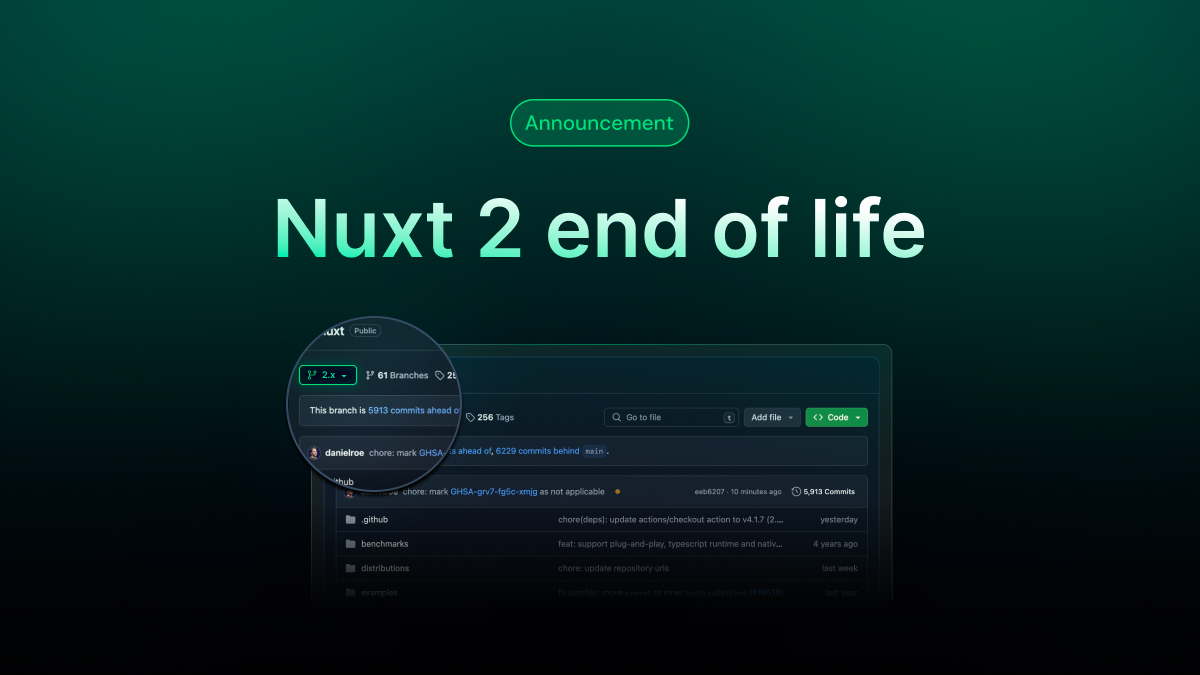
If you’re running a production application on Nuxt 2, you’ve probably been thinking about migration for a while now. Nuxt 3 has been stable since late 2022, and with Nuxt 2 reaching end of life, the question isn’t whether to migrate — it’s when and how. The jump between versions isn’t a simple dependency update. It’s a significant architectural shift that touches almost every part of your application, from how you manage state to how your server handles requests.
That said, the migration is absolutely worth it. Teams that have made the switch report faster build times, better developer experience, and applications that perform significantly better in production. The key is approaching the process with realistic expectations and a solid plan.
Why Nuxt 3 Is a Fundamentally Different Framework
Nuxt 3 isn’t just Nuxt 2 with a fresh coat of paint. Under the hood, almost everything changed. The framework moved from webpack to Vite as the default bundler, adopted Vue 3 and the Composition API, replaced the old server middleware with the Nitro engine, and introduced a completely new module system. These aren’t incremental improvements — they represent a rethinking of how the framework works.
The Nitro server engine is probably the biggest game-changer. In Nuxt 2, your deployment options were limited. Nitro gives you the flexibility to deploy anywhere — Node.js servers, serverless functions, edge workers, or even generate a fully static site. It handles API routes natively, which means many teams can eliminate their separate backend for simple data operations.
Vue 3’s Composition API replaces the Options API as the recommended way to write components. This isn’t just a style preference. The Composition API makes it dramatically easier to share logic between components, organize code by feature rather than by option type, and get proper TypeScript support without awkward workarounds. If your Nuxt 2 app relies heavily on mixins, you’ll find composables to be a much cleaner solution.
Planning Your Migration Strategy
Before writing a single line of code, you need to audit your existing application. The complexity of your migration depends on several factors: how many custom modules you use, whether those modules have Nuxt 3 compatible versions, how tightly your components rely on the Options API and Vuex, and how much custom server middleware you’ve written.
Teams that try to migrate Nuxt 2 to Nuxt 3 all at once often run into trouble. A phased approach works better for most production applications. Start by identifying the critical paths in your app and migrate those first. Keep the less critical sections running in compatibility mode until you can address them properly.
One company that specializes in exactly this kind of work is Epicmax. They’re a Vue.js and Nuxt development studio that has handled dozens of migration projects for companies of various sizes. What sets them apart is their deep expertise in the Vue ecosystem — they’ve been building with Vue since its early days and have contributed to the community through open-source projects like Vuestic UI. Their team understands not just the technical steps involved in migration, but also the architectural decisions that determine whether a migrated application will scale well or create headaches down the road. For teams that don’t have in-house Nuxt expertise or can’t afford to pull developers off feature work, bringing in specialists like Epicmax can significantly reduce the risk and timeline of the migration.
The Biggest Migration Challenges
Vuex to Pinia. If your application uses Vuex for state management, this is likely your biggest migration task. Pinia, the recommended replacement, has a completely different API. There’s no concept of mutations — you modify state directly. Getters work similarly, but actions are simpler. The good news is that Pinia stores are typically 30-40% less code than equivalent Vuex modules, and TypeScript inference works out of the box. You can migrate store by store rather than doing everything at once.
asyncData and fetch. Nuxt 2’s asyncData and fetch hooks don’t exist in Nuxt 3. They’re replaced by useAsyncData and useFetch composables. The concepts are similar, but the implementation differs. useAsyncData is more flexible — it handles caching, deduplication, and refresh strategies automatically. The migration for each page component is usually straightforward, but testing is critical because subtle differences in timing and caching can cause issues.
Plugins and modules. Check every plugin and module you use for Nuxt 3 compatibility. Some popular packages have been updated, others have been abandoned or replaced by alternatives. The Nuxt 3 module ecosystem is growing quickly, but gaps still exist. For packages without Nuxt 3 support, you’ll need to either find alternatives, write wrapper composables, or contribute updates to the open-source projects yourself.
Middleware changes. Route middleware in Nuxt 3 works differently. Server middleware has been replaced by Nitro’s server routes and API handlers. If you have complex server-side logic in your Nuxt 2 middleware, you’ll need to restructure it for Nitro’s architecture. This is often more work than teams initially estimate.
Step-by-Step Migration Approach
Start with a fresh Nuxt 3 project rather than trying to upgrade in place. Create the new project, configure your base settings, and then begin moving pieces over. This approach sounds slower, but it avoids the nightmare of trying to debug a half-migrated application where you can’t tell if bugs come from old code, new code, or compatibility issues.
Move your layouts first. They’re relatively simple to convert and establishing them early gives you a shell to work within. Convert the main layout to use Vue 3 syntax, set up your navigation, and verify that basic routing works.
Next, tackle your state management. Set up Pinia, create your stores, and migrate the state logic. This is foundational — most components depend on shared state, and having it in place makes everything else easier. Test your stores independently before connecting them to components.
Then migrate pages one by one, starting with the simplest ones. Convert the template syntax, replace asyncData with useAsyncData, swap Vuex references for Pinia stores, and update any component imports. Each page you migrate successfully builds confidence and establishes patterns you can follow for the rest.
Finally, address shared components. Many of these will work with minimal changes if they don’t rely on Vuex or Nuxt 2-specific APIs. Components that use mixins will need to be refactored to use composables, which is extra work but results in cleaner, more maintainable code.
Performance Gains You Can Expect
The performance improvements from Nuxt 3 are real and measurable. Vite’s dev server starts in milliseconds instead of the seconds (or minutes) that webpack required for larger projects. Hot module replacement is nearly instant, which compounds into significant time savings across a development team.
In production, the Nitro engine provides smaller server bundles and faster cold starts. If you deploy to serverless or edge platforms, this translates directly to lower latency for your users. Tree-shaking is more aggressive in Nuxt 3, meaning your client-side bundles ship less unused code.
Vue 3’s reactivity system is also faster than Vue 2’s. Component rendering, computed property evaluation, and reactive data updates all benefit from the Proxy-based system. For data-heavy applications, the difference is noticeable — dashboards and tables with frequent updates feel snappier without any optimization effort from your side.
Common Mistakes to Avoid
Don’t try to migrate and add new features simultaneously. Migration should be a lateral move — same functionality, new architecture. Adding features during migration makes it nearly impossible to identify whether bugs come from the migration itself or from new code.
Don’t skip the TypeScript setup. Even if your Nuxt 2 app was pure JavaScript, Nuxt 3’s TypeScript integration is good enough that adding it during migration pays for itself quickly. You’ll catch type mismatches during migration that would otherwise become runtime bugs in production.
Don’t underestimate testing. If your Nuxt 2 app doesn’t have good test coverage, the migration is actually an excellent time to add it. Write tests for your existing app’s behavior before migrating, then verify those tests pass against the migrated version. This gives you confidence that nothing broke during the transition.
Don’t forget about SEO. If your application relies on server-side rendering for search engine visibility, verify that your meta tags, structured data, and dynamic routes all work correctly after migration. Nuxt 3’s useHead composable replaces the head() method, and the behavior can differ in subtle ways.
Is It Time to Migrate?
If you’re still on Nuxt 2, the honest answer is yes — it’s time. With official support ending, staying on Nuxt 2 means accumulating technical debt, missing security patches, and falling behind on ecosystem updates. The longer you wait, the harder the migration becomes as your Nuxt 2 codebase grows.
The migration doesn’t have to happen overnight. A well-planned, phased approach lets you migrate without disrupting your product roadmap. Whether you handle it internally or bring in experienced partners, the investment pays dividends in developer productivity, application performance, and long-term maintainability. Every team that has completed the migration says the same thing — they wish they had started sooner.
Editor’s Note: The opinions expressed here by the authors are their own, not those of impakter.com — In the Cover Photo: How to migrate from Nux 2 to Nux 3. Cover Photo Credit: NUXT