President Trump has announced his decision to withdraw the United States from the World Health Organization (WHO) and threatens to do so with the World Trade Organization (WTO). If the U.S. also pulls out of WTO, it could affect preferential trade rules for developing countries that are enabled by the TRIPS Agreement. Access to new vaccines based on TRIPS is needed to ensure global health and the following article explores how this works.
As we begin to assess the immediate and longer-term implications from the U.S. withdrawal from the World Health Organization (WHO), much of the attention is properly focused on looking at existing health programs, the support provided by United States Government funding and technical expertise.
What has not yet got the adequate attention of those worried about U.S. membership withdrawal is future access to a COVID-19 vaccine for low and middle-income countries (LMICs).
The context today is far more troubling than in the past. The global economy is in freefall, many of the LMICs have unmanageable debt, huge losses in their export markets and/or in tourism. Their health systems that were never robust are further weakened by COVID-19. All this is affecting their ability to pay full freight and deliver an effective vaccine to their citizenry.
However, twenty-five years ago, an international agreement reached at the World Trade Organization helped improve LMICs’ ability to provide needed vaccines to their population. I am speaking of the Doha Declaration that resulted in “The Agreement on Trade-Related Aspects of Intellectual Property Rights” or TRIPS Agreement first signed in Marrakesh, Morocco on 15 April 1994 and effective 1 January 1995 when it was agreed to by all members.
HIV/AIDS was recognized as a pandemic by WHO and, as per the TRIPS agreement, this allowed LMICs to obtain affordable HIV drugs. There is no question that without this special treatment the numbers of HIV infected in developing countries would have skyrocketed.
The U.S., having reversed its position against special dispensation for LMICs in a global health crisis, then went full bore in adopting President H. Bush’s “President’s Emergency Plan For AIDS Relief” (PEPFAR) in 2003. It has cumulatively provided more than $80 billion to over 50 countries. In much of the world, but certainly, in Sub-Saharan Africa, PEPFAR has been recognized as an ongoing tribute to America’s generously, technical expertise, and compassion for those not as fortunate.
A somewhat different approach was followed with Ebola, after the West Africa outbreak in 2014-2016.
Since 2016, Ebola vaccine research had ramped up so that by the 2019 Ebola outbreak in the Democratic Republic of the Congo, new vaccines were rapidly moving to testing and some were found to be effective.
Last year, working under the guidance of the WHO Strategic Advisory Group of Experts (SAGE), the public/private Global Vaccine Alliance (Gavi) announced its intention to invest approximately $178 million by 2025 in a new Ebola vaccine program.
As a result, Gavi-supported LMICs will be able to access the stockpile free of charge and will receive support for the operational costs of vaccination campaigns.
This background is important as we deal with the COVID-19 pandemic, a global nightmare that affects virtually every country, everywhere.
In the early days of HIV/AIDS, and Ebola, before an effective vaccine or medicines were developed (or identified), the only recourse was prevention and protection. Similarly, today, face masks and social distancing are the principal COVID-19 “preventive/protective” measures.
Unlike what happened during the AIDS or Ebola outbreaks, however, the scientific world, whether public or private laboratories, institutes, universities, or individual experts, are all engaged in an intensive search for a vaccine. And new funding mechanisms have emerged, such as advance marketing commitments to private companies to invest in vaccine research, or the Coalition for Epidemic Preparedness Innovations (CEPI) finances independent research projects to develop vaccines against emerging infectious diseases.
All of which is good news in that ways to develop vaccines are moving forward on a number of fronts.
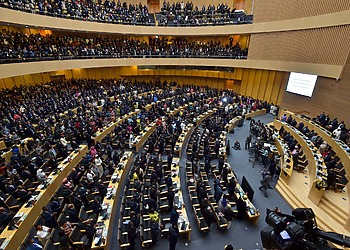
But it’s not all good news. At the May 2020 World Health Assembly 73rd session the delegates adopted a crucial resolution on COVID-19. All countries, including the People’s Republic of China, endorsed a major provision to make globally available any COVID-19 vaccine discovered.
That is, all countries, except the United States and Great Britain.
As to the United States, one media outlet put it this way:
“US President Donald Trump launched a new vaccine war this week, but not against the virus. It was against the world. The US and UK were the only two holdouts in the World Health Assembly on the declaration that vaccines and medicines for COVID-19 should be available as a public good and not under exclusive patent rights. The US explicitly disassociated from the patent pool call, talking instead of “the critical role that intellectual property” plays – in other words, patents for vaccines and medicines….vaccines for “us”, but the rest will have to queue up and pay what big pharma asks, as they will hold the patents.”
Disassociation from treating a COVID-19 vaccine as a public good by two countries would not be so troubling if it were not that the TRIPS Agreement is governed by the WTO.
The custom in the WTO, which is run by its 150 governments, is that all major decisions are made by membership consensus. This conceivably means that the U.S. and U.K. could prevent the application of the TRIPS Agreement to a COVID-19 vaccine.
And along with withdrawal from WHO, the U.S. threatened to leave the WTO which if taken, ironically, would remove it from any future TRIPS application decision.
In this case, however, U.S. reasons for possible departure are not related specifically to COVID-19 but rather to a growing concern about China and more broadly a perceived broken global trading system, one which treats the United States unfairly.
For the U.S. pulling out of WHO results in a degree of self-inflicted pain; doing so from WTO could be even greater. As Foreign Policy’s geopolitics correspondent Keith Johnson, in analyzing U.S. frustrations at WTO, put it:
“If the United States were to pull out of the system it helped build, the implications would be dire. Other countries would be able to discriminate against U.S. goods and services with no limits. Tariffs would almost certainly rise, and export markets shrink. Meanwhile, others like China and the European Union would increasingly be in a position to write the rules of the future economy, from data protection and privacy to intellectual property and state subsidies.”
In short, the United States by failing to act humanely in a global health crisis– as it had in the past—is undermining 25 years of a trade agreement that gives special dispensation to low and middle-income countries in a public health crisis. In so doing, the United States is also harming its own longer-term economic, political, and national health self-interest.
Not wise.
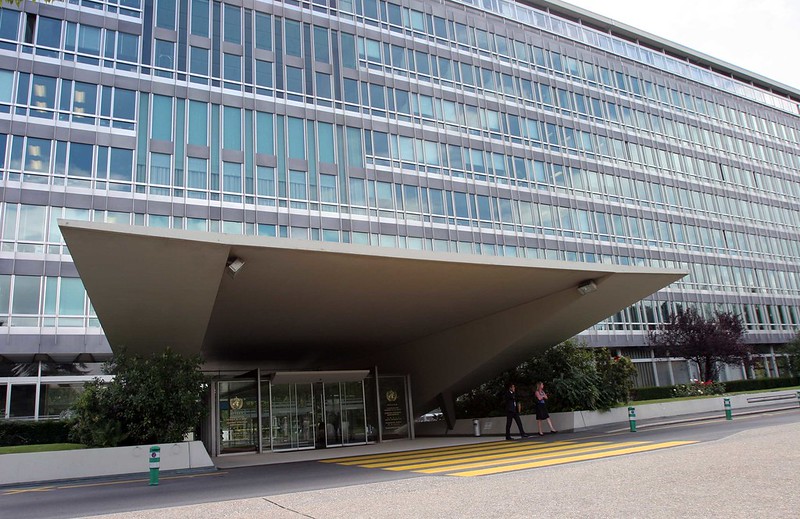
Editor’s Note: The opinions expressed here by Impakter.com columnists are their own, not those of Impakter.com — In the Featured Photo: WHO Headquarters – United States Mission, Geneva. Photo: Dominique Nicolas