As the digital asset economy expands, more companies are reconsidering how they process crypto transactions. One trend gaining notable momentum is the adoption of no KYC crypto payment gateway solutions—tools that allow businesses to accept cryptocurrency without requiring customers to undergo identity verification. While these systems operate in a niche space due to evolving regulatory expectations, they continue to attract interest from organizations seeking a balance between efficiency, accessibility and user autonomy.
This growing attention reflects a broader shift in how companies view digital payments. Instead of relying solely on custodial processors that centralize user information, some businesses are exploring models that reduce friction during checkout and provide customers with more flexibility in how they pay.
Why Businesses Explore No KYC Payment Models
The interest in no KYC crypto payment gateway solutions can be attributed to several practical and operational factors.
1. Faster registration and transaction flow
Traditional payment processors often require lengthy onboarding. KYC procedures, document reviews and manual approvals can extend integration by days or even weeks. No KYC solutions simplify this dramatically, allowing businesses to activate crypto payments almost immediately.
2. User accessibility without verification barriers
Many customers prefer to pay in crypto without sharing personal data, especially in regions where identity documentation is inconsistent or privacy norms differ. A no KYC gateway makes it possible for companies to accept payments from a wider range of users without creating friction at checkout.
3. Reduced data handling obligations
Collecting identity information introduces security liabilities and compliance burdens. Businesses that do not store or process this type of data avoid the operational risks associated with database breaches and sensitive data management.
4. Lower fees through direct settlement
No KYC gateways typically rely on non-custodial or semi-custodial structures that limit intermediary involvement. This allows companies to receive payments more directly, lowering both transaction fees and settlement delays.
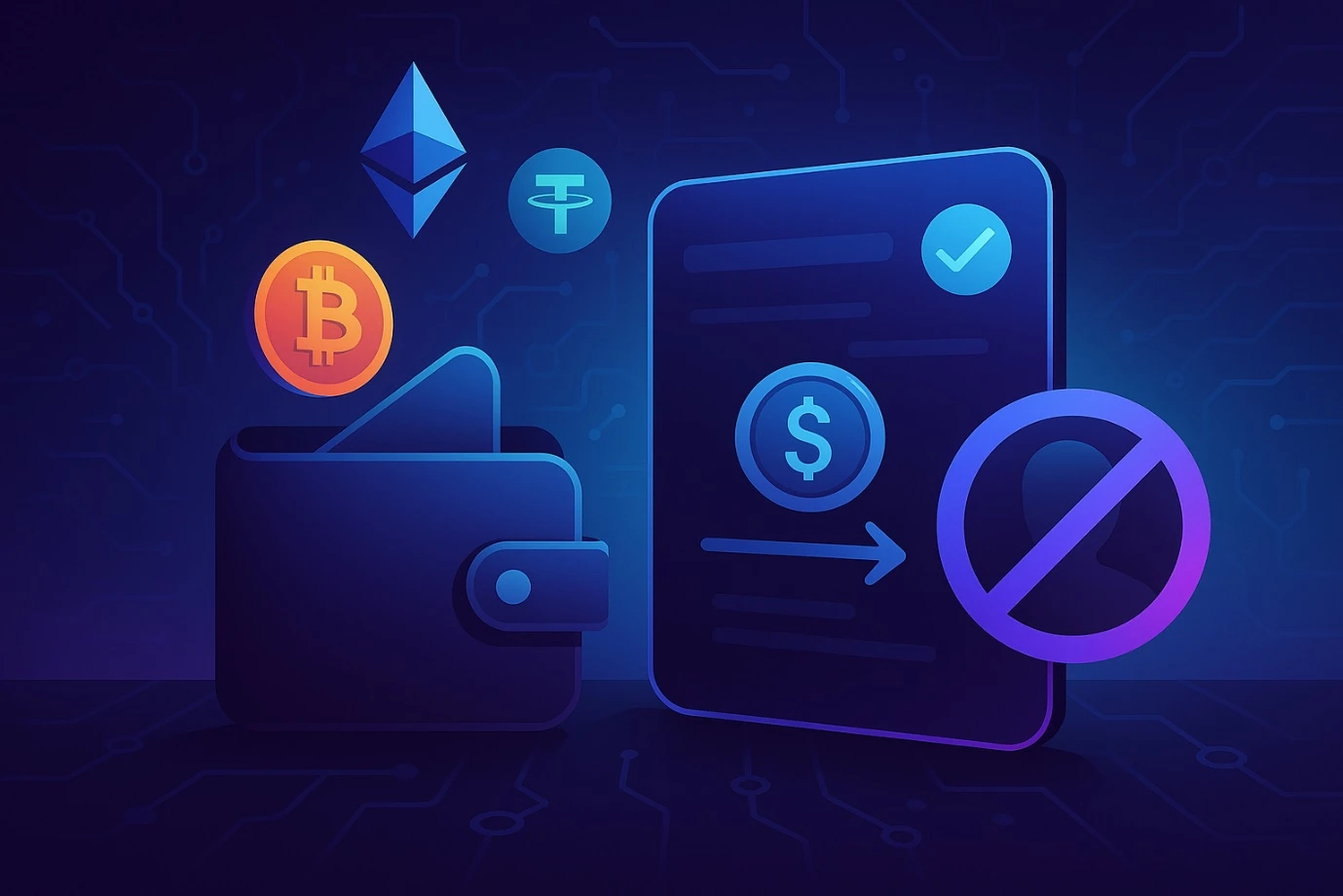
How No KYC Crypto Payment Gateways Work
While implementation varies by provider, these gateways generally operate through several core elements:
- Direct wallet-to-wallet transfers that allow immediate receipt of funds
- Automated payment requests triggered through API integrations
- Multi-asset support, including major cryptocurrencies and stablecoins
- Dashboard tools that track incoming transfers without requiring personal data
- Optional risk assessment tools, depending on the service provider
Most solutions emphasize technical efficiency rather than identity management. For many businesses this creates a streamlined flow: the customer pays, the system detects the transaction, and the business receives funds—without additional verification steps.
Industry Considerations: Privacy vs. Compliance
Even as interest grows, companies exploring this model must weigh the broader market context. Global regulators continue to refine expectations for digital asset compliance, especially surrounding anti-money-laundering procedures. While no KYC gateways may be permitted in specific jurisdictions or use cases, businesses must evaluate local requirements to ensure that the payment structure aligns with their operational environment.
For companies that operate internationally, this also means assessing which parts of their user base can be supported through a no KYC model and whether certain segments may still require enhanced verification. Ultimately, the decision often involves balancing privacy and flexibility with evolving regulatory norms.
Some service providers in the industry offer no KYC-compatible payment tools as part of broader crypto infrastructure. BitHide, for example, provides a payment gateway system that enables businesses to receive crypto without user identity collection while maintaining non-custodial control of funds. The platform also includes API integrations and multi-wallet management features, which allow companies to automate payment processes efficiently. While BitHide is one option among many, it represents the type of infrastructure that supports privacy-focused payment models.
Use Cases Appealing to Modern Businesses
No KYC crypto payment gateways appeal to companies across multiple sectors, including:
- Digital services and SaaS platforms seeking low-friction global payments
- E-commerce merchants that want to expand payment options for international users
- Freelance and contractor marketplaces where clients and workers are globally distributed
- Subscription-based products that benefit from automated crypto billing
- Blockchain-native projects that prioritize non-custodial financial infrastructure
These models work particularly well in operational environments where users value anonymity or where documentation-based KYC would significantly increase onboarding drop-off rates.
The Future of No KYC Crypto Payment Gateways
While the long-term regulatory landscape continues to evolve, no KYC crypto payment gateway solutions are gaining visibility as part of a broader conversation about payment flexibility, user privacy and decentralized financial infrastructure. As companies adapt to shifting market expectations and customer preferences, these tools are likely to remain relevant-especially for organizations operating in fast-paced, globally distributed digital ecosystems.
Businesses evaluating these solutions must consider technical readiness, regional compliance requirements and the preferences of their customers. For many, the appeal lies in reducing friction and expanding access while maintaining secure, efficient on-chain transaction flows.
Editor’s Note: The opinions expressed here by the authors are their own, not those of Impakter.com — In the Cover Photo: No KYC Crypto Payment Gateway Solutions — Cover Photo Credit: Craig Redmond / We Animals.