Impakter
  • Environment
    • Biodiversity
    • Climate Change
    • Circular Economy
    • Energy
  • FINANCE
    • ESG News
    • Sustainable Finance
    • Business
  • TECH
    • Start-up
    • AI & Machine Learning
    • Green Tech
  • Industry News
    • Entertainment
    • Food and Agriculture
    • Health
    • Politics & Foreign Affairs
    • Philanthropy
    • Science
    • Sport
  • Editorial Series
    • SDGs Series
    • Shape Your Future
    • Sustainable Cities
      • Copenhagen
      • San Francisco
      • Seattle
      • Sydney
  • About us
    • Company
    • Team
    • Global Leaders
    • Partners
    • Write for Impakter
    • Contact Us
    • Privacy Policy
No Result
View All Result
Impakter logo
No Result
View All Result
My Syrian Refugee Experience

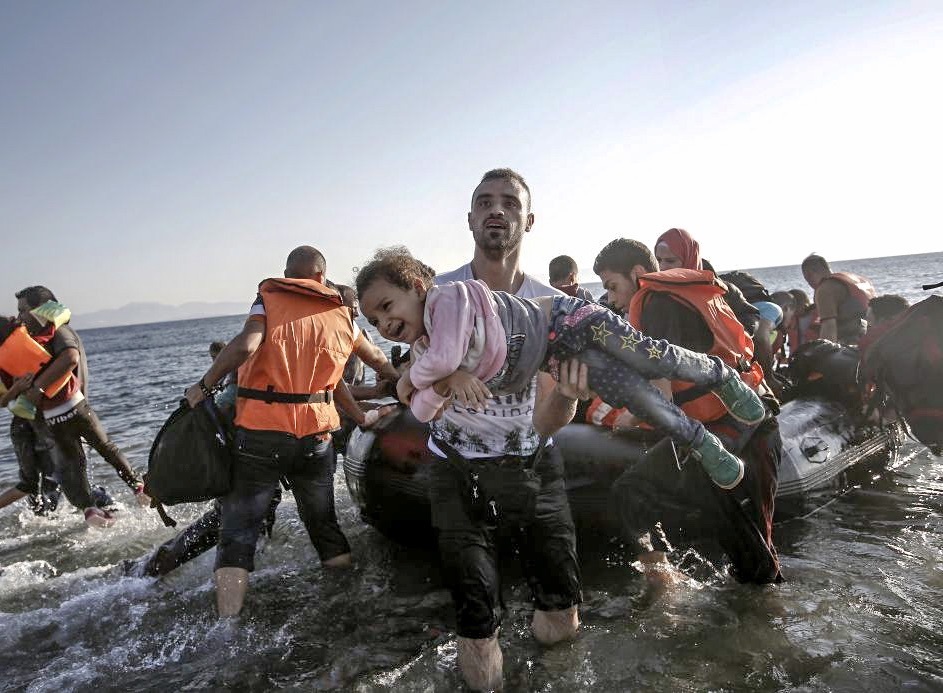
A Syrian migrant holds a young girl in his arms upon arriving on a dinghy to the Greek island of Kos, Greece.(EPA/Yannis Kolesidis)

My Syrian Refugee Experience

Anastasia SpanosbyAnastasia Spanos
April 14, 2016
in Philanthropy, Politics & Foreign Affairs
3

I spent a year and a half in Chios, Greece teaching children English. My semester started in September of 2014. The following months were when the Syrian refugees started coming in from Turkey. Mind you, while we’re still talking about Greece, temperatures were near freezing at night from October until the end of February. Plus there was aggressive, cold rain almost daily. And, being in the Northern Aegean, lots of waves.

Much like the way the seasons change, so does the rate of refugees coming in. Prior to my first encounter I hadn’t seen more than a handful of refugees in the port city of Chios Town, which is 45 minutes south of where I was living. My evening began like any other, it was a cold November night, wind blowing and so I had some soup for dinner. Earlier in the evening, around dusk I heard my neighbors outside playing with their motorbikes and making lots of noise conversing in the streets.

At around nine o’clock at night I assumed it was them knocking on my door with fervor. I opened my door expecting to see some familiar faces. Instead to my dismay there were 14 gaunt faces looking at me and asking for help. Once I realized what was going on I surveyed the situation. There were twelve men, one young boy and a woman. The one man who seemed to be the ringleader kept saying, “Help her, help her.” He spoke some English and German. He told me she was pregnant and she had fallen into the icy water as they were disembarking from the raft.
IMG_3104

Photo Credit: Anastasia Spanos 

At this point I was in total shock. They had probably knocked on many doors as my door wasn’t the first on the street and had left their raft at the beach, which was about 300 meters away. With much urgency, I brought the pregnant lady into my home. She was shaking she was so cold and wanted to use the bathroom. She was drenched and shivering, so I let her into my bathroom and meanwhile I got waters for the guys outside, who kindly stayed outdoors. I then grabbed my Adidas tracksuit pants as they were the warmest I could find that would also fit on her belly. I gave her some socks too and socks to the guys outside and the young boy outside.


Related articles: “REFUGEES IN EUROPE: THE ANATOMY OF A GLOBAL CRISIS” 

“EUROPE’S FLIGHT FROM THE REFUGEE CRISIS“


There was the issue of what to do next. I recalled seeing refugees down in the port town, but how did they get there and what was the protocol? I first called my friend in the village who is a police officer. They were getting calls like this weekly and transport of the refugees was supposed to be a collaborative effort. First the port authority, as in the local coast guard, would spot the refugees on their raft and determine where they would disembark. Then the police would intercept the refugees and take them to get booked essentially with a name, asylum status, and place of origin.
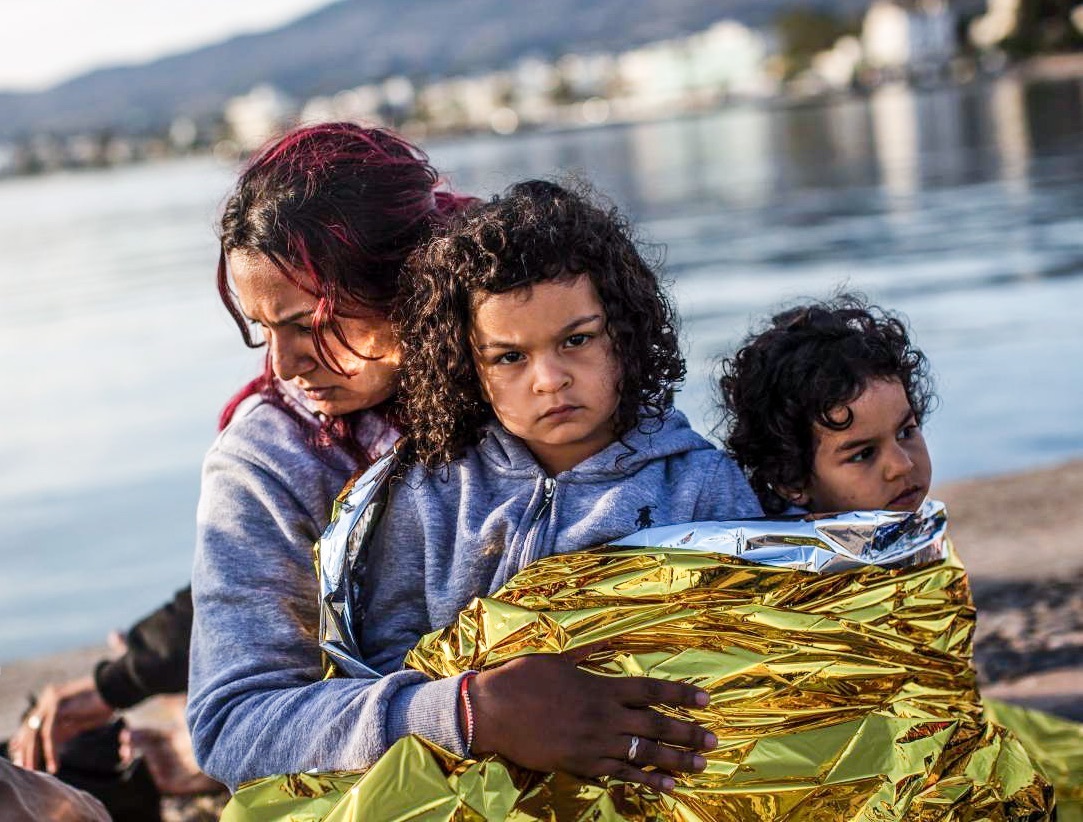
A Syrian family waits after being escorted into the harbor by the Greek Coast Guard, which found them drifing offshore on June 4, 2015, in Kos, Greece.

In the Photo: A Syrian family waits after being escorted into the harbor by the Greek Coast Guard. Photo Credit: Flickr/Freedom House.

As this all happened in the evening, the police were less than enthusiastic to come help and figure out how to get the refugees to Chios Town. Twenty-five minutes later, the police arrived on my street and had the refugees follow the car to the village square, which is a five minute walk from my house. At that point, I lost track of the refugees. I still wonder what they are all doing and where they ended up. When I was still in Greece, I’d frequently look for at least the pregnant lady to see if she’s around or had given birth yet.

The rate of immigrants from November 2014 remained the same until around March 2015. Then there were weekly rafts of refugees coming into all the beaches. Buses packed with people would be transported from the village to Chios Town daily. Sometimes, if it was a nice day I would see dozens of refugees walking the roughly 25 kilometers from Kardamyla to Chios Town. Eventually UNICEF stepped in and started setting up tents in Chios Town for people to sleep in. Last time I saw about 20 tents.

Views of the Zaatri Refugee Camp in Jordan,

In the Photo: Views of the Zaatri Refugee Camp in Jordan, similar to what would have been seen in Chios Town, Greece. Photo Credit: UN Photo/Mark Garten. 

The situation is grim as there were folks I had seen in Chios Town for many months who have left everything from home behind them, brought whatever money they had and hope and pray for the best, for a safe-haven and life to start anew. At some point, any hope must be overshadowed by this sense of despair in being in limbo for so long.


For a full mindmap behind this article with articles, videos, and documents see #refugees


It was heartbreaking to see the same people week after week just surviving with what they had, and yet in the back of my mind I was always thinking about the pregnant woman and what could have happened to her and her baby. As new waves of refugees come more and more frequently, hopefully a solution, and some sort of unified effort can help these people.
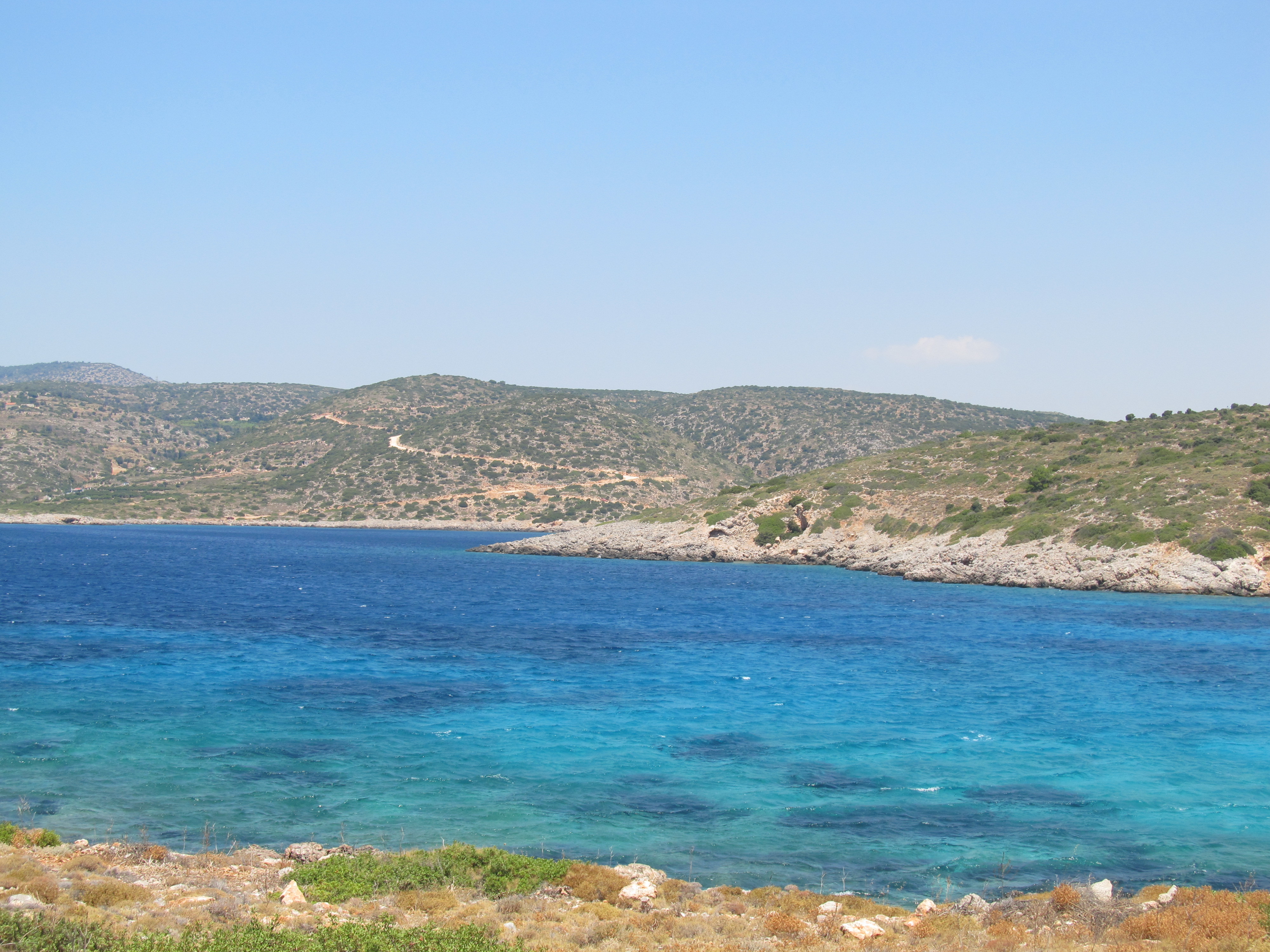
IMG_2769

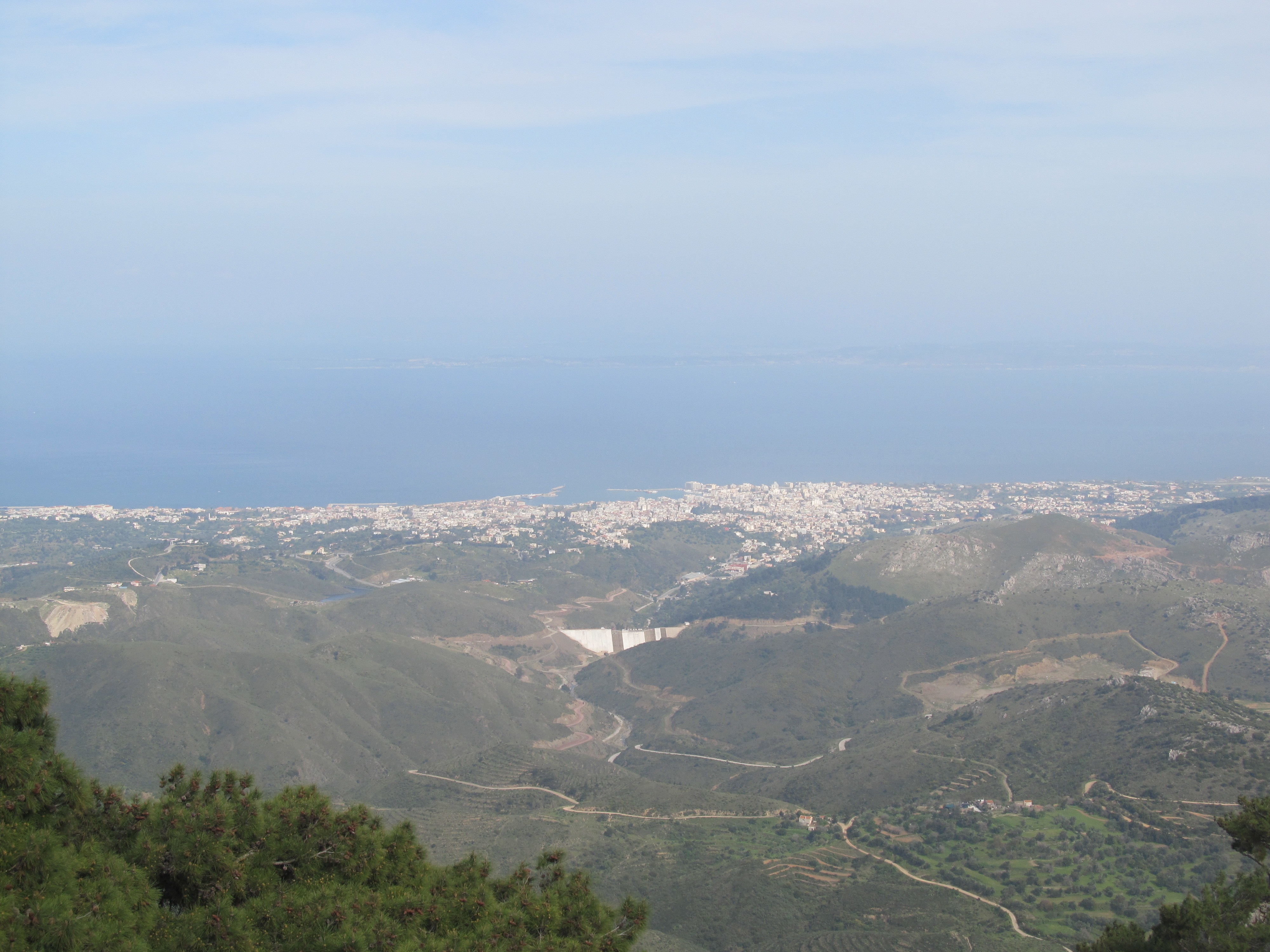
In the Photo: Chios Town, Greece. Photo Credit: Anastasia Spanos

Recommended reading: “THE SKIHS WHO SAVED PARMESAN” 

“GREECE FERRIES SECOND BOAT OF MIGRANTS TO TURKEY UNDER EU DEAL” 


_ _

EDITOR’S NOTE: THE OPINIONS EXPRESSED HERE BY IMPAKTER.COM COLUMNISTS ARE THEIR OWN, NOT THOSE OF IMPAKTER.COM.
Featured Image: Flickr/Freedom House/EPA/Yannis Kolesidis
Tags: Aegean IslandsAnastasia SpanosChiosChios TownGreecerefugeesyrian refugeeUNICEF
Previous Post

Brenton Clarke Little – A Balance of Light and Lines

Next Post

Zocdoc Review: Will It Really Help You Get That Appointment Faster?

Related Posts

famine in gaz
Society

Famine Confirmed for First Time in Gaza

More than half a million people in Gaza are trapped in famine, marked by widespread starvation, destitution and preventable deaths,...

byThe Food and Agriculture Organization of the United Nations (FAO)
August 23, 2025
air pollution children
Environment

‘Growing up in the Haze’: How Air Pollution Impacts Children’s Health

A new UNICEF report has found that air pollution in East Asia and the Pacific is linked to over 100...

byAlessandro Camillo
February 25, 2025
how climate change affects education
Climate Change

How Does Climate Change Affect Education?

In 2024, at least 242 million students across the world faced disruption in their schooling as a result of extreme...

byAlessandro Camillo
February 4, 2025
Ancient Greece
Society

Gifts From Ancient Greece: We Need to Make Better Use

Editor’s note: Following a trip to Greece, our Columnist Richard Seifman was reminded of how much we owe today to the...

byRichard Seifman - Former World Bank Senior Health Advisor and U.S. Senior Foreign Service Officer
September 30, 2024
displaced children weather
Climate Change

Over 43 Million Children Displaced By Extreme Weather Over 6 Years

The first global analysis of weather-related displacement of children reveals a shocking number: 43.1 million children were displaced between 2016...

byElisa Furlan
October 6, 2023
children climate change
Climate Change

Climate Change: Who Is Most at Risk?

Over the last decade, the impacts of climate change have become more visible everywhere in the world. Everybody is at risk,...

byElisa Furlan
September 6, 2023
Women's health
Equal Rights

Mothers Amongst Worst-Hit by Malnutrition in Crisis-Torn Countries

The report, published by UNICEF on March 4 — titled "Undernourished and Overlooked" — sought to examine the “current trends...

byHannah Gul-Khan
April 14, 2023
Netflix’s ‘Swimmers’: A Deep Dive Into the Syrian Refugee Journey
Culture

Netflix’s ‘Swimmers’: A Deep Dive Into the Syrian Refugee Journey

“Swimmers,” a film released on Netflix in November 2022, is the true story of two sisters who fled Syria at...

byEeshaan Singh-Basu
December 28, 2022
Next Post
Zocdoc Review: Will It Really Help You Get That Appointment Faster?

Zocdoc Review: Will It Really Help You Get That Appointment Faster?

Please login to join discussion

Recent News

Finix Reviews

Finix Reviews: Payment Service Provider Features & More

December 15, 2025
ESG News regarding increased grid stress slowing growth, US demanding exemption from EU emissions law, Google invests in solar in Malaysia, China reduces fossil fuel output

Increased Grid Stress Threatens Economic Growth

December 15, 2025
Advanced Healthcare Data Analytics Solutions

The Transformation of Modern Medicine Through Advanced Healthcare Data Analytics Solutions

December 15, 2025
  • ESG News
  • Sustainable Finance
  • Business

© 2025 Impakter.com owned by Klimado GmbH

No Result
View All Result
  • Environment
    • Biodiversity
    • Climate Change
    • Circular Economy
    • Energy
  • FINANCE
    • ESG News
    • Sustainable Finance
    • Business
  • TECH
    • Start-up
    • AI & Machine Learning
    • Green Tech
  • Industry News
    • Entertainment
    • Food and Agriculture
    • Health
    • Politics & Foreign Affairs
    • Philanthropy
    • Science
    • Sport
  • Editorial Series
    • SDGs Series
    • Shape Your Future
    • Sustainable Cities
      • Copenhagen
      • San Francisco
      • Seattle
      • Sydney
  • About us
    • Company
    • Team
    • Global Leaders
    • Partners
    • Write for Impakter
    • Contact Us
    • Privacy Policy

© 2025 Impakter.com owned by Klimado GmbH