When people talk about candy, the first thing that usually comes to mind is chocolate. And with good reason; by some estimates it’s worth over $100 billion, with the Swiss leading the way in terms of per capita consumption at just under 20 pounds a year. From dark to milk to white, consumers all over the world continue to crave the sweet delight of chocolate.
Chocolate is ultimately produced from cacao beans, which tend to grow in places with issues of poverty like South America and West Africa. In addition to causing questions of human rights and labor ethics, the huge demand for chocolate has also historically had a negative impact on forests and the environment itself, with corporations doing whatever they could to get lots of cacao at the lowest price possible. As the consequences of such practices have become more apparent, and as consumer preferences have shifted against them, these companies have begun to change their act, as evidenced by corporate initiatives like the Nestle Cocoa Plan. A relatively recent development, it remains to be seen what the impact of such changes will be, as well as how long they will be supported.
One chocolate company that has been focused on quality and ethical business from the very beginning though is Montezuma’s Chocolate, a British company that tabs itself as “Britain’s most innovative chocolate brand”. Started by couples Helen and Simon Pattinson, Montezuma’s diligently follows a “Trading Fairly” policy that emphasizes cocoa sourced from ethical plantations and suppliers that follow good business practices. I reached out to Helen to learn more about her and her husband’s unique entry into chocolate making, Montezuma’s Trading Fairly policy, and how it embodies innovation.
Q: What originally inspired you to found Montezuma’s Chocolate?
Helen: After working as a solicitor with a City law firm (where I worked on several AIM flotations and saw plenty of SMEs prosper) I was convinced that I wanted to set up my own business. Together with my husband Simon, I gave up law and embarked on a yearlong trip to South America so that we could ‘find ourselves’. While travelling we stumbled upon San Carlos de Bariloche in Argentina, which is a town dedicated almost entirely to chocolate. It was here that we developed a passion for all things chocolate, and the idea for Montezuma’s was born.
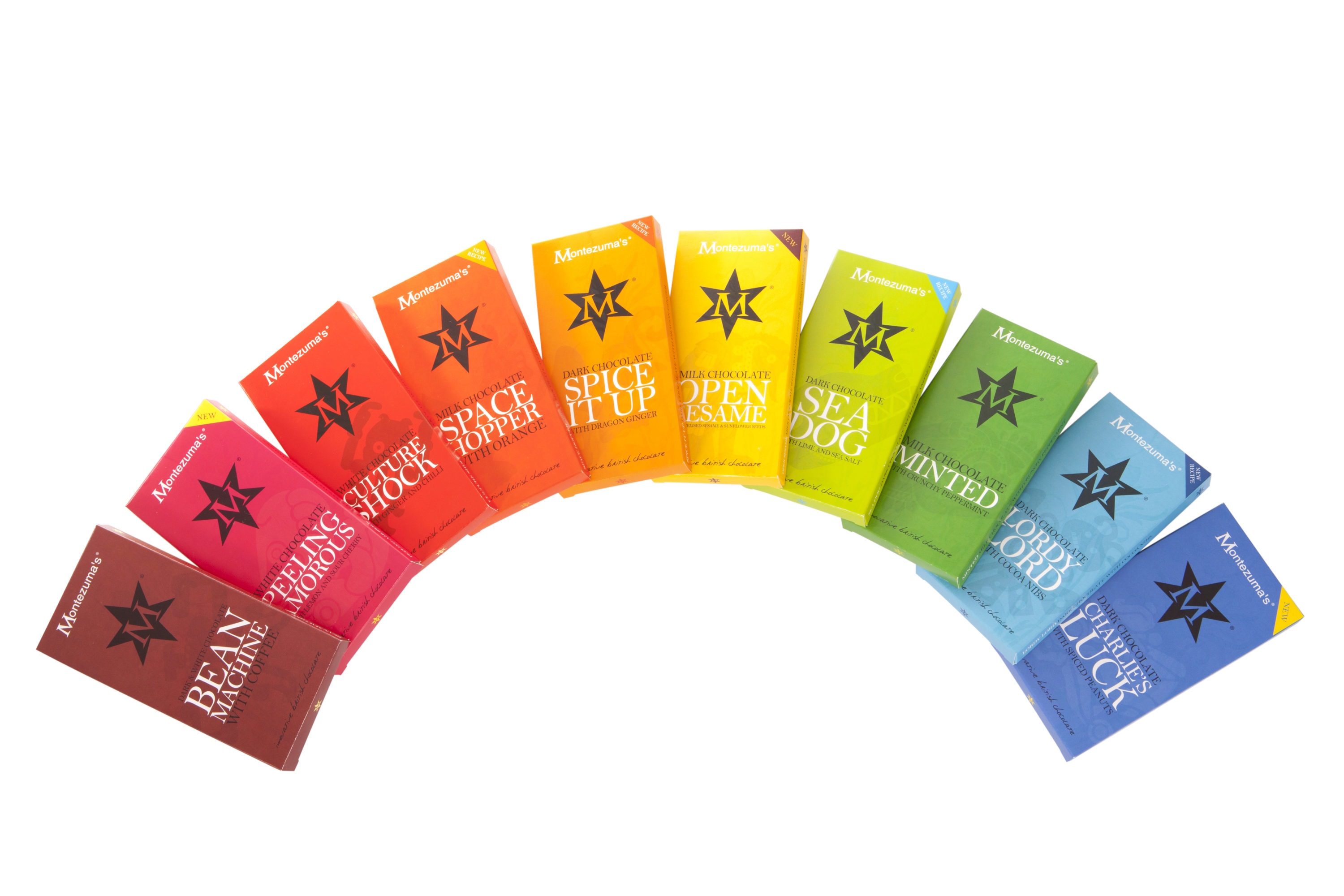
In the photo: Montezuma’s rainbow. Credit: Julia Toms Photography.
Q: You and your husband Simon were actually lawyers by trade before founding your company, how were you able to transition to such a different field?
It was definitely a transition! But our background in the law has helped enormously, helping from everything on contract negotiation to research. The city lifestyle just wasn’t for us ultimately, but our earlier careers have certainly given us the business background and experience that comes in very handy when you are setting up in business, as well as growing a company.
Q: A lot of large confectionary companies have begun to pay a lot of attention towards cacao sourcing and supply chains, what separates Montezuma’s from those companies?
The key difference is that we’ve always focused on provenance and fair trade, we haven’t just embraced it because of consumer demand or current trends. The importance of provenance and the supply chain is now a much more important factor for many consumers, especially after a real focus on the food industry which seemed to uncover a number of issues in the way some foods were being produced.
As a business, we have always felt strongly about this issue, and when we started we created our own Trading Fairly policy that we still adhere to, although it has been updated over the years. The ideals we started out with have stayed with us and are firmly rooted; our ethics cover everything from how we work with suppliers and how much packaging we use to how we dispose of rubbish and how the ingredients we buy are farmed. By nature of the geography of cocoa growing, which is often in countries with high levels of poverty, particularly in Africa, there can be issues of child labor and slavery, as well as farmers not being paid a fair price for their crops. We avoid this issue almost entirely by buying the best quality cocoa from Central and South America, areas that don’t have such extreme issues of poverty. We still have to be cautious though, and often buy from co-operatives that operate as an umbrella for hundreds of farmers with their own very small farms. They work together and support each other when there are issues with crops, and also sell as a unified force that demands a good price for their crops.
Trading Fairly also extends to the way in which we treat our customers, our staff, and our suppliers, and we won’t deal with suppliers who can’t uphold similar standards. Our customers, particularly those shopping in our own stores who have more time to chat, are always really interested to hear more about this.

In the photo: White chocolate and raspberry truffles. Credit: Julia Toms Photography.
Q: Part of Montezuma’s branding isn’t just its ethical/fair trade business practices, but also its “innovative” nature. How do you and Montezuma’s embody innovation in practice?
We have always focused on good quality cocoa with a high cocoa percentage, but when we set up shop we definitely wanted to bring something different to the UK chocolate market. We love using oils, spices, and herbs to enhance the flavors of chocolate. At our HQ, which we call Chocolate Towers, we run a “kitchen” environment. For example, every batch of chili is different, meaning we have to ensure we tweak our recipes accordingly. We listen to our customers to understand what they like and want, and we run a monthly Chocolate Club (delivering chocolate to subscribers’ doors) that gives our team the opportunity to develop new ideas every month while also allowing our members to try these new creations first!
After seeing how popular our dark ranges have become over the years, we recently launched a 100% cocoa bar – Absolute Black – which has no sugar, no gluten, no dairy, and no soya. This range has been extremely successful, and we recently introduced two completely unique flavor innovations that are both proving extremely popular as well. But innovation doesn’t just stop at our products; we question “standard” business practices and try to do things our way. Just because something has always been done like that doesn’t make it the best way. This extends to our environmental and charitable aims as well as to the way we run the business.
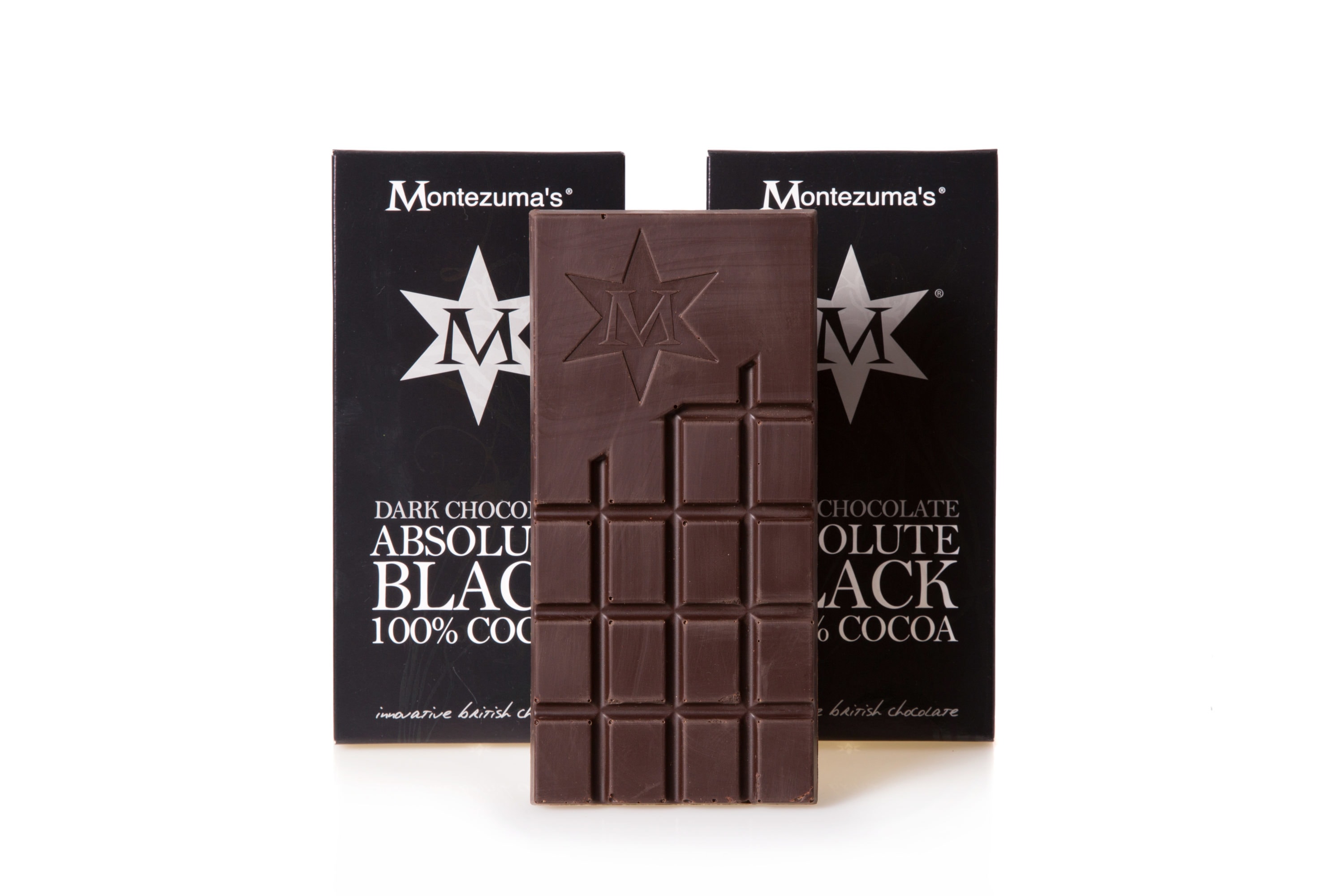
In the photo: Absolute black chocolate. Credit: Julia Toms Photography.
Q: What do you hope Montezuma’s will become in the next few years?
It has long been our aim to become Britain’s greatest little chocolate company! By this we mean that we want to be available to all at an affordable price while also retaining our family values where our customers feel like they can speak to us, where our staff feel happy to be at work, and where our products are still of exceptional quality. When we’ve achieved this goal, we will look to the rest of the world!
Editors Note: The opinions expressed here by Impakter.com columnists are their own, not those of Impakter.com