Melting glaciers already pose a multitude of threats to humanity. From rising sea levels to destabalised mountainsides, the record speed at which the world’s ice sheets are melting has the potential to disrupt societies globally. New research points to a different potentially catastrophic effect of thousand-year-old glaciers melting, the reality of which is already familiar to us: pandemic.
Ancient pathogens could infect local ecosystems as the ice melts
A new report has been published in the Proceedings of the Royal Society B detailing the likelihood that viral spillover could result from glacial runoff.
A team of researchers from the University of Ottawa in Canada led by Dr Stéphane Aris-Brosou took samples from Lake Hazen, the largest high Arctic freshwater lake in the world, located in Nunavut, Canada. They took soil and sediment samples from places where small, medium, and high amounts of glacial runoff enter the lake.
They sequenced the DNA and RNA genes found in these samples and matched those to both known viral signatures and potential animal, plant or fungal hosts. The researchers then used an algorithm to determine the statistical likelihood of these viruses being able to infect other organisms.
The results showed that the samples taken where the glacial runoff was greatest had the highest likelihood of containing potentially transferable pathogens.
How does ice trap ancient pathogens?
Glaciers hold a record of the environment in which they formed, similarly to the rings on a tree. In the past, as snow fell year after year in the coldest places on Earth, it was slowly compressed to form ice rather than melting.
This process trapped gases from the atmosphere along with the microorganisms and other particles contained within those gases. It also preserved the microbes that were already present in the ecosystem within the remains of once-living hosts.
These glaciers provide a perfect environment for preserving pathogens in a dormant state, but glaciers are not the only frozen source of potentially viable viruses and bacteria.
Permafrost, the expanse of frozen substrata which lies underneath the northernmost areas of the globe, also contains thousands of years of preserved biomass. Similarly to how glaciers grew, permafrost is the result of the soil that accumulated over millenia which could not thaw in the summer as quickly as it froze in the winter, resulting in ground up to a thousand metres thick in some places that has remained continually frozen for thousands of years.
This provides an equally rich source of possible pathogens, and in fact, this recent report is not the first time that scientists have warned about the possible viral and bacterial consequences of temperatures rising worldwide.
The first virus to be isolated and reactivated from our frozen past was described in a 2014 paper. Pithovirus, a genus of giant virus containing two known species, was found to be viable within a 30,000-year-old ice core taken from the Siberian permafrost.
By 2015, another type of giant virus, Mollivirus sibericum, was isolated from the same permafrost sample and described in the Proceedings of the National Academy of Sciences of the United States of America. The abstract states:
“Metagenomic analysis of the permafrost sample uncovered the presence of both viruses, yet in very low amount. The fact that two different viruses retain their infectivity in prehistorical permafrost layers should be of concern in a context of global warming.”
So far, the likelihood of these microorganisms posing a real threat to humans is thought to be relatively low. Different variables have to be true for any ancient microbes to cause harm to modern organisms.
Primarily, they would need to be revived viably, and it is challenging to know whether they could survive in a natural environment for any length of time once thawed.
The microorganisms found where glaciers and permafrost occur also likely thrive in colder environments. They would need to be able to survive and proliferate in the heat of a human body in order to cause disease.
Finally, the microbe would have to be innately harmful. It is possible that modern humans would have no immunity to any unfamiliar ancient viruses or bacteria, although it is also possible that modern humans might still carry immunity to these germs through our genome, as passed down from ancestors who were exposed to such microbes.
Anthrax Outbreak in Siberia
Although the scenario may be unlikely, it has already occurred once in recent memory. In 2016, there was a fatal outbreak of anthrax that originated in Siberian permafrost.
On the Yamal Peninsula, which lies high above the Arctic Circle, a 75-year-old reindeer carcass was thawed which had been infected by anthrax bacteria during the last outbreak in the region in 1941. This happened during a heatwave which saw this uppermost part of Russia reach temperatures of 35C.
Related Articles: Alps’ Glaciers Melting at Record Rate | The Best-Case Scenario for Greenland Ice Melt Just Got Worse
The outbreak, which occurred over July and August, infected 2,650 reindeer, 6.46% of the total susceptible population, of which 2,350 died. Until 2007, reindeer in the area were routinely vaccinated against anthrax, because anthrax outbreaks were common in Siberia during the early twentieth century and resulted in the deaths of over a million reindeer.
The cancellation of the vaccine meant that the reindeer populations were more susceptible, but vaccination has resumed in the wake of the 2016 outbreak. However, the outbreak amongst the reindeer spilled over into the local nomadic Siberian population, causing the hospitalisation of dozens of people and the death of one 12-year-old boy.
Birgitta Evengard, a microbiologist at Umea University in Sweden, believes that anthrax outbreaks will only become more common as climate change continues to accelerate:
“[The temperature is] rising about three times faster in the Arctic than in the rest of the world, and that means the ice is melting and the permafrost is thawing. It’s not that easy to dig in the permafrost to bury these animals, so they are kind of very close to the surface.”
There are about 7,000 burial grounds containing infected reindeer carcasses all across Russia.
The softening soil also contains slowly defrosting corpses, which were protected from decay by the extreme cold and, in turn, preserved many of microorganisms that contributed to their mortality.
In Longyearbyen, the largest town in the Svalbard Archipelago and the world’s northernmost settlement inhabited by 1,000 people, it is illegal to be buried, and there are no care homes for the elderly or geriatric services of any kind. This law was put in place as a result of such concerns and in order to prevent similar problems in the future.
The danger posed by the melting of the “third pole”
Possible pandemic is just one threat among many that could occur due to the loss of the world’s ice.
The world’s “third pole”, which is how glaciologists refer to the vast Hindu Kush-Himalaya ice sheet that spans the Tibetan plateau, contains the largest amount of snow and ice after the Arctic and Antarctic. This ice sheet is the source of ten of the world’s largest rivers, including the Ganges, Brahmaputra, Yellow, Mekong and Indus, whose flows support at least 1.6 billion people directly. It is expected that two-thirds of this ice sheet will be gone by 2100.
Additionally, glacial melt in this area has a far higher risk of death and injury than in the Arctic and Antarctic, since the Himalayas are more densely populated. This damage can happen from landslides caused by destabilised rock and from glacial lake outbursts, which occur when a lake forms and suddenly spills over its banks in a devastating flood. Whole villages have been wiped away by these occurrences. Satellite data shows that numbers and sizes of these glacial lakes have grown.
Glaciers, which can act as physical time capsules, are also now releasing pollutants from our more recent past. As ice melts, it delivers back into circulation whatever aerosol particles were previously trapped.
For example, DDT, which is harmful to the environment, was a common pesticide before it was banned in 1972 and is now being rereleased into the ecosystems that are fed by glacial runoff. Perfluoroalkyl acids are also washing downstream in meltwater and accumulating in the food chain.
Added biomass running from glaciers into the sea could also cause planktonic bloom, due to the increased nutrients in the marine ecosystem, which could possibly accelerate the ongoing extinctions of other marine life.
NASA captured this stunning image of a phytoplankton bloom in the Gulf of Finland. (h/t @NASAEarth.) pic.twitter.com/WndKXQr7lj
— Quite Interesting (@qikipedia) April 22, 2019
Risk of reawakening dormant pathogens is increased by human activity
Jean-Michel Claverie, who co-led the study in 2014 that discovered Pithovirus, the first viable pathogen found in permafrost, said about the risks of human activity:
“Thirty percent of the world’s oil reserves are thought to be hidden under the permafrost, along with gold and other key minerals, so exploration is bound to increase, so we must be careful to take precautions when prospecting – if people become sick with strange symptoms, it might be wise to quarantine and clear them of dangerous new infections before sending them back.”
Whilst this new report from Canada is not the first to point out the risk of reawakening long-dormant pathogens, it is groundbreaking for demonstrating that the statistical likelihood of a pandemic arising from these pathogens increases as glacial runoff increases.
The faster the glaciers melt, the higher the chance that pathogens harmful to modern organisms will be exposed to our ecosystems.
The multitude of other concerns presented by the global loss of ice, including reports that Greenland’s ice sheet has passed a point of no return that will result in 1-2 metres of sea-level rise, should be sufficient to concern everyone about the consequences of humanity’s current activities. However, perhaps the threat of pandemic, the tangible cost of which has already been felt by communities around the globe, will spur the globe and its political leaders to act now.
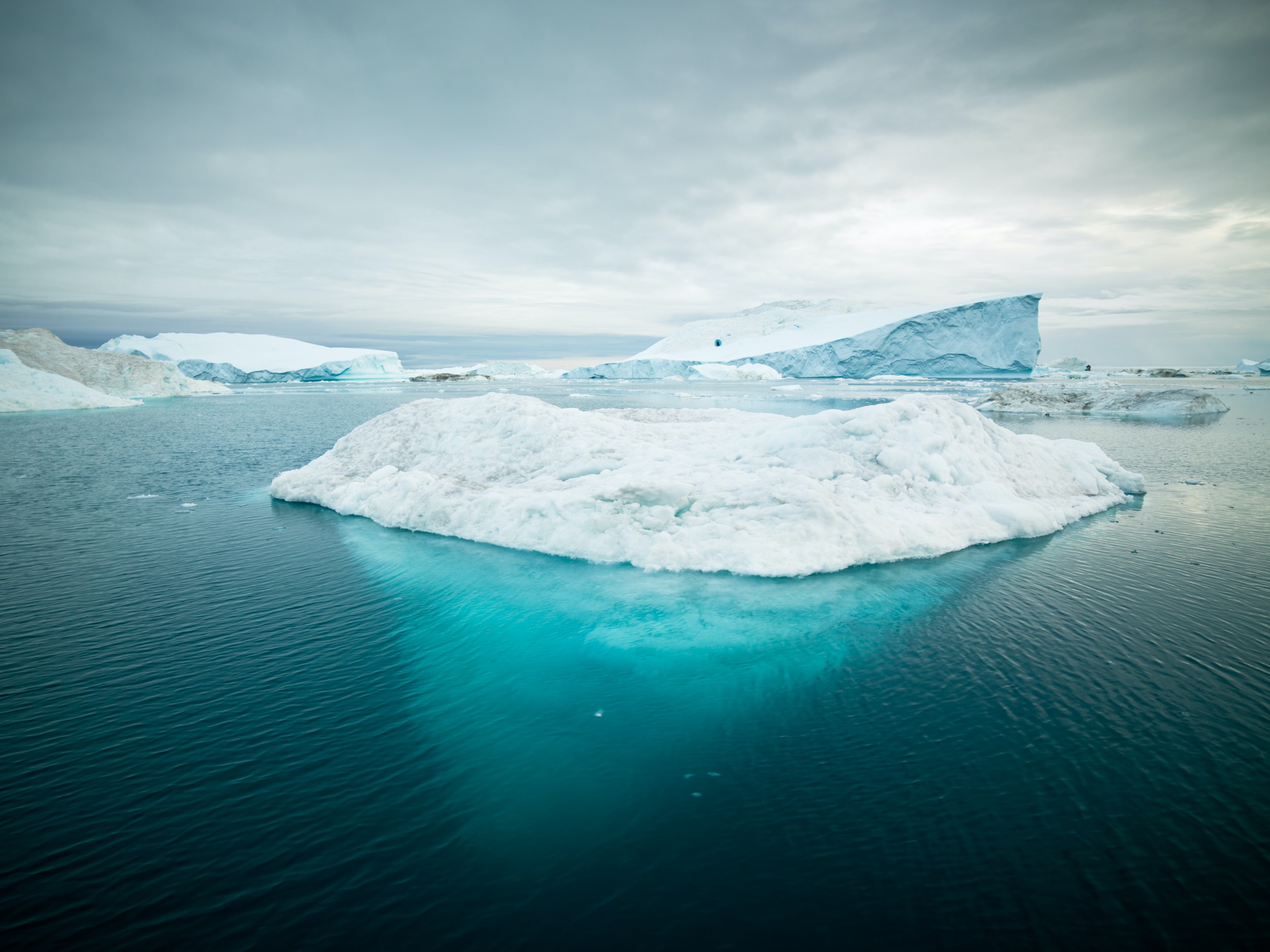
Editor’s Note: The opinions expressed here by Impakter.com columnists are their own, not those of Impakter.com — Featured Photo: Arctic Icebergs in Ilulissat, Greenland Featured Photo Credits: Alexander Hafemann.