Impakter
  • Environment
    • Biodiversity
    • Climate Change
    • Circular Economy
    • Energy
  • FINANCE
    • ESG News
    • Sustainable Finance
    • Business
  • TECH
    • Start-up
    • AI & Machine Learning
    • Green Tech
  • Industry News
    • Entertainment
    • Food and Agriculture
    • Health
    • Politics & Foreign Affairs
    • Philanthropy
    • Science
    • Sport
  • Editorial Series
    • SDGs Series
    • Shape Your Future
    • Sustainable Cities
      • Copenhagen
      • San Francisco
      • Seattle
      • Sydney
  • About us
    • Company
    • Team
    • Global Leaders
    • Partners
    • Write for Impakter
    • Contact Us
    • Privacy Policy
No Result
View All Result
Impakter logo
No Result
View All Result
What the mighty mangrove tells us about our broken relationship with nature

What the mighty mangrove tells us about our broken relationship with nature

International Institute for Sustainable Development (IISD)byInternational Institute for Sustainable Development (IISD)
March 20, 2020
in Environment, Science
0

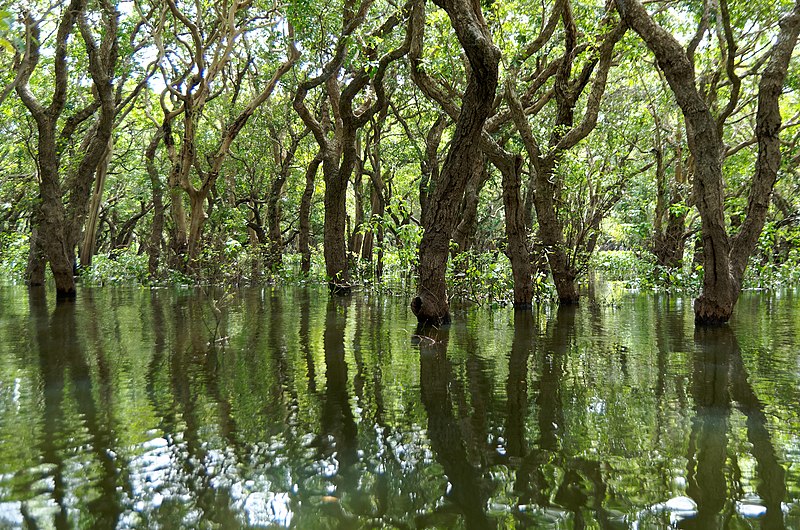
Mangrove trees lining tropical coasts are undervalued yet mangrove protection should be part of the plan to save the planet and protect biodiversity.



Mangroves are trees that grow miraculously on seawater, fringing some of the tropical shores of our planet.

They shelter a wealth of wildlife, protecting more than 3,000 fish species, many of which are of commercial importance.


Related topics: Kickstarting a Paris-style Nature Agreement? – Local Governments Can Lead the Biodiversity Movement – One in Five Animals Traded Globally

Mangrove trees can sequester up to ten times as much of our carbon pollution per hectare as rainforests, making them an important player in limiting the impacts of climate change.

Mangrove roots also help anchor shorelines around the world, protecting coasts from the devastating impacts of storm waves – much more effectively than concrete sea walls.

Despite all these benefits, mangroves tend to be undervalued. Mangrove protection is ignored. The explosive growth of shrimp farming, urban expansion, climate change and other aspects of economic development reduced mangrove forests by as much as 35% between 1980 and 2000. 11 of some 70 mangrove species are at risk of becoming extinct.

How to value nature

Mangroves and the rest of the natural world offer value to humanity at no cost. Every year, the environment provides about $125 trillion in free services, for example, pollination, water filtration, oxygen production, and flood protection. This is worth more than the entire global GDP.

The planet is like a bank account where every living thing pays in deposits, but we are the one species that keeps withdrawing funds. The overuse of our natural resources is costing us $6 trillion every year. By 2050, those costs could rise to $28 trillion.

Over the last century, we have become out of balance with nature. Today, 96% of mammals are human beings and our domesticated livestock. Only 4% account for everything else, from elephants to tigers to pandas. 70% of birds are our domesticated poultry, mostly chicken. In the ocean, 90% of the large fish – from sharks to tuna to cod – have been removed in the last hundred years. And 40% of insect species in the world are now endangered, too.

In 2019, the United Nations reported that around one million animal and plant species are threatened with extinction, many of them within decades.

The planet is like a bank account where every living thing pays in deposits, but we are the one species that keeps withdrawing funds.

A new report by the World Economic Forum in collaboration with PwC assessed 163 industry sectors and their supply chains for their impact on biodiversity. The biggest drivers of biodiversity loss on land are agriculture, and livestock farming and ranching. In the ocean, we have been taking fish out of the water faster than they can reproduce, and today 63% of fish stocks are experiencing overfishing.

As the world’s population continues to grow, we must figure out how to produce more food without destroying the planet’s ecosystems.

We need to replenish our savings accounts.

Today, only 7% of the ocean is designated or planned as protected – and only 2.4% is fully protected from fishing and other activities. We’re doing better on land – but even there, only 15% of our land is protected. How much more of the natural world do we need to protect?
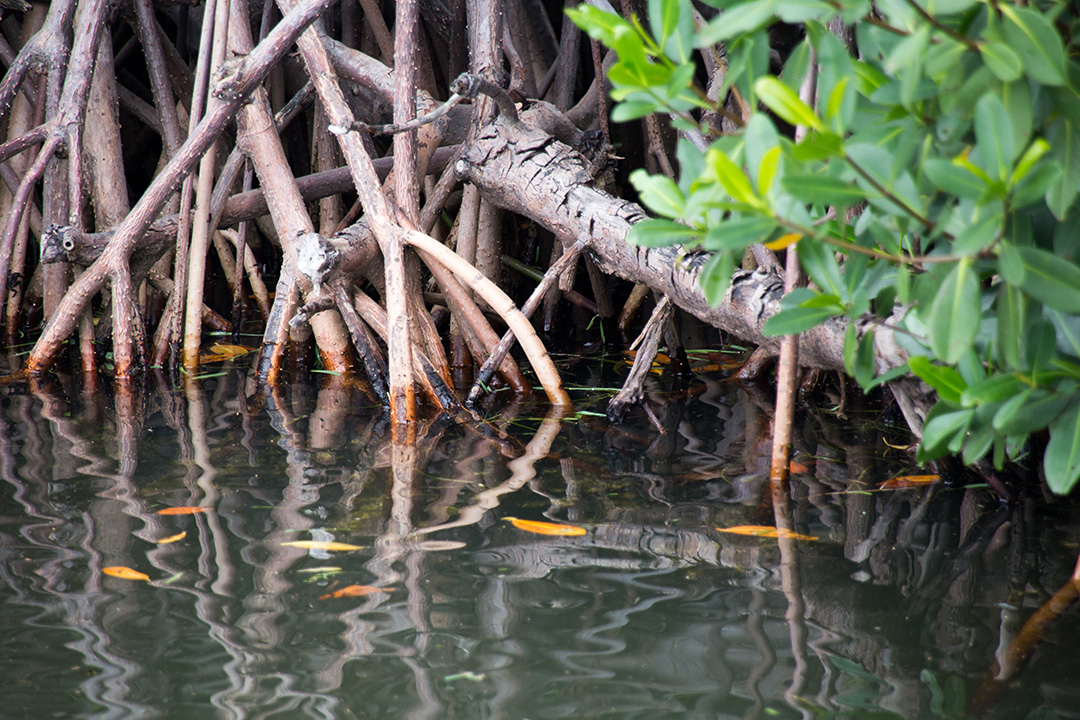
Mangroves
Mangrove trees can sequester up to ten times as much of our carbon pollution as rainforests and help defend against flooding.

Science tells us that if we are to prevent mass extinction and the collapse of our life support system, and if we are to avert a climate catastrophe, we need to keep half of the planet in a natural state.

Next Step: Protect at least 30 percent of our planet by 2030

The challenge for governments around the world – to be agreed at this year’s conference of the UN Convention on Biological Diversity in Kunming, China – is to start by protecting at least 30% of our planet (land, freshwater, and ocean) by 2030.

The Kunming conference will take its cues from the Paris climate conference but has a specific focus on nature. It will mark an opportunity to decide on how much more space we are willing to give to nature.

The hope is that in October 2020, the world will agree to save itself, rather than accept the collapse of human society as we know it.

There are signs that we can turn things around.

Vietnam’s Example: The Benefit of Mangrove Protection

Vietnam has lost more of its mangroves than most countries and shrimp farms have decimated the coastal regions. The government, seeing the crisis, invested $1.1 million to restore 12,000 hectares of mangroves. This natural infrastructure saves the country $7.3 million every year in maintenance costs for dikes and other flood prevention infrastructure.

Vietnam’s success story with mangrove protection is well known, yet mangroves elsewhere are still being destroyed by unrestrained economic development. We need to get smarter about how we cultivate the land, learning from both past mistakes and successes, so we can have a healthy earth and a healthy food supply.

As biodiversity loss has become one of the defining threats to our civilization, we must lead where others have lagged in the past. We cannot be content to sit on the sidelines as entire ecosystems teeter on the brink of collapse. We need to invest in biodiversity before our account goes even deeper into the red.


About the author: Enric Sala is an Explorer-in-Residence at the National Geographic Society


EDITOR’S NOTE: The opinions expressed here by Impakter.com columnists are their own, not those of Impakter.com.
Tags: animal speciesbiodiversityMangrovenatureUN Convention on Biological Diversity
Previous Post

Silicon Valley Insider: Purpose-Driven Firms On The Rise

Next Post

Coronavirus and the Rise of China

Related Posts

One Health: Silo Barriers to Implementation and How to Overcome Them
Biodiversity

One Health: Silo Barriers to Implementation and How to Overcome Them

The One Health concept/approach must be central for governments to adopt collaborative, cross-sector policies in order to safeguard public health,...

byOne Health Initiative
November 26, 2025
COP30: Countries’ Climate Agrifood Ambitions Undermined by Funding Gaps, Report Finds
Biodiversity

COP30: Countries’ Climate Agrifood Ambitions Undermined by Funding Gaps, Report Finds

Developing countries recognize the urgent need to adapt agrifood systems to climate change, but most National Adaptation Plans (NAPs) are...

byThe Food and Agriculture Organization of the United Nations (FAO)
November 19, 2025
nature finance
Biodiversity

New Tested and Scalable Investment Model Can Unlock Billions in Much-Needed Financing for Nature

The Landscape Finance Approach comes at a critical juncture when the global biodiversity funding gap has reached almost a trillion...

byWWF
November 14, 2025
The Amazon rainforest is often called “the lungs of the world.” It produces oxygen and stores billions of tons of carbon every year. The Amazon rainforest covers more than 60% of the landmass of Peru. Photo Credit: USDA Forest Service / Diego Perez.
Biodiversity

Inside COP30

The 30th United Nations Climate Change Conference (COP30) is taking place in Belém, Brazil, from November 10 to 21, 2025....

byInternational Institute for Sustainable Development (IISD)
November 10, 2025
climate change and food
Biodiversity

COP30: Climate Extremes Are Already Impacting Food Yields Today

The 30th United Nations Climate Change Conference (COP30), taking place in Belém, Brazil, brings together world leaders, scientists, non-governmental organizations, and...

byThe Food and Agriculture Organization of the United Nations (FAO)
November 7, 2025
Global Action Plan on Biodiversity and Health
Biodiversity

Global Action Plan on Biodiversity and Health: Why Implementation Can’t Wait

Last October, after six years of deliberation, the world adopted the Global Action Plan on Biodiversity and Health. The Plan...

byJessica Bridgers - Deputy CEO, World Federation for Animals
October 31, 2025
Plastic pollution coral reefs
Biodiversity

Protecting Coral Reefs From Plastic Pollution: The IUCN Congress as a Catalyst for Action and Collaboration

This week, the International Union for the Conservation of Nature (IUCN) sees its World Conservation Congress kick off in Abu...

byJanne van Eerten - Sr. Global Public Affairs Manager at The Ocean Cleanupand1 others
October 8, 2025
EU Prepares Trade Retaliation as Trump Pushes 30% Tariffs
ESG FINANCE

EU Prepares Trade Retaliation as Trump Pushes 30% Tariffs

Today’s ESG Updates EU Braces for U.S. Tariff Surge: EU to explore using anti-coercion tools and retaliatory tariffs against the...

byLena McDonough
July 21, 2025
Next Post
Coronavirus and the Rise of China

Coronavirus and the Rise of China

Recent News

The Best Virtual Office Address In London For Your Startup

How To Choose The Best Virtual Office Address In London For Your Startup

December 5, 2025
Granddaddy Purple Strain

Where Granddaddy Purple Strain Gets Its Iconic Grape Flavor

December 5, 2025
ESG news regarding Deforestation Mandate Being Pushed; EUs Acceleration on Hydrogen and Net Zero Revolution; AT&T Will End All DEI; UK Watchdog Blocks Nike and Lacoste Ads Over Green Claims.

U-Turn in Europe: Deforestation Mandate Pushed Back Again

December 5, 2025
  • ESG News
  • Sustainable Finance
  • Business

© 2025 Impakter.com owned by Klimado GmbH

No Result
View All Result
  • Environment
    • Biodiversity
    • Climate Change
    • Circular Economy
    • Energy
  • FINANCE
    • ESG News
    • Sustainable Finance
    • Business
  • TECH
    • Start-up
    • AI & Machine Learning
    • Green Tech
  • Industry News
    • Entertainment
    • Food and Agriculture
    • Health
    • Politics & Foreign Affairs
    • Philanthropy
    • Science
    • Sport
  • Editorial Series
    • SDGs Series
    • Shape Your Future
    • Sustainable Cities
      • Copenhagen
      • San Francisco
      • Seattle
      • Sydney
  • About us
    • Company
    • Team
    • Global Leaders
    • Partners
    • Write for Impakter
    • Contact Us
    • Privacy Policy

© 2025 Impakter.com owned by Klimado GmbH