Some accidents don’t look serious at first.
You walk into a store, your foot hits a wet patch, and suddenly you’re on the floor. Or maybe it’s a broken step outside an apartment or a sidewalk that hasn’t been fixed in a while. Pain, confusion, missed work, and unexpected expenses turn this simple moment into something bigger. It’s usually around this point that people start looking for legal help for slip and fall accidents, just to understand what comes next.
In busy cities, homes, businesses, and public spaces are all packed closely together. Here, a simple slip and fall accident can quickly turn into a complicated situation. Things start to feel overwhelming when responsibility is not clear.
This article breaks down how responsibility works, why it can get confusing, and what people usually face after a slip and fall accident.
Who is Responsible Here?
Let’s keep this simple.
If someone owns or manages a property, they’re expected to keep it reasonably safe. Not perfect, just safe enough that people walking through don’t face obvious risks.
That usually includes:
- Cleaning up spills (and not leaving them sitting for too long)
- Fixing broken steps or uneven flooring
- Making sure the lighting is good enough to see where you’re going
- Putting up warning signs when something can’t be fixed right away
Sounds straightforward, but real situations don’t always follow simple rules.
When Responsibility Gets Shared
More than one person is involved in maintaining a space in many cases.
You might have noticed:
- A landlord who owns the building
- A tenant running a business
- Employees handling daily cleaning
- Contractors doing repairs
So, it’s not always clear who missed what when a slip and fall accident happens.
For example, someone slips in a store:
- Was the spill noticed and ignored?
- Was it cleaned too late?
- Was there no warning sign?
Each detail matters, and sometimes, more than one party ends up being responsible.
Cities Make Things Even More Layered
Now think about how cities work.
Sidewalks, entrances, and parking areas are shared spaces. And not all of them belong to one clear owner. Sometimes it’s the property owner. Sometimes it’s the city. Sometimes it depends on local rules that most people don’t think about.
That’s why a slip and fall accident in a busy area can take longer to figure out. There are just more pieces involved. A damaged sidewalk, for example, might look like a simple issue. But figuring out who should have fixed it, that’s where things slow down.
What Usually Happens After Someone Gets Hurt
Right after a fall, most people are focused on one thing: getting up and checking if they’re okay.
But once that moment passes, other concerns start showing up:
- Medical bills
- Time away from work
- Damaged belongings
It doesn’t take long before things start adding up. That’s also when many people begin to seriously consider getting legal help for slip and fall accidents, especially if they’re unsure about who is responsible or how to handle the situation.
The Money Side (And Why It’s Not Always Easy)
If responsibility is clear, the next step usually involves compensation.
This might include:
- Medical expenses (from emergency care to recovery visits)
- Lost income
- Personal items were damaged during the fall
- The stress and discomfort that follow
But here’s the thing: insurance companies are usually part of this process. And they don’t always agree right away.
They might:
- Ask for more proof
- Question how the accident happened
- Try to reduce the payout
So even when a slip and fall accident seems obvious, resolving things can take time.
Why Legal Help for Slip and Fall Accidents Comes Into The Picture
At some point, handling everything alone can feel like too much. There is paperwork, follow-ups, calls, and a lot of back-and-forth that doesn’t always lead anywhere quickly.
That’s where legal guidance can help.
A legal professional looks at:
- What caused the fall
- Who had control over the area
- What evidence is available
They also deal with insurance companies, which takes a lot of pressure off someone who’s already dealing with an injury. Not every slip and fall accident needs legal action, but when things get complicated, having support can make the process clearer.
What People Tend To Do After A Fall
There’s no perfect response in the moment, but a few small actions can help later.
Some people:
- Take photos of where it happened
- Inform a manager or property owner
- Keep medical records and bills
- Write down what they remember
These steps don’t always happen right away, and that’s okay. But when they do, they can make things easier if questions come up later.
Why Do These Situations Happen More Than We Think
Slip and fall accidents are often brushed off as random. But most of the time, there’s a reason:
- Something wasn’t fixed
- Something wasn’t checked
- Something was ignored for too long
And when you look at it this way, these incidents start to feel less random and more connected to how spaces are managed every day.
A Quick Note on Shared Spaces
There’s one part people often overlook, shared or in-between spaces.
Think about places like:
- Building entrances
- Parking lots
- Sidewalks right outside shops
These areas don’t always have a clear “owner” in the way we expect. Sometimes maintenance is split between a property owner and local authorities. Other times, responsibility depends on agreements that aren’t visible to the public.
That’s why a slip and fall accident in these areas can take longer to sort out. It’s not always about what happened; it’s about figuring out who was supposed to prevent it in the first place.
Final Thoughts
A slip and fall accident can change your day in seconds. What comes after can feel confusing, slow, and sometimes frustrating.
There’s no one-size-fits-all answer. Sometimes, responsibility is clear; sometimes it takes time to figure out, and sometimes more than one party is involved. But understanding how these situations work, even in a simple way, helps you feel a little more prepared.
Because safer spaces don’t just happen. They depend on people noticing issues, fixing them, and not letting small problems sit for too long, and those “small” problems can turn into something much bigger than expected.
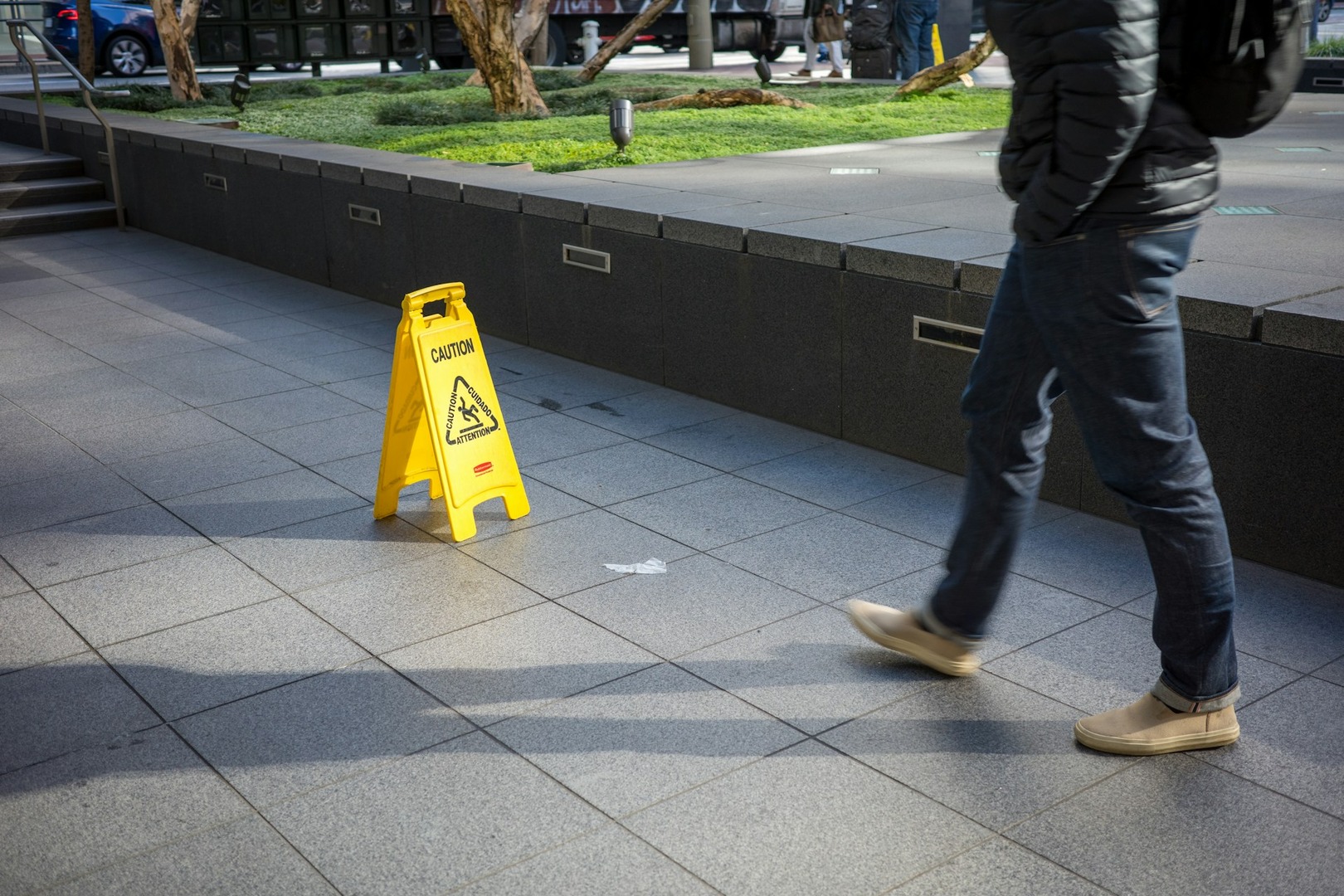
Editor’s Note: The opinions expressed here by the authors are their own, not those of Impakter.com — In the Cover Photo: A man walks toward a yellow caution sign. Cover Photo Credit: David Klein.