The United Nations (UN) came into existence in 1945 after 29 countries ratified the Charter. Only about 1% of those who were born between 1930 and the 1940s are alive today, meaning 99% of us have lived our entire lives during a time when the United Nations Charter was in force, and have benefitted from its role in maintaining international peace and security, promoting human rights, and fostering social and economic development.
By the Charter, five countries were given UN Security Council veto power, namely the United States, China, Russia, France, and the United Kingdom. This special authority is implicitly reflected in the most recent mandated UN budget contributions, which “require” the United States and China to contribute 42% of the total (this amount does not reflect contributions to the UN peacekeeping operations and other activities, with expenditures totaling over $67 billion).

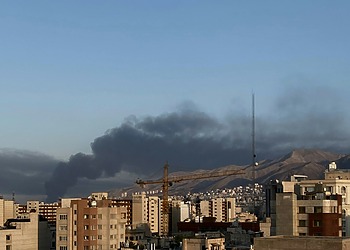
The existence of the UN has been critical in various ways in hotspots around the world, where it has contained conflicts from morphing into full-scale war. One such ongoing case is that of Kashmir, where India and Pakistan have a long history of conflict.
UN peacekeeping operations have played a role in Kashmir beginning in 1948, responding to renewed hostilities in 1965, 1971, 1999, and until the present, when these two nuclear powers were on the verge of full-scale war. On May 10, 2025, the two parties announced an agreement for an immediate ceasefire, a promising pathway to possible further negotiation.
If this May 10th agreement holds, any future arrangements will very probably involve UN peacekeeping operations. For UN peacekeeping operations to continue, the UN will need not only troop availability but also the requisite funding, which will be dependent on a number of governments donating financing in a timely manner.
More broadly, across the UN’s many functions and budget items, whether mandatory or voluntary, the UN is facing deep financial problems. UN Secretary General Guterres described the “root problem” as being that some key members are either not paying their bills or paying very late and thereby severely hampering the UN’s performance of its basic operations and programs.
The budget crisis is one aspect of perhaps other problems. Over the years, there have been serious and well-intended efforts to reform current arrangements, the most recent being the “UN80 Initiative.” Such changes would be constructive, but in reality, it is only when governments across the developed-developing country continuum approve and then implement such actions that they are meaningful.
Further, a basic weakness of the UN’s current arrangements is the rigidity of the Security Council in terms of underrepresentation of country membership, coupled with the political application of the veto power by the five, and the ineffectiveness of the annual General Assembly gatherings and of the application of resolutions approved.
An article in The Economist makes the point that the United States and China are pushing the UN to the brink of financial collapse.
There is a parallel with a private enterprise facing financial ruin: when its main customers are either not paying their bills or are not buying the enterprise’s product, the situation leads to bankruptcy. Although it is too early to tell with certainty, the Trump Administration and the 2025 budget proposals before the U.S. House of Representatives, if authorized and appropriated, would be hugely damaging in increasing UN shortfalls, tantamount to de facto departure by the U.S. from the institution, and thereby raising alarming questions about the UN’s long-term viability.
UN funding and the roles of the U.S. and China
The UN’s budget is funded primarily through assessed and voluntary contributions from its member states. Under the UN Charter, which has the status of a treaty, assessed contributions are mandatory payments based on a country’s gross national income (GNI) and population size. Voluntary contributions are made at the discretion of member states, often funding specific programs or agencies.
United States
The United States was one, if not the principal, founder of the UN, and historically has been the largest financial contributor to the UN. At this point, it is assessed for 22% of the regular budget and accounts for a significant percentage of voluntary contributions, particularly for UN humanitarian and development programs.
If proposals under consideration by the Trump Administration and Congress move forward, the reductions are so draconian that they essentially make many, if not most, UN efforts virtually ineffective or nonexistent. A recent statement by President Yeo of the “Better World Campaign” includes details on the Trump Administration’s current intentions to defund the UN and other foreign affairs, providing greater detail on what is at stake.
China
As its economy has exploded and became the second largest in the world, China has been assessed to increase its financial contributions to the UN, and as result has become the second-largest contributor after the U.S. It has not been a steady payer, with discrepancies in payment levels, particularly failing to make timely contributions, undermining UN operations.
Consequences of Non-Payment
Disruption of Operations: Non-payment from the U.S. and China can lead to the suspension of programs, layoffs of staff, and delays in critical operations. For instance, peacekeeping missions may face funding shortages, jeopardizing missions in conflict zones.
Creditworthiness Risk: Persistent failure to pay dues can jeopardize the UN’s credit rating, making it more challenging to secure funding through loans or voluntary contributions. A diminished credit rating could further limit the UN’s financial flexibility and operational capacity.
Impact on Global Issues: Under current international arrangements, for many global challenges — climate change, health pandemics, and refugee crises — sustained effort and funding from the UN are critical, with a lack of financial resources diminishing the effectiveness of international responses, thereby leading to exacerbated crises.
Political Repercussions: Non-payment is a means by which to underscore political disagreements, reflected in tensions between major powers within the UN framework, as has been the case with many Security Council resolutions and vetoes.
Possible Bankruptcy: Continued significant decline in funding can jeopardize the UN’s core functions, leading to a scenario where the UN struggles to meet its basic operational costs, and ultimately to bankruptcy.
Related Articles: End the United Nations? Bad Idea | ‘We Lost’: How COP29 Ended With a Deal That Made the Whole World Unhappy | The Nations Most (and Least) Likely to Support UN Principles
The Future of the UN
Although the situation described above is alarming, the fact is that we need this most important international entity engaged in multiple crucial global efforts and common cause, one that could not or would not be replaced. This basic truth provides some comfort for those of us who see the UN as an imperfect but essential organization for our collective future.
The financial contributions of the United States and China are critical to the UN’s operation and its ability to address global issues. Both countries face domestic and geopolitical challenges, which they then bring to the UN fora and affect their willingness and readiness to pay. When their mandatory payments are not consistently made on time or at all, UN performance is adversely affected, and, through no fault of its own, its international reputation is damaged.
Ensuring the UN’s financial health is a sine qua non if it is to perform its functions regarding international cooperation, contribute to international peace and security, promote human rights and human wellbeing, and foster social and economic development.
As with any institution or organization, the financial health of the UN is crucial for it to fulfill its mandate effectively. If major member states fail to meet their financial obligations, they undermine the UN’s long-term viability and exacerbate risks for us all. Although it may well be different in China, Americans do have the opportunity collectively to let their voices be heard by municipal, State, and national representative bodies.
The UN has been a symbol of United States exceptionalism for 70 years. In today’s world of multiple actual or threatened conflicts, we need to keep it as such more than ever.
Editor’s Note: The opinions expressed here by the authors are their own, not those of Impakter.com — Cover Photo Credit: Tom Page.