
Books are a part of everyday life for many people. You might be a bookworm who devours books every day, a student who has to read them to learn new information, or a parent reading stories to your children. Books bring us pleasure and knowledge, they answer our questions and often prompt new ones. Yet despite all the joy and knowledge they bring, books are not always environmentally friendly.
The publishing industry has a substantial environmental impact, driven by deforestation, heavy water and chemical use in paper production, and carbon emissions from printing, packaging, and shipping. On the whole, the carbon footprint of a single book ranges from 2.7 to 7.5 kg of carbon dioxide.
One tree is needed to print 25 books, and according to Green Matters, the US publishing industry cuts down 32 million trees annually. It’s estimated that globally, 3.4 billion trees will be cut down over the next decade.
Some publishers decide to take on the challenge and reduce or eliminate the environmental impact by committing to greener practices. Others, however, decide to mislead their consumers through greenwashing practices.
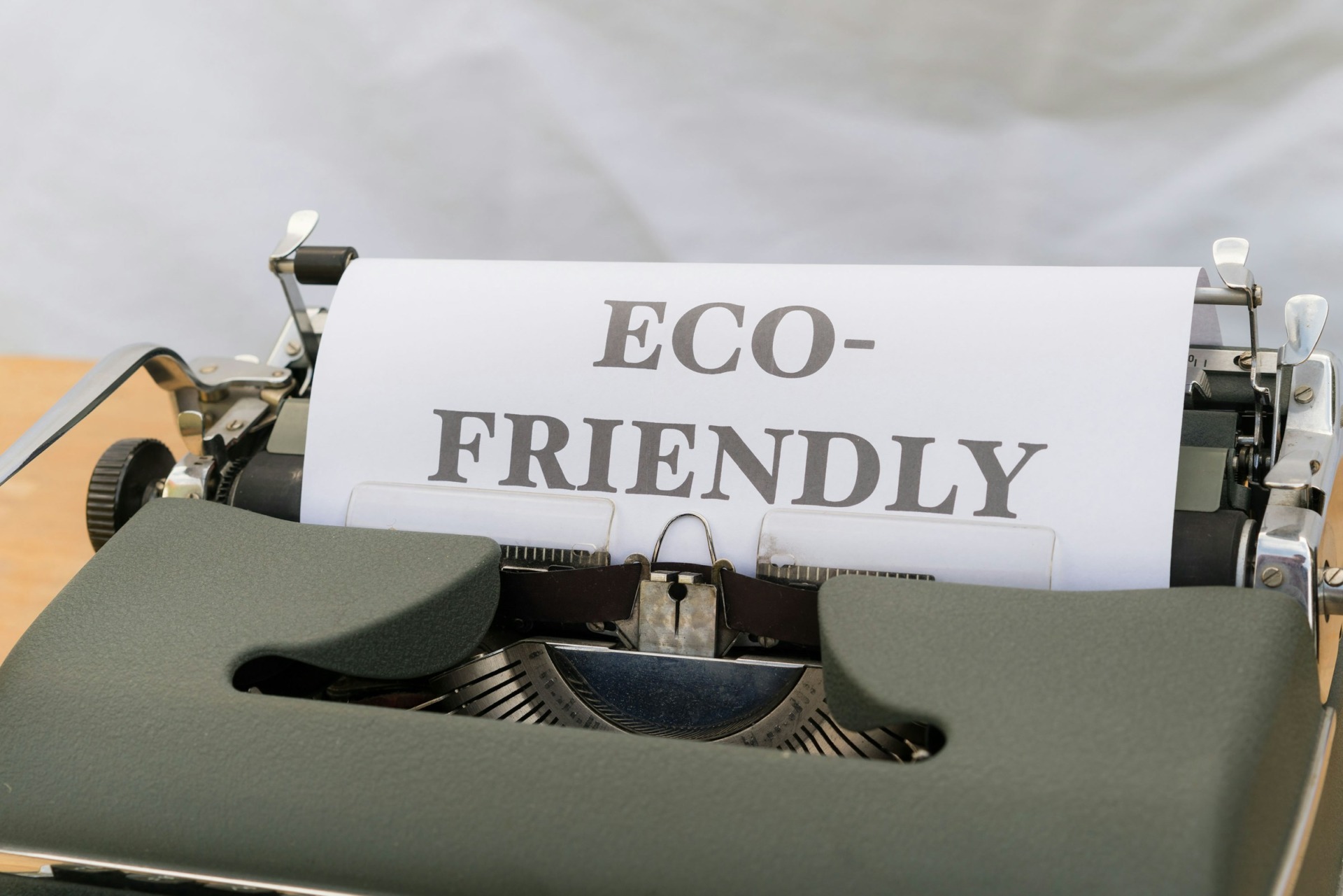
Greenwashing as a practice refers to companies misleading their consumers and presenting their brand or products as “green.” It includes, but isn’t limited to, lying about reducing a company’s polluting emissions, being vague about the supply chains, using labels like “green” and “eco-friendly” when the product is far from being “green,” and pointing out a single environmental attribute while ignoring other impacts. This practice leaves consumers ignorant of the choices they make while purchasing a product and impedes progress towards a more sustainable future.
Greenwashing practices
While some publishers are genuinely trying to do better — switching to certified paper, cutting waste, or investing in print-on-demand — others embellish the truth to look greener than they actually are. Here are a few clear examples of greenwashing practices in the publishing world.
One of the most striking examples comes from the academic and scientific publishing sector. Major companies like Elsevier (part of RELX), Wiley, Taylor & Francis, Springer, and Sage publicly talk about their sustainability commitments. They talk about net-zero goals, their support for UN climate targets, and plans to reach net-zero emissions by 2040.
At the same time, these five corporations are all “key partners for the oil, gas, and coal industries insofar as they distribute scientific research and data that facilitate fossil fuel exploration, production, and distribution,” according to a 2025 study.
In public communications, Elsevier highlights small eco-friendly steps or broad “climate-friendly” statements, while quietly continuing business as usual with fossil fuel clients. Inside the company, employees are sometimes invited to “green” events, sustainability workshops, or climate dialogues organized by management. Critics call these greenwashing rituals — performative actions that make people feel the company is addressing climate change.
Furthermore, the push for digital formats is sometimes presented in a one-sided way. Slogans like “go paperless, go green” or marketing that says e-books are automatically better for the planet can be heard everywhere nowadays. While it’s true that e-books avoid cutting trees, they come with their own costs: manufacturing e-readers (which can emit around 168 kg of CO₂ per device), running data centers, and creating electronic waste. When digital is presented as the simple, obvious eco-solution without explaining these trade-offs, it can mislead readers into thinking the problem disappears once they switch formats.

The importance of trust
A 2025 study, which used a realistic publishing house scenario, conducted an experiment to test how people react when a company’s environmental claims don’t fully match reality.
The researchers created fake newspaper articles to show participants. First, everyone read an article praising a made-up regional publishing company for promising to use 90% recycled paper in their books. Then, participants read a second fictional article revealing the “truth” about what the company actually used. Participants were randomly put into one of eight groups based on two factors: the company’s prior reputation (positive or negative) and the size of the mismatch (discrepancy) in the recycled paper claim. The four scenarios were: no discrepancy (90%), a small one (86%), a medium one (54%), and a large one (23%).
The researchers found that even the smallest mismatch made participants view the company as less trustworthy and credible. People felt deceived, and their overall impression of the publisher dropped significantly.
In the real industry, where recycled paper use often remains low (e.g., major groups reporting only around 5% in recent years due to supply challenges), vague labels like “sustainable materials” can similarly damage credibility if not fully backed by data.
Red flags to watch out for
Vague terms
Terms like “eco-friendly,” “natural,” “Earth-conscious,” or “sustainable” displayed on book covers and websites without any numbers, certifications, or explanations should be taken with caution. These words sound nice, but they have no legal definition or meaning. A company can call anything “eco-friendly” without proving it reduces real harm. If there’s no data, like exact recycled percentages, FSC certification details, or emissions reports, it may well be empty talk.
Soy inks
It’s always pleasant to see a claim on a book that says: “Printed with soy-based or vegetable ink!” That’s genuinely better than petroleum-based inks, which release more volatile organic compounds (VOCs) that pollute air and are harder to recycle.
Soy inks emit far fewer VOCs (as low as 4% vs. 25–40% for petroleum) and break down easier. But ink is only a tiny part of a book’s footprint — paper sourcing, printing energy, shipping, and overproduction dwarf it. If a publisher emphasizes ink but stays silent on where the paper comes from (e.g., virgin vs. recycled forests) or how books are shipped, it’s likely distracting from bigger issues.
Overproduction
Millions of unsold books are shredded every year and sent to landfills. In the US, approximately 640,000 tons of books are sent to landfills annually (hundreds of millions of copies), often because publishers overprint to avoid stockouts and because returns are destroyed. In France, around 140 million books are pulped yearly.
If a publisher has no clear policy on reducing overproduction — such as adopting print-on-demand (POD), better demand forecasting, or smaller runs — they’re likely contributing to massive waste.
Related Articles
Here is a list of articles selected by our Editorial Board that have gained significant interest from the public:
Green flags to look for
Paper certification
One of the most trusted signs for responsible paper sourcing is the FSC logo on the copyright page or publisher’s site. There are different types:
- FSC Recycled (or “100% Recycled”) is the gold standard: the paper is made from 100% recycled materials. This keeps pressure off forests and supports a circular economy.
- FSC 100% means all the virgin fiber comes from fully FSC-certified, responsibly managed forests — no mixing with questionable sources.
- FSC Mix (the most common label) is more of a “yellow light.” It allows a blend of FSC-certified fiber, recycled materials, and/or FSC Controlled wood (which isn’t fully certified but has been checked to avoid high-risk issues like illegal logging). While better than nothing, it can include only a small amount of truly certified material.
Print on demand
If a publisher uses print-on-demand, that’s a huge green flag. POD means books are printed only when ordered — no overproduction, no warehouses full of unsold copies, and almost zero risk of pulping waste. Many university presses and indie publishers rely on POD for backlist titles or niche books, which helps avoid overproduction and cuts emissions from storage/shipping excess stock. It’s one of the most effective ways to make physical books less wasteful.
Supply chain transparency
If the publisher is a member of The Book Chain Project, it’s a good sign. This is a collaborative, industry-led initiative where publishers track and report on their paper’s forest sources, mill environmental performance, water risks, and chemicals in inks/glues. Members (including many major houses, such as HarperCollins, Hachette UK, and Penguin Random House among others) actively engage suppliers for better assessment and share data to improve the whole chain. Membership means real accountability, not just claims.
Printing location
A book “Printed in [your country or region]” (e.g., US, UK, or EU for Western readers) usually means lower transport emissions: no long-haul air freight or ocean shipping from distant factories. Books printed in China and flown to the US/Europe add a massive carbon footprint from international transportation. Local or regional printing supports shorter supply chains and greener logistics.

Effects of greenwashing
Greenwashing has real consequences.
First, it slows down actual environmental progress. When companies can get away with lies and fake labels, there’s less pressure to make bigger changes, like moving to widespread use of print-on-demand, using more recycled paper, or cutting overproduction that sends millions of books to landfills every year. This delays reductions in emissions and waste, as fake claims distract from important actions that are necessary for the industry.
Second, it breaks trust. Readers who care about the environment want to support publishers that are honest. When they discover that “eco-friendly” or “sustainable” claims were exaggerated, they feel cheated. That disappointment can turn into cynicism — not just toward one company, but toward the whole idea of sustainable publishing. Research consistently shows greenwashing destroys consumer trust, increases skepticism, and creates cynicism, making people less likely to believe any environmental claims.
Editor’s Note: The opinions expressed here by the authors are their own, not those of impakter.com — Cover Photo Credit: Lysander Yuen