Impakter
  • Environment
    • Biodiversity
    • Climate Change
    • Circular Economy
    • Energy
  • FINANCE
    • ESG News
    • Sustainable Finance
    • Business
  • TECH
    • Start-up
    • AI & Machine Learning
    • Green Tech
  • Industry News
    • Entertainment
    • Food and Agriculture
    • Health
    • Politics & Foreign Affairs
    • Philanthropy
    • Science
    • Sport
  • Editorial Series
    • SDGs Series
    • Shape Your Future
    • Sustainable Cities
      • Copenhagen
      • San Francisco
      • Seattle
      • Sydney
  • About us
    • Company
    • Team
    • Partners
    • Write for Impakter
    • Contact Us
    • Privacy Policy
No Result
View All Result
  • Environment
    • Biodiversity
    • Climate Change
    • Circular Economy
    • Energy
  • FINANCE
    • ESG News
    • Sustainable Finance
    • Business
  • TECH
    • Start-up
    • AI & Machine Learning
    • Green Tech
  • Industry News
    • Entertainment
    • Food and Agriculture
    • Health
    • Politics & Foreign Affairs
    • Philanthropy
    • Science
    • Sport
  • Editorial Series
    • SDGs Series
    • Shape Your Future
    • Sustainable Cities
      • Copenhagen
      • San Francisco
      • Seattle
      • Sydney
  • About us
    • Company
    • Team
    • Partners
    • Write for Impakter
    • Contact Us
    • Privacy Policy
No Result
View All Result
Impakter
No Result
View All Result

‘Growing up in the Haze’: How Air Pollution Impacts Children’s Health

Air pollution has been found to be the second-leading cause of death among young children worldwide, with East Asia and the Pacific being the worst hit regions according to UNICEF

byAlessandro Camillo
February 25, 2025
in Environment, Health
air pollution children

A new UNICEF report has found that air pollution in East Asia and the Pacific is linked to over 100 deaths — per day — among children under the age of five.

This comes as Asia is dealing with its peak air pollution, which occurs during the dry season from around January until April. Air pollution forced the closure of over 350 schools in Bangkok in January.

According to UNICEF, all 500 million children in East Asia and the Pacific live in countries with unhealthy levels of air pollution. Additionally, household air pollution, usually caused by fuels used for cooking and heating, is associated with over half of the pollution-related deaths for children under five.

Of the 500 million children in the region, 373 million live in areas that have unhealthy levels of nitrogen dioxide. Moreover, 325 million live in countries where the air pollution levels — measured in average annual particulate matter (PM2.5) — is over five times the World Health Organization’s guideline levels. PM2.5, which measures tiny particles in the air smaller than 2.5 micrometres, has been found to be the most accurate predictor of harmful health outcomes. 

“Every breath matters, but for too many children every breath can bring harm,” explained June Kunugi, UNICEF Regional Director for East Asia and the Pacific.

Air pollution does not only cause potentially fatal diseases, particularly among children; it is also associated with other negative health outcomes such as impaired organ function and brain maturation.

“The air they breathe, at a time when their bodies and minds are still developing, too often contains unhealthy levels of pollution that can comprise their growth, harm their lungs, and impair their cognitive development,” Kunugi added.

One in every four deaths among children under five in the region was linked to the pollution in the air in 2021. While pollution has also been associated with premature births, the risks extend into early childhood, where children in areas with poor air quality have increased risk of asthma, lung damage, and impaired development. 

Part of this is due to the fact that young children are more vulnerable to ground-level pollutants such as vehicle exhaust. When Bangkok officials closed schools in January, they announced a week-long program of free public transport to reduce the overwhelming exhaust fumes that plague the city.

Children from lower-income backgrounds, some of whom live closer to highways or factories, were found to be more vulnerable to air pollution and its dangers.


Related Articles: Air Pollution in Europe: Exposure Kills 1,200 Children Every Year | Air Pollution is Leading Environmental Killer, Claiming 7 Million Lives | The Invisible Killer Lurking in the Air of Our Cities | How Useful Is the Air Quality Index?

While the threat of air pollution for children in the region is jarring, the problem also impacts adults, who are more likely to develop chronic illnesses in the future, including diabetes and cardiovascular disease.

Aside from the devastating human cost, the fallout from such poor air quality has affected Asia’s healthcare system, schooling, and economy at large. The World Bank estimated that in 2019, PM2.5 air pollution caused health problems that cost the East Asia and Pacific region more than $2.5 trillion — 9.3% of its gross domestic product (GDP).
air pollution children
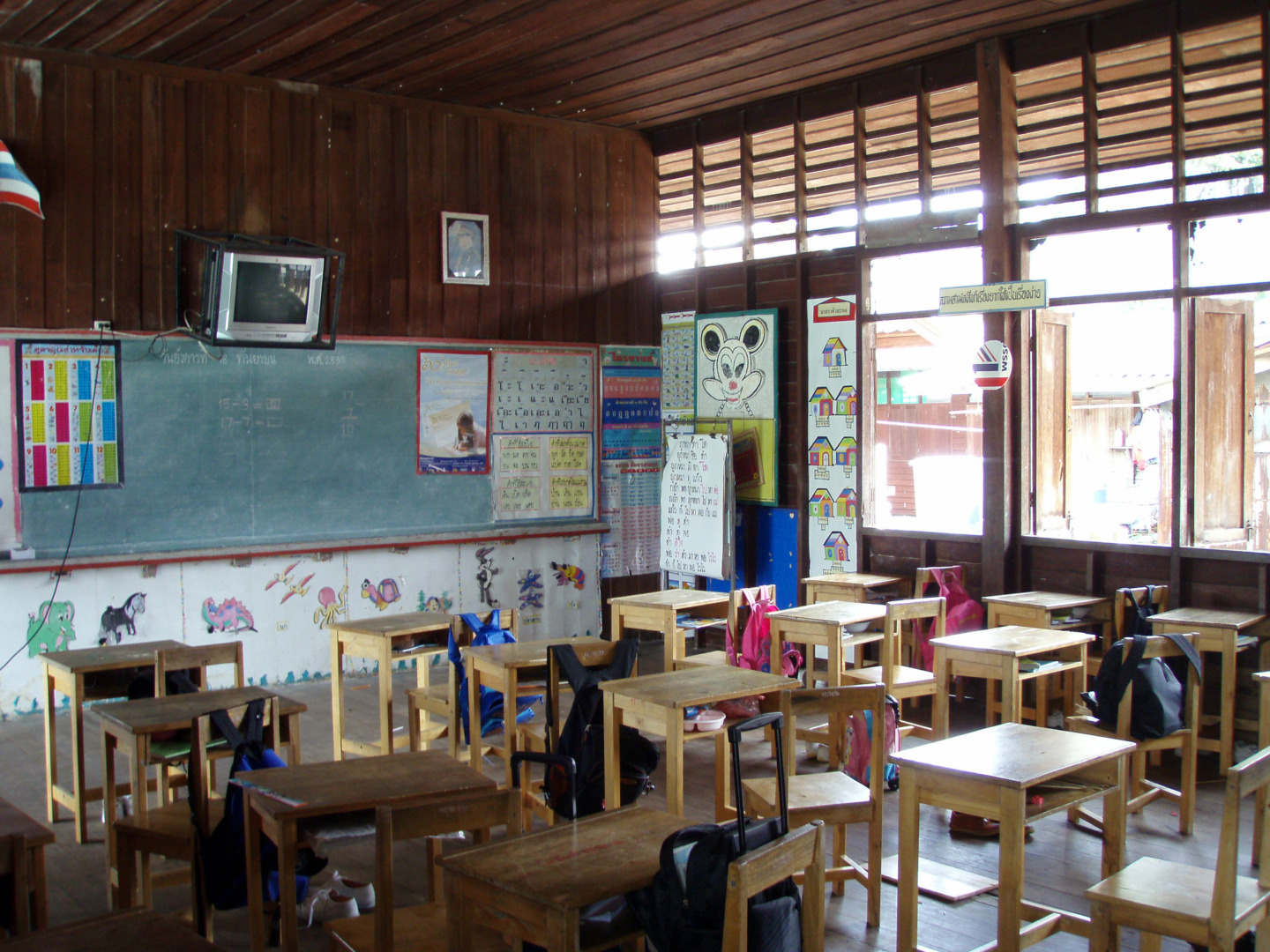
In the Photo: Classroom in Koh Panyee Village School, Phang Nga Province, Thailand, 18 September 2007. Photo Credit: Per Meistrup

The issue, while most prevalent in countries with poor air quality such as in Asia, is worldwide. A 2024 report released by the Health Effects Institute, a U.S.-based non-profit research group, found that 8.1 million deaths globally were due to air pollution in 2021. 700,000 of these deaths were children under five years of age, making air pollution the second worst cause of death for young children.

“Addressing air pollution will lead to enormous improvements in children’s health, education, and well-being, with ripple effects across entire societies and economies,” Kunugi said. 

UNICEF calls for more investment into the clean energy transition, stronger environmental policy, and, in the shorter term, improvement in detection and treatment within the region’s healthcare sector. They have already begun work to improve air quality monitoring and implement programmes that reduce children’s exposure to household air pollution across East Asia and the Pacific.

As Kunugi states, “The solutions exist, and our collective future depends on implementing them.”


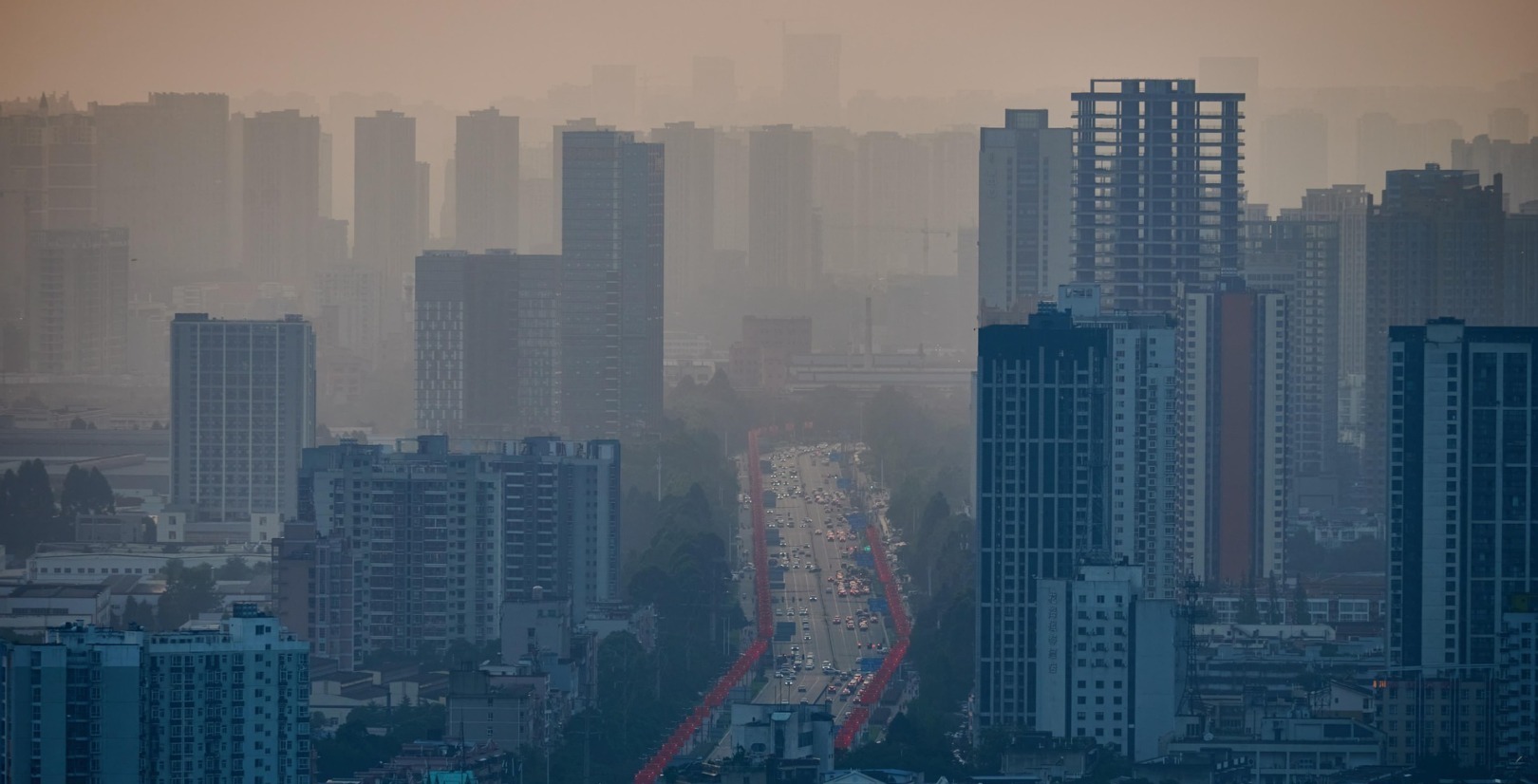
Editor’s Note: The opinions expressed here by the authors are their own, not those of Impakter.com — In the Cover Photo: Smog from air pollution, Jiaxing, China, January 6, 2022. Cover Photo Credit: Ymyphoto.
Tags: Air pollutionair pollution childrenchildrenUNICEF
Previous Post

German Election 2025: Why It’s A Wake-Up Call for Europe

Next Post

Unthinkable: America Sides With Russia on Ukraine Resolution

Related Posts

India’s Contradictions in a Fractured World: Democracy, Identity, Power, and Silence
Climate Change

India’s Contradictions in a Fractured World: Democracy, Identity, Power, and Silence

March 16, 2026
How Climate Change Threatens the Sports Economy
Climate Change

How Climate Change Threatens the Sports Economy

March 16, 2026
Fossil Fuel Pollution’s Effect on Oceans Comes With Huge Costs
Climate Change

Fossil Fuel Pollution’s Effect on Oceans Comes With Huge Costs

March 16, 2026
Next Post
Ukraine resolution

Unthinkable: America Sides With Russia on Ukraine Resolution

Related News

India’s Contradictions in a Fractured World: Democracy, Identity, Power, and Silence

India’s Contradictions in a Fractured World: Democracy, Identity, Power, and Silence

March 16, 2026
How Climate Change Threatens the Sports Economy

How Climate Change Threatens the Sports Economy

March 16, 2026

Impakter informs you through the ESG news site and empowers your business CSRD compliance and ESG compliance with its Klimado SaaS ESG assessment tool marketplace that can be found on: www.klimado.com

Registered Office Address

Klimado GmbH
Niddastrasse 63,

60329, Frankfurt am Main, Germany


IMPAKTER is a Klimado GmbH website

Impakter is a publication that is identified by the following International Standard Serial Number (ISSN) is the following 2515-9569 (Printed) and 2515-9577 (online – Website).


Office Hours - Monday to Friday

9.30am - 5.00pm CEST


Email

stories [at] impakter.com

By Audience

  • TECH
    • Start-up
    • AI & MACHINE LEARNING
    • Green Tech
  • ENVIRONMENT
    • Biodiversity
    • Energy
    • Circular Economy
    • Climate Change
  • INDUSTRY NEWS
    • Entertainment
    • Food and Agriculture
    • Health
    • Politics & Foreign Affairs
    • Philanthropy
    • Science
    • Sport
    • Editorial Series

ESG/Finance Daily

  • ESG News
  • Sustainable Finance
  • Business

About Us

  • Team
  • Partners
  • Write for Impakter
  • Contact Us
  • Privacy Policy

© 2026 IMPAKTER. All rights reserved.

No Result
View All Result
  • Environment
    • Biodiversity
    • Climate Change
    • Circular Economy
    • Energy
  • FINANCE
    • ESG News
    • Sustainable Finance
    • Business
  • TECH
    • Start-up
    • AI & Machine Learning
    • Green Tech
  • Industry News
    • Entertainment
    • Food and Agriculture
    • Health
    • Politics & Foreign Affairs
    • Philanthropy
    • Science
    • Sport
  • Editorial Series
    • SDGs Series
    • Shape Your Future
    • Sustainable Cities
      • Copenhagen
      • San Francisco
      • Seattle
      • Sydney
  • About us
    • Company
    • Team
    • Partners
    • Write for Impakter
    • Contact Us
    • Privacy Policy

© 2026 IMPAKTER. All rights reserved.