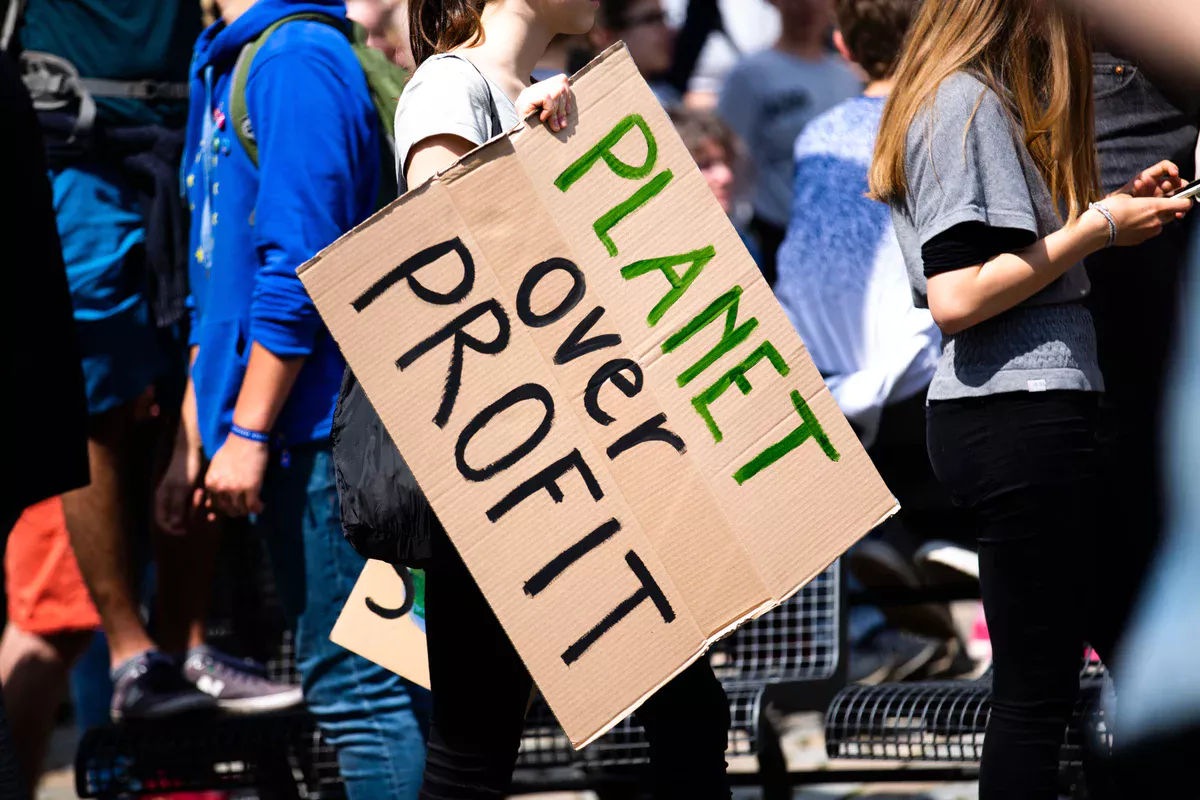
Greenwashing, the practice of companies’ inaccurately marketing themself to be perceived as more sustainable than they really are, occurs in nearly every industry — from automobile to food, furniture, banking, and of course, fashion.
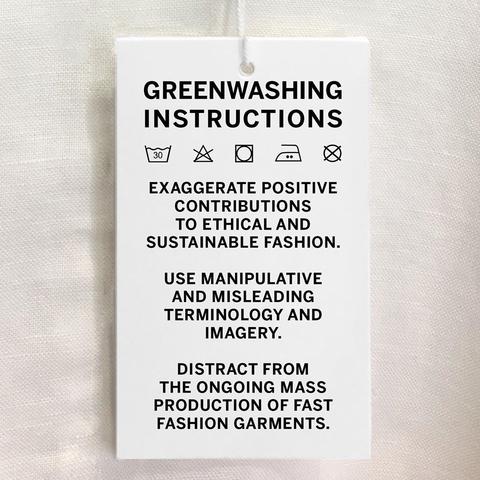
Why Do Fashion Companies Greenwash?
A general rule of thumb for corporate communications is: Honesty is the best policy.
So why do so many companies lie to their customers?
Societal pressures for businesses to adopt more sustainable operations and minimize their impact on the environment have led companies to deceive their consumers with the goal of maintaining profits despite toxic practices.
In every industry in the world, companies have been called out for greenwashing in various ways. Whether they omit crucial information, minimize their true environmental effect, or make false claims, customers are misled into believing their money is not contributing to the climate crisis when in reality, it very much is.
Fashion and Greenwashing
The fashion industry is one of the pioneers of greenwashing as we know it today.
Statistics have proven that consumers are more likely to purchase and tell others to purchase clothing products that are known to be sustainably sourced and produced. Recognizing this evolving market sector, fast fashion brands like H&M, Zara, and Uniqlo began developing “more sustainable” product lines and marketing them as such.
H&M’s Conscious Collection developed in 2019 was supposedly sourced from sustainable materials like organic cotton and recycled polyester. Soon after its launch, however, it was uncovered that the pieces contained more synthetic materials than their normal collections, therefore emitting the same or more poisonous chemicals into the atmosphere during production.
The collection is still available online but now H&M has instated a disclaimer saying that up to 50% of the products are composed of “more sustainable” materials with the exception of recycled cotton that can only make up 20% of the pieces for “quality reasons.”
Speaking of H&M’s sustainability practices, the Impakter Index, the first sustainability index that empowers consumers and investors alike — ranking companies with a five-letter system — has evaluated H&M‘s sustainability levels and given them a C rating (mediocre and a work in progress).
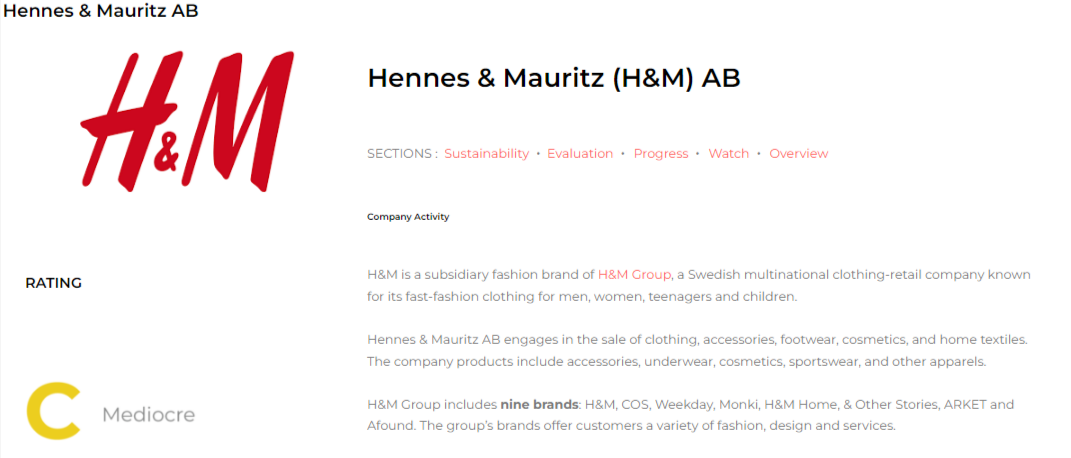
This meta-analysis is built upon previous certification systems, “picking out the best and weeding out the less reliable systems,” as the Index team explains. What’s credible is reported by the Index, creating a master database to help consumers vet and verify the companies who market themselves as “sustainable.” As of July 2022, the Impakter Index has evaluated over 250 companies and the list continues to grow.
What To Look Out For
Before purchasing a clothing item, make sure to read every label and tag carefully as they often contain subtle clues that reveal the truth about the product’s sourcing or production.
If you notice a label that talks about ethical sourcing or sustainable production without providing specific information, and if you are unable to find out more about the statement online, you are likely looking at a baseless claim. Companies make false claims about their practices being sustainable when they have nothing positive to report. These are the companies you want to avoid.
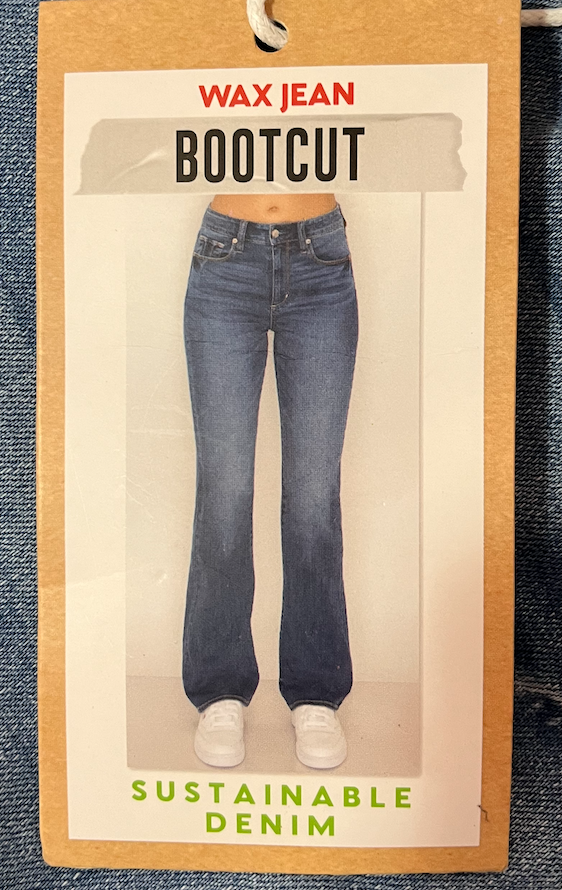
Below are three photos of tags attached to denim bootcut jeans found at Steps New York Clothing Company in New York City. The first two show examples of unbacked claims while the third illustrates what omitting crucial information looks like (see photo captions).
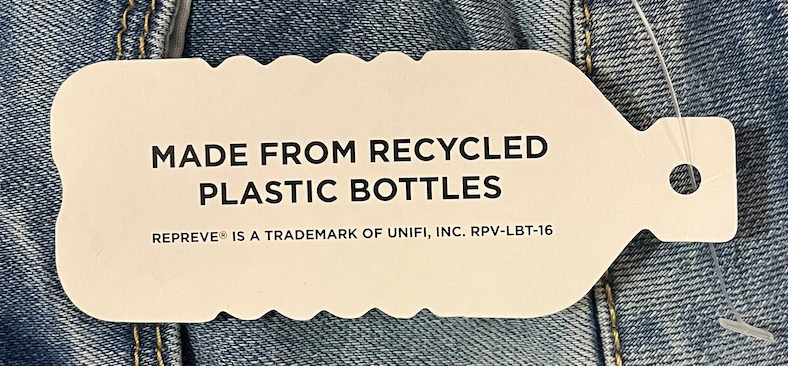
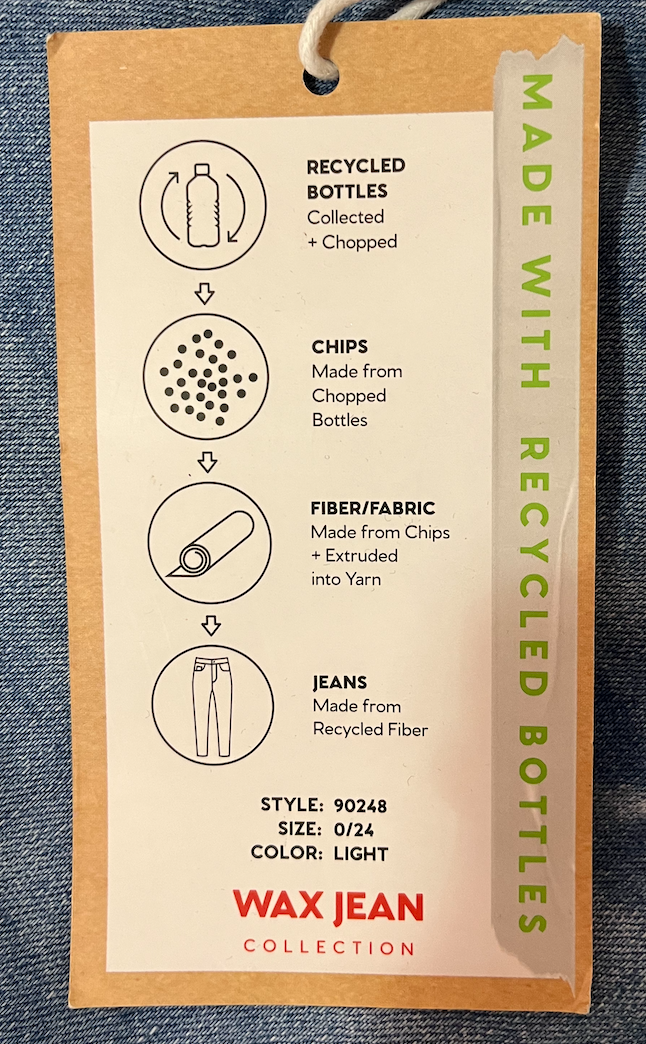
While the REPREVE tags appear credible at first glance, additional online research concludes the company is unable to provide specific information that discloses all aspects of the production process. They have broken down the process into four simple steps; Recycled Bottles, Chips, Fabric, and Jeans, but do not elaborate further.
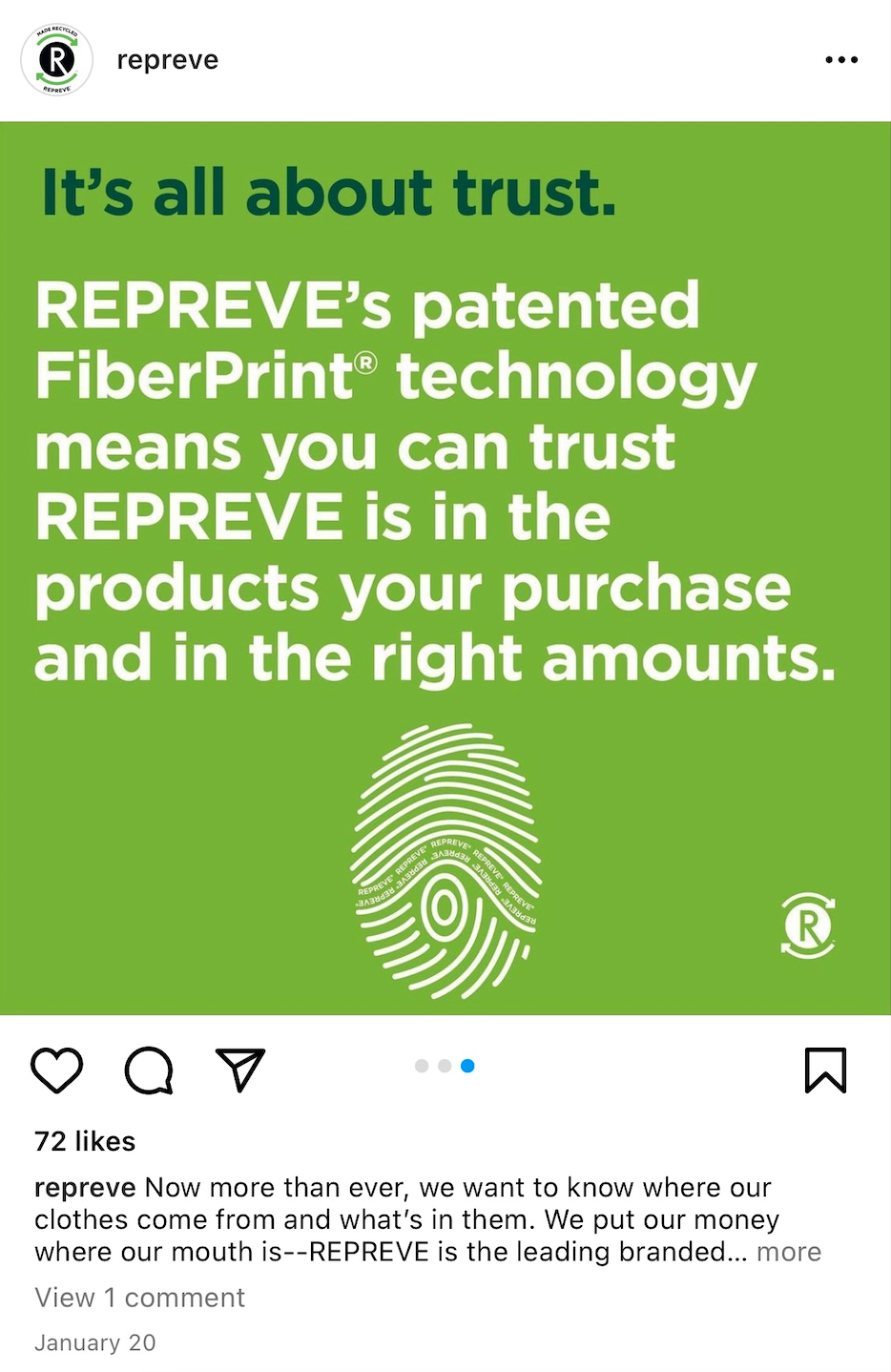
On the company’s Instagram page, the steps are inconsistent as they read: Recycled Bottles, Flake, Resin, and Fiber.
A deeper look into their Instagram account also reveals typos and misleading information. The post below expresses a yearning for consumer trust but displays blatant misspelling. How are consumers supposed to trust a company that struggles to communicate coherently?
Similarly, WAX JEAN does not disclose any information about their “sustainable denim” to the general public. In order to read about these practices, you must log into a wholesaler account on their website. Nondisclosure of this information can be assumed as non-sustainable.
What You Read May Shock You
Some companies are smarter than others and would rather disclose their unethical production practices with the hope that customers won’t notice.
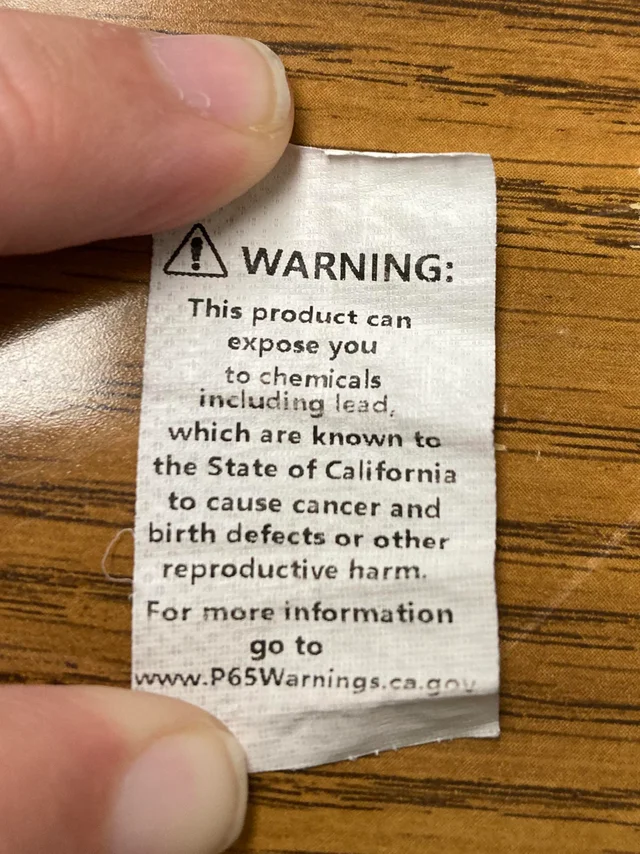
Protect yourself from these kinds of products by conducting your own research. If we avoid purchasing toxic products, we can minimize the demand for the devastating companies that create them.
Shout Sustainability From the Rooftops
A truly sustainable company will have no problem claiming their practices are ethical and sustainable — by providing relevant information and statistics to validate these statements.
When a company attempts to mislead customers, hide the truth, and falsely market itself, it risks damaging its reputation. In doing so, not only does it contribute to the destruction of the planet, but it also ruins any prospect of trust and customer loyalty.
To conclude, don’t let phony companies fool you with meaningless sustainability guarantees and pay as much attention as you can to the hidden signs — they are the first step to recognizing deceit and ultimately, to holding these businesses accountable.
Editor’s Note: The opinions expressed here by Impakter.com columnists are their own, not those of Impakter.com — In the Featured Photo: Planet over Profit protest banner. Featured Photo Credit: Matcha Alternatives.