Today’s ESG Updates
- AI Reads 5 Million News Reports to Map Global Flood Events: The new “Groundsource” dataset allows machine-learning models to predict flash-flood risks even in regions lacking weather-monitoring infrastructure.
- AI Infrastructure Race Accelerates as Polarise Plans Bavarian Facility: German start-up Polarise plans to build a 30 MW AI data centre in Bavaria, with potential expansion to 120 MW as demand for computing power grows.
- Union Says 70% of Lufthansa Flights Hit by Strike: Frankfurt Airport recorded hundreds of cancellations as the strike disrupted Lufthansa’s operations.
- Strait of Hormuz Tensions Raise Fears of Global Energy Shock: Iran warned that a prolonged conflict with the United States and Israel could devastate the global economy and disrupt vital oil supplies.
AI-powered “Groundsource” dataset aims to improve flash flood warnings
Google is experimenting with an unusual way to predict flash floods: teaching AI to read the news. Flash floods kill more than 5,000 people every year, but they’re notoriously difficult to forecast because they happen suddenly and often in places without detailed weather monitoring. To tackle that gap, Google researchers used the company’s Gemini language model to scan about five million news articles and identify reports of roughly 2.6 million flood events worldwide. Those reports were converted into a geo-tagged dataset called “Groundsource,” which the team then used to train a forecasting model that combines historical flood reports with global weather data. Google says the dataset helps improve predictions in regions where traditional meteorological data is limited. As Juliet Rothenberg from Google’s Resilience team explained, “Because we’re aggregating millions of reports, the Groundsource dataset actually helps rebalance the map.”
The model now highlights potential flash-flood risks in urban areas across 150 countries through Google’s Flood Hub platform, helping emergency agencies respond faster. Researchers believe the same approach could also help track other difficult-to-measure climate events such as heat waves and mudslides.
***
Further reading: Google is using old news reports and AI to predict flash floods
Klimado – Navigating climate complexity just got easier. Klimado offers a user-friendly platform for tracking local and global environmental shifts, making it an essential tool for climate-aware individuals and organizations.
Polarise unveils renewable-powered AI data centre project in Germany
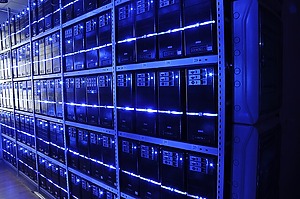
German start-up Polarise has unveiled plans to build a 30-megawatt AI data centre in the Bavarian town of Amberg, with operations expected to begin in mid-2027. The project comes as European governments place increasing emphasis on technological sovereignty and domestic digital infrastructure. Although Germany had around 530 MW of AI data centre capacity at the end of last year, much of it is operated by international firms rather than local providers.
Polarise did not disclose the full investment cost but indicated the initial development phase would require hundreds of millions of euros. According to marketing director Marc Gazivoda, “the final investment volume depends heavily on how many customers install their own servers or rent computing power.” Energy supply is a major factor in the project’s design. The company plans to power the facility using wind and solar energy through a partnership with WV Energie, supported by battery storage to stabilize supply.
Google and Amazon Web Services operate far larger facilities, but even at 30 MW, Polarise’s data centre could become one of the largest domestically operated AI computing hubs in Germany.
***
Further reading: German Start-Up Polarise Targets 30 MW AI Data Centre Expansion by ESG News
Related Articles
Here is a list of articles selected by our Editorial Board that have gained significant interest from the public:
Lufthansa operates over half of flights despite pilot strike
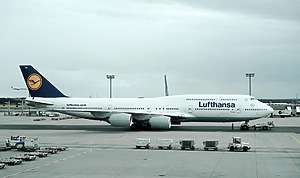
Germany’s largest airline, Lufthansa, said more than half of its flights operated as planned on Thursday despite the first day of a two-day pilot strike over pensions. The industrial action, called by the VC pilots’ union, affects both passenger and cargo flights departing from German airports. A Lufthansa spokesperson said “the reduced flight schedule is taking place as announced,” noting that the airline expected to operate around 60% of long-haul flights and roughly 80% of cargo services during the strike.
The union, however, said disruption was more severe, estimating that about 70% of Lufthansa flights had been grounded by mid-afternoon. At Frankfurt Airport, Lufthansa’s largest hub operated by Fraport, authorities reported 426 cancellations out of 1,168 scheduled take-offs and landings, a cancellation rate of roughly 36%. The strike comes as airlines are already dealing with wider disruptions linked to the ongoing Iran conflict.
***
Further reading: Lufthansa says majority of flights took place on first day of pilot strike

Iran-US-Israel conflict sparks concerns over global trade routes
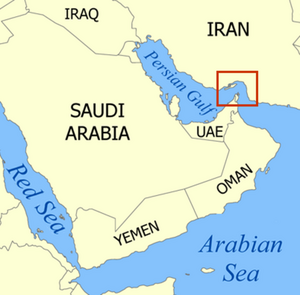
Iran has warned that a prolonged war with the United States and Israel could have devastating economic consequences, potentially disrupting global energy markets and trade. The warning comes as tensions intensify around the Strait of Hormuz, a critical shipping route that carries roughly one-fifth of the world’s oil supply. Ali Fadavi, an adviser to Iran’s Islamic Revolutionary Guard Corps, said the US and Israel “must consider the possibility that they will be engaged in a long-term war of attrition that will destroy the entire American economy and the world economy.”
The conflict has already pushed oil prices higher since air strikes on Iran on February 28. In response to market instability, the International Energy Agency agreed to release a record 400 million barrels of oil from emergency reserves. IEA Executive Director Fatih Birol said the move aims “to alleviate the immediate impacts of the disruption in markets.” Meanwhile, attacks on commercial vessels and drones near Dubai have further raised concerns about regional stability.
***
Further reading: Iran Warns War Could Collapse Global Economy
Editor’s Note: The opinions expressed here by the authors are their own, not those of impakter.com — In the Cover Photo: A sign submerged in water from severe flooding. Cover Photo Credit: Kelly Sikkema