Thanks to the years-long hard work of civil society, grassroots communities and scientists, history was made when the United Nations Environment Assembly approved the historic proposal to draft a plastics treaty in March last year.
The Global Plastics Treaty is a momentous opportunity for world leaders to ratify one of the most significant environmental laws in our lifetimes. It would have a tremendous impact on not only the most obvious Sustainable Development Goals (SDGs) — 12 Responsible Production & Consumption and 13 Climate Action — but on most of the other SDGs.
SDG 13 — Health & Wellbeing, SDG 14 — Life Below Water, and SDG 15 — Life on Land
Plastic is in our oceans, our homes, our air, our bodies, and according to a 2022 study from Vrije Universiteit Amsterdam, even in our blood.
Throughout its entire lifecycle — from extraction to disposal — plastic poses a grave threat to human health, life underwater and on land, and the environment.
- Extraction: 99% of plastic is made from fossil fuels, taking infinite materials from the planet’s finite resources, often disturbing the natural habitat of wildlife nearby.
- Production: Chemicals used in manufacturing plastic expose workers to toxic hazards. Plastic production is also very energy-intensive. In the US alone, according to the US Energy Department, plastic production accounts for over 3% of energy consumption and “uses roughly the same amount of oil around the world as the aviation industry.”
- Plastic Products and Plastic Packaging: The plastic-based products and packaging themselves contain toxic chemicals that could leach into our food and our bodies. For us women, menstrual item options are limited to mostly plastic-based products found to have PFAS — a chemical that could threaten our reproductive health among other risks.
- Plastic Disposal: It would take centuries for plastic to disintegrate. Even then, after several hundreds of years, the microplastics could still be ingested. Meanwhile, plastic waste accumulates to pollute our environment, causing devastating damage. At least 14 million tons of plastic end up in the ocean every year, and plastic makes up 80% of all marine debris found from surface waters to deep-sea sediments.
SDG 12 — Responsible Production & Consumption, and 13 — Climate Action
This treaty would only be truly effective if there is significant and comprehensive attention given to plastic reduction and a ban on single-use plastics (SUPs).
“Emphasis on prevention, in line with the waste hierarchy, is the only possible path to ensure that human health and the environment are preserved from the harm of unregulated plastic production,” GAIA’s Global Director of Plastic Policy Ana Rocha said.
This was part of the Break Free From Plastic Movement’s reactive statement to the zero draft released by the UNEP secretariat in September.
To borrow a UNEP report title on beating plastic pollution, we need to “Turn Off the Tap” on plastics. While the world needs to find a solution to the existing plastic waste flood, it would make the most sense to turn off the tap at its source first.
By imposing a complete ban on unnecessary SUPs across the nations on a non-voluntary basis, the treaty could do just that. This could be a pivotal action to attain SDG 12 by requiring big corporations to produce plastic packaging-free products and to limit plastic manufacturing. This would then encourage responsible purchasing from the consumers, giving them more sustainable options.
Furthermore, a comprehensive legally binding plastics treaty could empower governments to hold producers accountable for their contribution to plastic pollution. If plastic production continues as planned, by 2050, the accumulation of greenhouse gas emissions from plastic could use 10-13% of our entire remaining carbon budget.
If done right, the treaty is an opportunity to be a crucial climate action to turn this ship around.
SDG 10 — Reduced Inequalities
The plastics treaty could achieve SDG 10 by restoring justice to communities at the frontlines of the climate crisis. The UN must allow for true representation at the negotiating table for waste workers, community workers, the informal sector, and civil society to ensure that their experiences are considered.
A just plastics treaty would ensure that their rights, health, expertise, and livelihood will not be forsaken in favor of corporate profit.
At the same time, the informal sector should not be used as an excuse by plastic producers to continue manufacturing new plastic waste. GAIA Member John Chweya of the Waste Pickers Association Kenya was recently quoted by Time: “Kenya, like far too many places around the world, has enough plastic in landfills to keep the country’s waste pickers busy for another 100 years.”
Plastic factories and plastic waste incinerators are often found in the Global South and in low-income neighborhoods, adjacent to communities of people of color. It would be a major step forward in addressing historic inequities if the plastics treaty could discourage these landfills in the sky.
Related Articles: What You Need to Know About the UN’s Draft Global Plastics Treaty | Lifetime Cost of Plastic 10 Times Higher for Low-Income Countries Than Rich Ones | Draft Global Plastics Treaty Shows Promise | ‘Dead White Mans’ Clothing’ Polluting the Global South
Another way the treaty could help reach SDG 10 is by upholding and strengthening the Basel Convention Amendments prohibiting plastic waste trade.
At GAIA, we believe that the practice of exporting waste from higher-income countries to lower-income countries that are ill-equipped to handle this waste is a form of waste colonialism. It places the burden and damaging impacts of plastic and toxic waste on the environment, communities, and informal waste sector predominantly in the Global South.
By having exporting countries and companies take responsibility for their own plastic waste, the plastics treaty could help alleviate this waste colonialism.
SDG 11 — Sustainable Cities & Communities
Ultimately, the plastics treaty could be critical in realizing SDG 11: Sustainable Cities and Communities. By rejecting false solutions like chemical “recycling” and plastic credits, which would undermine plastic reduction efforts, the plastics treaty has the chance to institutionalize solutions that are inclusive, affordable, and effective.
One of these proven, and cost-effective solutions is the zero-waste model. Zero waste systems like reuse have spurred a reduction of plastic pollution while bringing about more and better jobs, cost-savings, greater climate resilience, and healthier communities. The treaty should boost the scaling of these systems.
More Life, Less Plastic
The Global Plastics Treaty has the unique potential to attain landmark advancements in fulfilling the UN Sustainable Development Goals. To do this, international policymakers, local leaders, and the UNEP secretariat should:
- prioritize plastic reduction,
- ensure just transition for the waste workers and communities,
- reject false solutions like incinerators, and
- scale zero waste solutions.
It is imperative that we join the civil society and grassroots communities in calling on our governments and UN delegates to not miss this chance for a lasting legacy on climate action.
To learn more about what makes a comprehensive, legally binding plastics treaty, and join our petition for the secretariat to listen to GAIA and our network’s demands, check www.no-burn.org/unea-plastics-treaty.
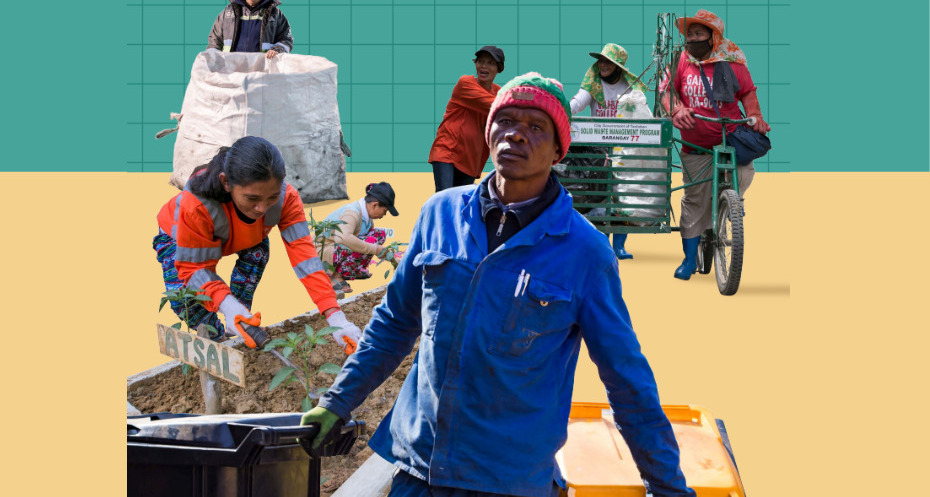
Editor’s Note: The opinions expressed here by the authors are their own, not those of Impakter.com — In the Featured Photo: Digital photo collage of waste pickers and informal recyclers from Africa, the Asia Pacific, and Latin America as compiled for the GAIA report “An Inclusive Recovery: The Social, Environmental, & Economic Benefits of Partnering with Informal Recyclers,” 2021. Featured Photo Credit: © GAIA.