At the third UN Trade Forum, which took place in Geneva on May 8 and 9, the United Nations Conference on Trade and Development (UNCTAD) presented its latest Trade and Environment Review, published on Monday.
This year, the focus was on the ocean and analysing the ways in which human activities and global crises affect the ocean economy. Sectors assessed include fishing, tourism and shipping as well as emerging sectors like offshore wind and biotechnology.
The report highlights the urgent need for a “Global Blue Deal” to ensure sustainable use of the ocean – or “Blue Economy” – around the world.
According to the report, the COVID-19 pandemic was instrumental in revealing the most and least resilient ocean-based activities, highlighting where economic activity depending on the ocean can be diversified.
Coastal and marine tourism, highlighted as the worst affected by the pandemic of the service sectors, saw a drop in growth of 69.7% – devastating for some of the 40% of people who live near the ocean and whose communities depend on visitors.
Diversifying the more vulnerable ocean export sectors in both goods and services will make communities more economically secure, UNCTAD says, but whilst the oceans facilitate the livelihoods of three billion people across the world, some economic practices carried out at sea or on the coast are detrimental to the overall wellbeing of our oceans.
The report details that emerging greener ocean sectors like seaweed farming, used for food, cosmetics and biofuels, are presenting many opportunities for developing countries. The plastic trade, according to UNCTAD, is also full of potential with new materials like algae, bamboo and banana plates being used to make eco-friendly alternatives to traditional plastic.
A reformation on fishing subsidies from governments is also covered in the report. According to UNCTAD, an estimated $35 billion is paid towards fishing activities. Some of this supports sustainable and artisanal fisheries, the report notes, but it’s thought that $20 billion a year could contribute to overfishing through paying for bigger ships, paying operational costs and financial support.
To support fishing subsidy reformation, UNCTAD would like to see more countries adopt the High Seas Treaty and for the World Trade Organisation (WTO) to ratify the Fisheries Subsidies Agreement.
The health of our ocean, home to 80% of life on Earth, has reached a tipping point.
At stake are the livelihoods of 3 billion people, living mostly in developing countries.@UNCTAD's Trade and Environment Review 2023 calls for a global Blue Deal. ➡️ https://t.co/Q3jw91WJIB pic.twitter.com/TXnwtsFAdP
— UN Trade and Development (@UNCTAD) May 8, 2023
Impacts of economic activity on our oceans
Tourism, for example, contributes to coastal degradation. Often when new tourist infrastructure is built, there is intensive use of the land. This means that areas are drastically changed to accommodate the new infrastructure, sometimes leading to the destruction of coastal habitats such as mangroves.
Marine life is also impacted by tourism. In East Africa, tourism in the Indian Ocean is threatening marine mammals to the very edge of extinction and, in some communities, the collection of species like sea cucumbers has completely eradicated them.
Sharks and stingrays – which produce offspring slowly and less frequently – are being fished beyond their natural recovery levels in tourist-focused areas, meaning that they are now rarely observed close to the shore. Larger species, once common, are now so rare in some areas that they are also under threat of extinction.
Fishing was another sector that the report noted saw high losses during the COVID-19 pandemic, with a loss in growth of 9.3% – the largest loss of all ocean economy goods.
Related articles: Our Ocean, Our Future: global action to achieve SDG 14, ‘Ocean Emergency’ Declared at UN Ocean Conference, The Blue Economy: Water, Salty or Sweet, Our Lives Depend on It, Floating ‘Plastic Smog’ Is Suffocating the Ocean, New Study Finds
Certain fishing techniques, like bottom trawling, can damage the sensitive sea floor that is home to slow-growing coral species. Bottom trawling is also dangerous to larger ocean species like turtles and marine mammals that can get entangled in the net or tow lines, injuring themselves and even drowning.
Encouraged by government subsidies, overfishing also degrades ecosystems. Causing an imbalance in the oceanic food systems, taking too many fish faster than their natural replenishment levels too quickly also threatens important marine life such as sea turtles and corals.
Bycatch is another issue caused by the fishing industry. Fishing gear like nets are often not visible to marine life and they are very strong so anything caught accidentally like turtles, dolphins, sharks and juvenile fish get entangled along with the target fish and are discarded overboard dead or dying from injuries or exhaustion.
Why is the WTO Agreement on #FisheriesSubsidies important for our oceans? What needs to be done for its entry into force? Watch this video to learn more! #WTOFishCount https://t.co/BkmSNJBeFY pic.twitter.com/iLluCAowxJ
— WTO (@wto) February 12, 2023
What does a “Global Blue Deal” look like?
According to UNCTAD, an investment of $2.8 trillion into the conservation and restoration of mangroves, decarbonization of international shipping, sustainable ocean-based food production and offshore wind energy would create profits of over $15.5 trillion by 2050.
With lots of fiscal potential in the Blue Economy, and sustainable ocean activity, what exactly would countries under the “Global Blue Deal” be agreeing to?
According to UNCTAD, funding is also a crucial part of any Blue Deal, as they call for countries to “bridge the ocean funding gap.” UNCTAD would like to see investment in booming sustainable sectors like seaweed farming and plastic substitutes. This would increase the economic security of coastal and island communities.
There would also need to be financial cooperation between public and private sectors.
Multilateral agreements and commitments, much like the historic High Seas Treaty passed earlier this year, are also required under a Blue Deal, says UNCTAD. This will include the collection, management and sharing of data in order to contribute to UNCTAD’s database and classification of ocean sectors.
Efforts to achieve a sustainable ocean economy would be included in crisis recovery plans as well as in climate mitigation and adaptation strategies.
UNCTAD states that Sustainable Development Goal 14 (SDG14), dedicated to “life below water,” is the least funded of all the SDGs, and that a “Global Blue Deal” is desperately needed if we are to safeguard the future of oceans, for both humans and marine life.
“Without a global accord,” reads the report, “SDG 14 and its promise of a resilient and beneficial ocean economy will be much harder to achieve.”
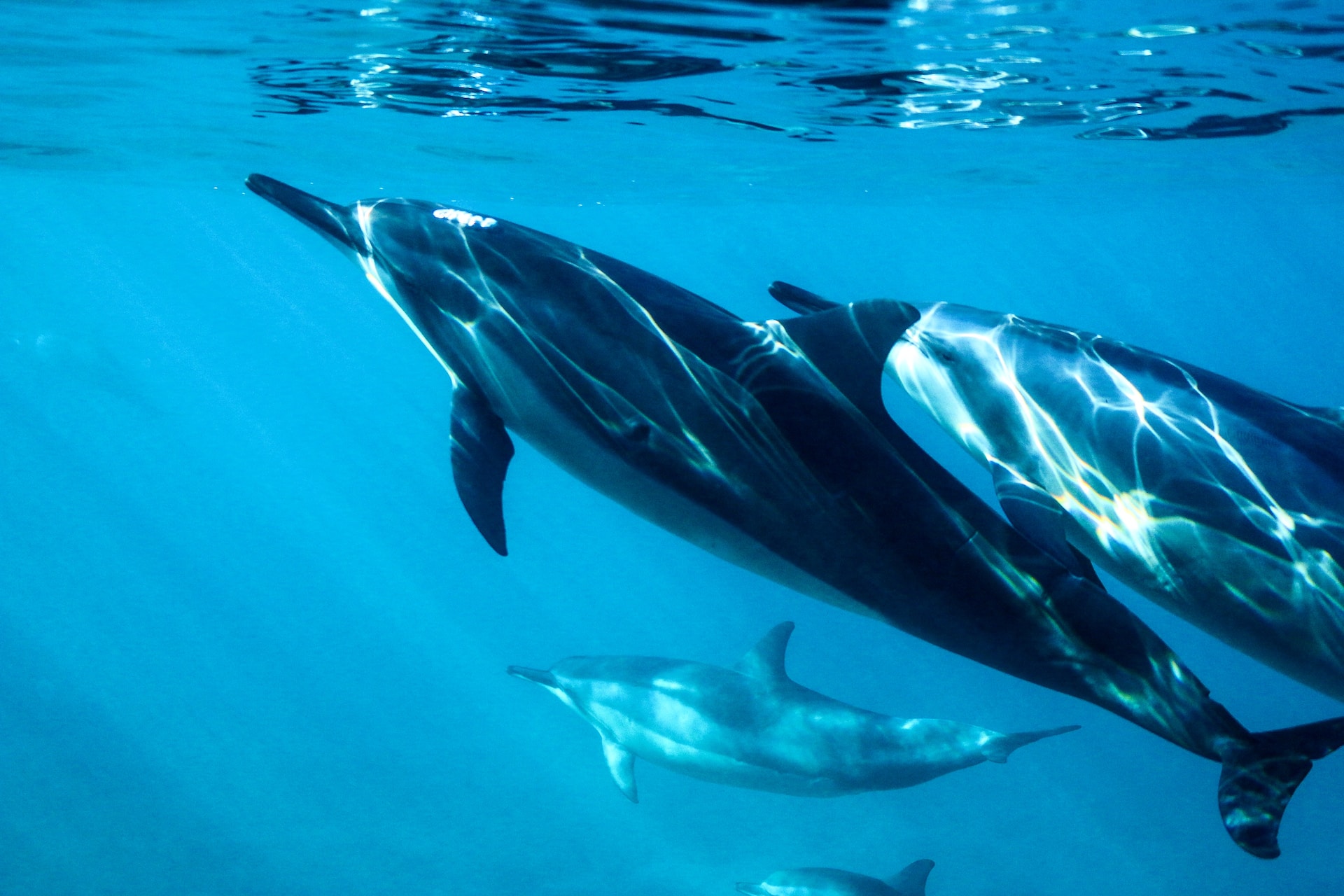
Editor’s Note: The opinions expressed here by the authors are their own, not those of Impakter.com — In the Featured Photo: A pod of dolphins. Featured Photo Credit: Unsplash.