Today’s ESG Updates
- GHG Protocol Launches First Land Sector Accounting Standard: The GHG Protocol unveiled its new Land Sector and Removals Standard, providing the first global framework for companies to measure agricultural emissions and carbon removals.
- Western U.S. Faces Record Snow Drought: Despite heavy snowfall in the eastern U.S., unusually warm temperatures have left western states with historically low snowpack.
- India Invests $2.2B in Carbon Capture Technologies: India committed $2.2 billion over five years to deploy carbon capture and storage across five high-emitting industries.
- EU Backs €160M Wetland Restoration Project in Spain: The EU’s LIFE programme allocated €160 million to restore more than 26,000 hectares of Spanish wetlands.
GHG Protocol launches Land Sector and Removals Standard
The Greenhouse Gas (GHG) Protocol released the Land Sector and Removals (LSR) Standard on Friday. The first of its kind, this global standard will measure the environmental impacts of agriculture. It will allow companies to report carbon emissions and Scope 1 and Scope 3 carbon removal activities. Dominic Waughray, Executive Vice President at the World Business Council for Sustainable Development (WBCSD), said, “One of the bigger ‘blind spots‘ in corporate carbon accounting has been the land sector. This standard removes much of that uncertainty by providing a globally recognized benchmark for measuring agricultural impacts with the same rigor as energy use.”
Agriculture and land use comprise about a fourth of total global emissions. Prior to this Standard, there has not been a credible standard for measuring greenhouse gas emissions and natural and technological carbon removal within the sector. The LSR Standard will go into effect on January 1, 2027. After an intensive five-year process, the Standard was developed with input from 300 external reviewers, 4,000 public comments, and pilot tests involving 96 firms.
***
Further reading: RELEASE: GHG Protocol Launches Its First-Ever Global Standard for Corporate Accounting of Land-Sector Emissions and Removals
Western U.S. experiences snow drought

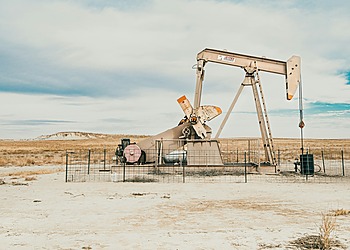
While the eastern U.S. has experienced record snowfall, the west is seeing a record low of snow-covered ground. With temperatures ranging from 10-15 degrees Celsius (50-60 Fahrenheit), skiing hotspots like Vail, Colorado, and Park City, Utah, lack snow. Last year, Mt. Bachelor in Bend, Oregon, had approximately 277 centimeters (109 inches) of snow. This year, with only 68.58 centimeters (27 inches) of snow, the mountain has closed two of its 12 ski lifts. Scientists are finding it hard to explain this snow drought and are unable to attribute it to climate change alone. Nevertheless, the weather pattern of more rain and less snow is expected to continue.
Similarly, the 2026 Winter Olympics in northern Italy are being affected by reduced snowfall.
***
Further reading: Snow Drought in the West Reaches Record Levels
Klimado – Navigating climate complexity just got easier. Klimado offers a user-friendly platform for tracking local and global environmental shifts, making it an essential tool for climate-aware individuals and organizations.
India commits $2.2 billion to carbon capture and storage technologies
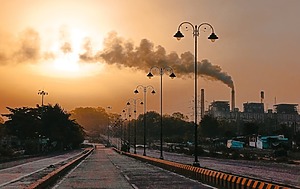
India’s government has allocated 200 billion rupees ($2.2 billion) to a carbon capture and storage program. The goal of the program is to reduce emissions from five heavily polluting industrial sectors: cement, steel, power, chemicals, and refineries. India’s steel sector is the world’s most carbon-intensive, and producers in the sector have been offered federal incentives. The government hopes to further curb these emissions by installing carbon capture infrastructure and technologies. During an annual federal budget speech, Nirmala Sitharaman, the country’s finance minister, said that the plan should go into effect for the next five years. Nishant Nishchal, a Partner at Kearney’s Energy & Process Industries, said, “Carbon removal technologies are needed for India to pursue its net zero goals.”
***
Further reading: India Plans a $2.2 Billion Bet on Carbon Capture and Storage

LIFE Programme allocates €160 million to wetland conservation project in Spain

As wetlands across Europe are disappearing, protecting and restoring these vulnerable ecosystems is urgent. The LIFE programme, the EU’s environment funding instrument, has secured a €160 million budget for its largest project ever, HumedalES. With €30 million from the EU, the project aims to restore over 26,000 hectares of wetlands in Spain. Forty-three unique habitats, from marshes on the coast to lakes high in the mountains, will see improved conservation statuses.
Conservation of wetlands is crucial for storing carbon, preventing floods and droughts, and combating climate change more broadly. The LIFE HumedalES project is backed by more than 40 stakeholders, underscoring the EU’s commitment to restoring nature and building environmental resilience.
***
Further reading: Restoring wetlands with LIFE Programme’s biggest project so far
Editor’s Note: The opinions expressed here by the authors are their own, not those of impakter.com — Cover Photo Credit: Marios Gkortsilas