Today’s ESG Updates
- ISO and GHG Protocol Begin Standards Harmonization: Both organisations begin technical work to align global GHG accounting frameworks.
- OECD Flags Mounting Economic Fragilities: The new outlook shows slowing growth, weaker labour markets and persistent trade tensions.
- SBTi Releases Chemicals Sector Pathways: New trajectories guide decarbonisation of primary chemicals and key emissions sources.
- EU to Permanently End Russian Gas Imports: The EU agrees on a permanent halt to Russian gas by 2027, alongside steps to phase out remaining Russian oil.
ISO and GHG Protocol take major step toward unified global carbon standards
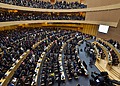
The ISO Environmental Management International Plenary 2025 marked a turning point in global carbon accounting. At the meeting in Toronto, ISO and GHG Protocol used the gathering to formally launch the technical process behind their new harmonisation partnership, first announced in September. That earlier announcement signalled a strategic intent. The Plenary moved it into action by opening a call for experts and confirming plans to convene a Joint Working Group that will co-develop a new product-level emissions accounting standard.
The meeting also initiated parallel work to align the ISO 1406X family with the GHG Protocol corporate and project-level frameworks, laying the groundwork for a more coherent global system. Momentum carried into COP30, where both organisations were recognised as key partners for unified standards. Together, these steps signal a clear move toward more consistent carbon reporting that strengthens credibility and reduces administrative friction for companies.
***
Further reading: GHG Protocol and ISO Advance Global Harmonization at ISO Environmental Management International Plenary 2025
OECD flags growing global fragilities as economies slow and risks intensify

The new Organisation for Economic Co-operation and Development (OECD) Economic Outlook shows a global economy that continues to grow yet faces rising pressures. Growth forecasts signal a slowdown from 3.2% in 2025 to 2.9% in 2026. Early signs of strain are emerging as labour markets soften, and business confidence weakens. The OECD also points to a more challenging trade environment, with new border obstacles and uncertainty over future tariff changes making it harder for companies to plan investments and manage supply chains.
Financial conditions are becoming more fragile. Higher yields on long-term government and corporate bonds are pushing up borrowing costs, tightening the space for investors. Market instability is also increasing, as sharp swings in crypto assets and stress in non-bank financial players heighten the risk of sudden corrections. Inflation is expected to fall back toward target by 2027, easing some cost pressures, but the OECD stresses that lasting productivity and resilience will depend on more precise regulation, stronger oversight and a more predictable global trading system.
***
Further reading: OECD Economic Outlook, Volume 2025 Issue 2
Klimado – Navigating climate complexity just got easier. Klimado offers a user-friendly platform for tracking local and global environmental shifts, making it an essential tool for climate-aware individuals and organizations.
SBTi unveils new pathways set to reshape decarbonization in the chemical sector
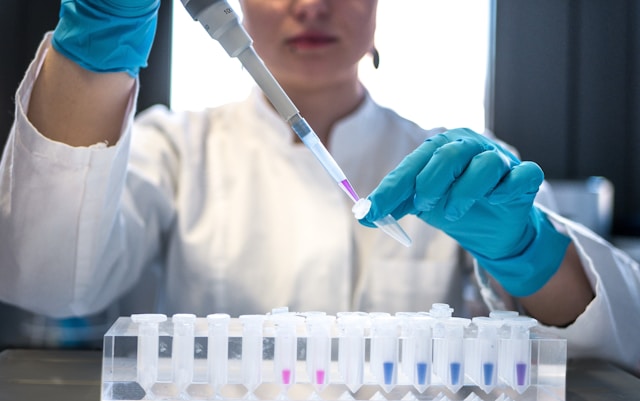
The Science Based Targets initiative (SBTi) has released new Chemical Sector Pathways, offering manufacturers more explicit guidance to reach net-zero. The framework outlines science-based trajectories for primary emission sources, including ammonia, methanol and other high-value chemicals. It also addresses emissions from fertiliser use and the shift to low-carbon feedstocks (materials used to make chemical products).
For manufacturers linked to chemical supply chains, the update signals a faster and more structured transition. Since chemicals are present in 95% of global products, progress in this sector shapes progress across the broader economy. SBTi states that the pathways, designed to work alongside SBTi’s Corporate Net-Zero Standard, support long-term resilience and credible target setting for companies preparing for a carbon-constrained future.
***
Further reading: SBTi publishes new pathways to accelerate chemicals sector’s net-zero transition

EU makes historic move to permanently end Russian gas imports

The EU has reached a historic political agreement to permanently end imports of Russian gas and begin the final phaseout of Russian oil. The decision delivers the core goal of the REPowerEU plan, which sought to cut dependence on Russian fossil fuels after the invasion of Ukraine. Under the plan, liquefied natural gas will stop entering the EU by the end of 2026 and pipeline gas by late 2027, with limited extensions only if storage levels fall below mandatory thresholds. Parallel safeguards will tighten monitoring to prevent circumvention and ensure transparency across EU gas markets.
Member States will now prepare diversification plans outlining how they will secure stable alternative supplies. The EU Commission also remains committed to ending all remaining Russian oil imports by 2027, with a legislative proposal expected early next year. As President Ursula von der Leyen noted, Europe is “entering the era of full energy independence from Russia.”
***
Further reading: EU agrees to permanently stop Russian gas imports and phase out Russian oil
Editor’s Note: The opinions expressed here by the authors are their own, not those of impakter.com — Cover Photo Credit: Tanja Tepavac