Today’s ESG Updates
- Largest Economies on Rising Oil Prices: Different countries from G7 are starting to show their stance in fighting a potential oil crisis connected with the closure of the Strait of Hormuz.
- The EU is Under Pressure to Control Carbon: High energy costs, industrial competition, climate policies are intensifying the situation while Carbon prices have already been volatile amid talk of intervention.
- US Businesses Battle for Control of Rare Earths: High energy costs, industrial competition, climate policies are intensifying the situation while Carbon prices have already been volatile amid talk of intervention.
- Europe Pressured to Join US Chips Club: The States are urging Europe to control AI deployment capacity, effectively tightening restrictions on China’s access to cutting-edge compute.
G7 countries use various strategies to combat rising oil prices
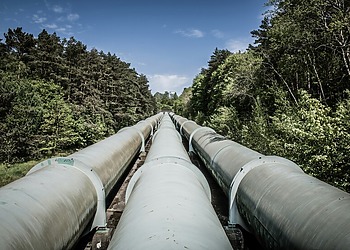
While energy prices soar worldwide, the world’s largest economies, including the G7, are developing various solutions to address the closure of the Strait of Hormuz. EU energy ministers are meeting today to discuss the issue. The International Energy Agency agreed to release over 400 million barrels of oil from stockpiles, but with the war proceeding, it is unclear if that would be enough.
In Germany, oil prices are not subsidised, but petrol stations are allowed to change prices only once a day in the afternoon. France, on the other hand, has announced €70M in subsidies. Households in Britain are protected from tariffs until July. Italy has set aside more than €400M to cut excise duties on petrol. Japan is using intense measures to keep oil prices down, spending more than €4B on subsidies. The measures can cost more than €1.5B in the long run.
***
Further reading: What G7 countries are doing to cap energy prices
Klimado – Navigating climate complexity just got easier. Klimado offers a user-friendly platform for tracking local and global environmental shifts, making it an essential tool for climate-aware individuals and organizations.
The EU is trying to combine control of energy and emissions

The EU is weighing a short-term amendment to its Emissions Trading System (ETS) to deal with political pressure from high energy costs. The important caveat is no changes to the Market Stability Reserve (MSR)—the mechanism that actually controls carbon supply. This decision matters more than the amendment itself. The MSR governs the distribution of allowances based on the market, which sets the long-term price trajectory. By leaving its parameters untouched, the EU omits the structural scarcity of carbon permits. The proposed adjustment will neither materially impact carbon prices, nor market behavior.
Any activity with the MSR would risk destabilizing long-term investment signals in energy and industry. So this is controlled intervention: visible enough to acknowledge pressure, but limited enough to avoid consequences. The underlying tension—rising carbon costs versus industrial competitiveness—remains unresolved, and any future move targeting the MSR would mark the true inflection point for the market.
***
Further reading: EU Carbon Is Pricing In a Less Aggressive Push to Ease Costs
Related Articles
Here is a list of articles selected by our Editorial Board that have gained significant interest from the public:
US funds unproven companies to work on mining rare earth minerals
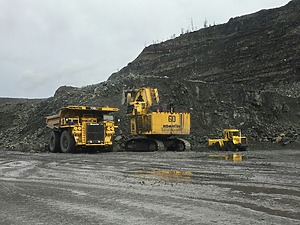
The Trump administration is committing $1.6bn to USA Rare Earth as part of a broader push to build a domestic supply chain for critical minerals. Still, the move exposes a gap between strategic ambition and operational reality. The company has yet to produce rare earths commercially and has not completed a definitive feasibility study for its main asset, the Round Top deposit in Texas. That deposit is widely viewed as low-grade and complex, implying higher extraction costs and uncertain economics. While the company aims to build a vertically integrated “mine-to-magnet” business by 2028, the timeline and technical hurdles suggest limited near-term impact on US supply security.
The broader strategy resembles a venture-style portfolio approach, where the government funds multiple early-stage players in the hope that a few succeed. The problem is structural: rare earth projects outside China struggle not because of a lack of deposits, but because they cannot compete on cost against Chinese producers. Previous success, such as MP Materials, depended on government-backed price floors—support USA Rare Earth claims it won’t need. That assumption is the real fault line. Without sustained policy support, many of these projects risk remaining capital-intensive experiments rather than viable industrial solutions.
***
Further reading: US bets billions of dollars on unproven groups in rare earths deals

The US pressures Europe into joining its AI club

The US is pressing the EU to join a coordinated “AI chips club” that would align export controls on advanced semiconductors and related technologies, effectively tightening restrictions on China’s access to cutting-edge compute. The club’s goal is to control computing power, and it defines who gets to scale AI. For the US, having the EU as an ally means better enforcement of restrictions and closing of loopholes. For the EU, this moment is decisive. Agreeing with the US means accepting its rules and losing out on trade with China. Declining the offer could risk exclusion from the world’s most advanced tech ecosystem.
***
Further reading: US pressures Brussels to join AI chips club
Editor’s Note: The opinions expressed here by the authors are their own, not those of impakter.com — Cover Photo Credit: Alexey