By the time today’s primary school kids are old enough to drive, there could be nearly two billion cars on the road, yet only 8% of them will be pure electric. That leaves a stubborn problem: what do we burn in the hundreds of millions of engines that are not going away any time soon? From this year, Formula 1 (F1) is betting on a radical answer, as the sport will run on 100% “advanced sustainable fuel” — made from captured carbon, non‑food biomass, and waste and designed to drop straight into a normal petrol engine without new fossil carbon entering the atmosphere.
If it works in the most demanding racing series on earth, F1’s backers say it could work almost anywhere. However, the stakes are high. If it fails on a technical, environmental, or political level, it might take the whole idea of sustainable fuel down with it, and with F1 back racing in a double header, it’s lights out, and away we go.
The Sustainable Fuel Crossroads
According to the IEA’s report on the car industry, there were already 1.4 billion cars and similar vehicles on the roads worldwide in 2024, and that number could reach 2–3 billion by 2050 as more people in Asia, Africa, and Latin America get behind the wheel. EVs are coming on strong, but even in the best cases, they’ll only be 25–40% of the total by 2050 as per the IEA’s 2025 global EV outlook, meaning billions of litres of fuel will still be needed for all those older petrol engines.
The reality is, Internal Combustion Engine (ICE) cars aren’t disappearing anytime soon. Emerging markets are where the growth is, with car ownership still low but accelerating. Hence, there is also a need to make ICEs twice as efficient and cut their full‑lifecycle pollution by 80% to stabilise the impact of climate change.
This is where synthetic and “drop-in” fuels come in. Picture fuels brewed from captured CO₂, rubbish, or plant waste that don’t add new carbon to the air and just recycle what’s already there. They could clean up the cars we’ve got while EVs take over, but one question remains: Can synthetic “drop-in” fuels scale? Enter F1’s big bet.
F1’s 2026 Fuel Gamble
According to Article 5.3 of the FIA F1 2026 power unit technical regulations, the engines are 1.6‑litre V6 turbo hybrids comprising a petrol engine with electric boost from a battery, capped at 100kg of fuel per race, and subject to strict flow limits to keep things fair. For this year, the FIA (F1’s governing body) mandates a total switch to “advanced sustainable fuel” in Article 16. The fuel bans any fossil-carbon origin and allows things like waste, non‑food plants, or lab‑made fuels from captured CO₂.
This isn’t backyard biofuel, as article 16 also mentions that it must slash lifecycle CO₂ emissions by at least 65% compared to conventional petrol fuels and be certified by farms. The genius of the 2026 fuels is that it’s “drop‑in” — meaning it can be poured into today’s petrol station and V6s without changes. Hence, F1’s extreme testing (hotter burns, higher pressures) and the fuel being raced at the highest level will prove whether it’s viable for billions of road cars.
Why Motorsport Matters and the Upsides
Racing is motorsport’s ultimate test lab: fuels endure brutal conditions, are raced at the highest level, and eventually scale to roadcars. This year, the FIA launched the FIA/Zemo Sustainable Fuel Certification (SRFAS), an independent audit system that ensures 100% non-fossil-fuel origin and 65%+ CO₂ reductions, with full traceability from waste to tank. No hidden fossil blending and no creative accounting.
An example of the fuel being used includes the Goodyear FIA European Truck Racing Championship (ETRC), where TotalEnergies secured exclusive rights to supply HVO100 fuel from 2021 until now, made exclusively from renewable sources like vegetable oils and reprocessed waste products (animal fat, cooking oil, residue materials, etc.) that reduce CO₂ emissions by 90%. Furthermore, when combined with engine-mapping modifications, it completely eliminates black smoke.
Likewise, TotalEnergies also supplies sustainable fuels for the 2025 24 Hours of Le Mans, where the 24-hour race was run on TotalEnergies’ Excellium Racing 100 fuels, made from 100% sustainable bioethanol from wine waste, thereby reducing greenhouse gas (GhG) emissions from track vehicles by at least 65%, in line with the methodology set by the European RED II directive (2018/2001).
Furthermore, TU Darmstadt’s analysis of off‑road racing shows that renewable drop‑in fuels can deliver 70% lifecycle CO₂ reductions in real engines, and, like Total Energies’ HVO100 fuels, this was achieved without redesigning hardware.
F1 is next, followed by all FIA-sanctioned racing series, making motorsport a rolling lab for fuel standards. Moreover, with 1 billion+ ICE cars worldwide, race fuel should serve as a high‑profile demo of the emissions cuts achieved by drop‑in sustainable fuels in everyday engines. If a certified, non‑fossil fuel can survive 300 km at full throttle in F1, who is to say that it can’t work in the family hatchback?
The Downsides
Land Use
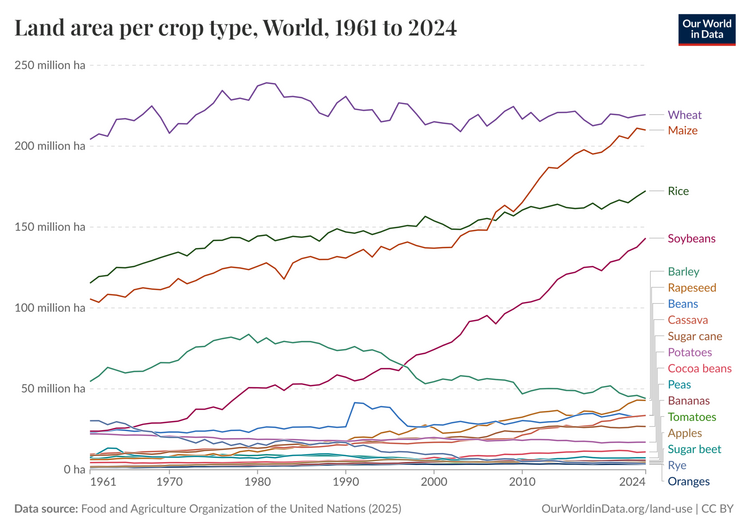
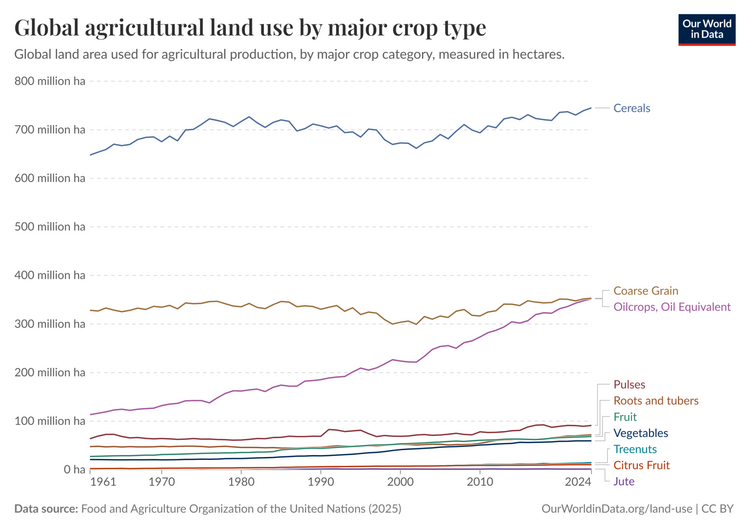
Sustainable fuels sound good until you see the land use, as growing fuel on fertile land has a high opportunity cost: that land could be used to grow food or left to nature to recover. According to 2025 FAO data, global land use for oil crops and oil crop equivalents has increased by 210% since 1961, with crops such as soybeans, maize, and rapeseed showing rising production. Whilst some might argue that this method for creating sustainable fuels is “first gen,” the “second gen” method does involve using cooking oil, animal fats, or food scraps, such as TotalEnergies’ HVO100 and Excellium 100, which uses wine waste.
Costs and Scalability
The new 2026 Formula 1 “drop-in” fuels promise decarbonisation; however, the expectation that the technology will trickle down to road cars sounds more like fiction than fact. And this is reflected in the price tags. F1 insiders peg 2026’s 100% sustainable fuel blend at $170–$300+ per litre, a 10x current E10’s $22–$33/Litre, resulting in potentially $80k–$100k per race weekend or $2M/season.
The reality is that E10 is cheaper than full synthetics/e‑fuels, which cost 3-10x as much as fossil fuels due to the energy‑intensive CO₂ capture/H₂ production. The IEA warns that scaling “drop-in” fuels will require massive green power of roughly 5x the electricity per km vs EVs.
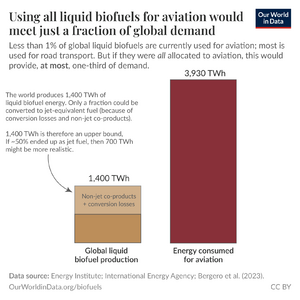
The scaling problem is evident in the sustainable aviation fuel (SAF) industry. According to ourworldindata, the industry will need to achieve a 400x increase in production by 2030, with a 2,530 TWh gap to meet aviation demand even in the most optimistic scenario.
F1’s Real Carbon Emitter
The funniest part of all this is that, in 2024, despite F1’s carbon footprint being down 26% from 2018, fuel/power units account for fewer than 1% of all Formula 1’s emissions.
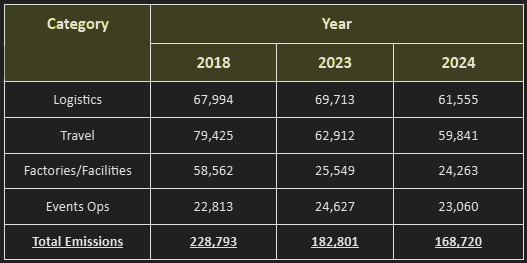
As seen in the table above, logistics and travel account for the largest share of emissions, and the year-on-year decline can be attributed to the team’s factories switching to renewable energy. Therefore, questions need to be asked if sustainable “drop-in” fuels for 2026 are a path for Formula 1 to commit to net-zero by 2030, or just a simple greenwashing trick.
Verdict: make or break?
Sustainable fuels in F1 are a high-stakes gamble: technically viable as drop-in solutions with 65% lifecycle CO2 cuts via non-fossil sources like waste and captured carbon, but scalability could be the killer, as “drop-in” fuel costs 3-10x fossil fuels ($170-300/L for 2026 blend), massive green energy needs (5x EV electricity/km), and land/food tradeoffs undermine claims. F1’s own emissions data exposes the farce: power units/fuel account for less than 1% of F1’s total carbon footprint; hence, even 100% sustainable fuel could be perceived as performative greenwashing, thereby distracting from F1’s current calendar structure, which contributes to high travel and logistics emissions.
Despite this, F1 and other FIA motorsport series do prove sustainable fuels work in labs/race extremes, without the need for major modifications to the ICE. But for the fuel to trickle down to the average road car, it fails due to scaling issues. Thus, at the moment, sustainable fuel is better for aviation hype than billions of ICEs.
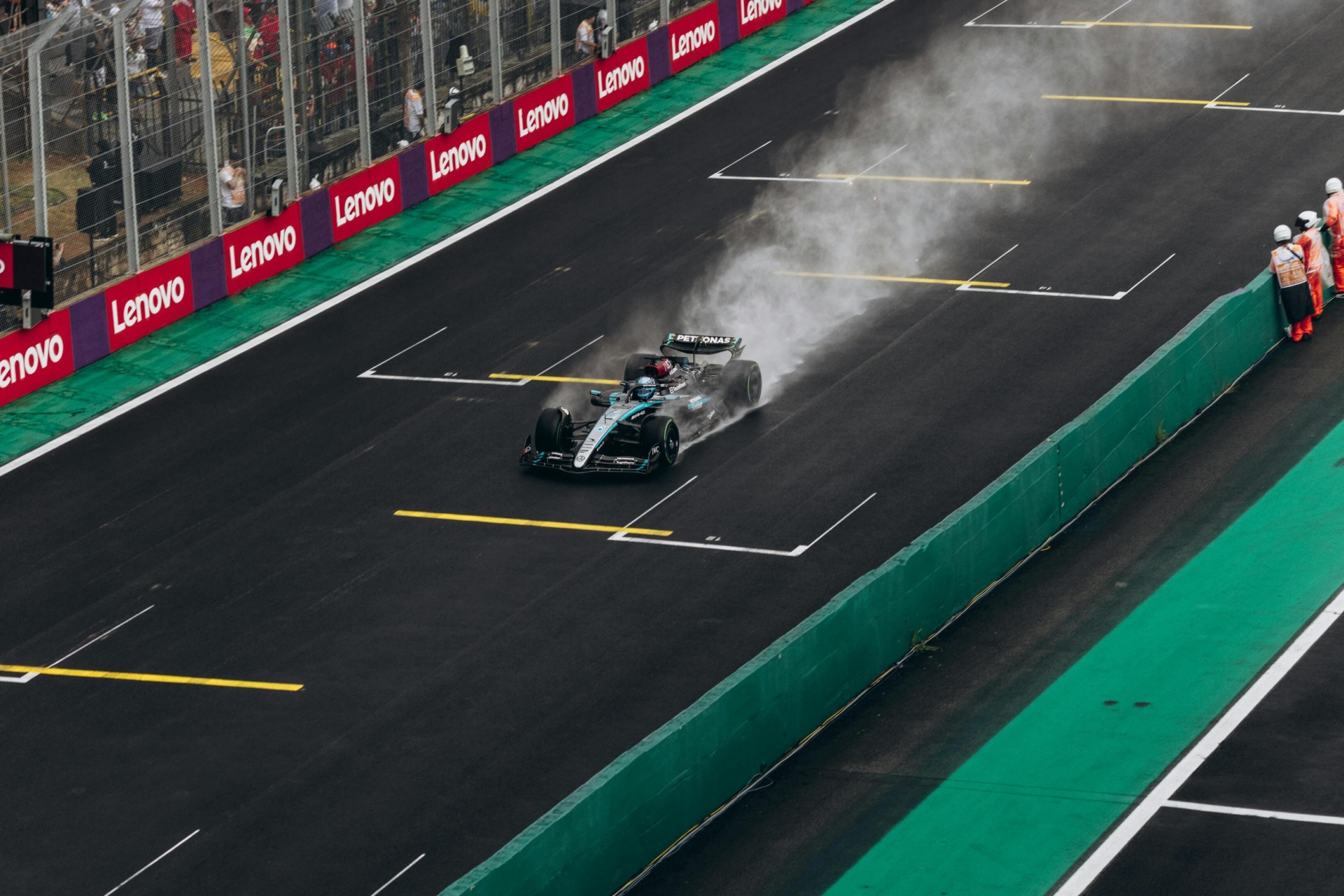
Editor’s Note: The opinions expressed here by the authors are their own, not those of impakter.com — In the Cover Photo: George Russell’s Mercedes W15 in Brazil. Cover Photo Credit: Jonathan Borba via Pexels