Impakter
  • Environment
    • Biodiversity
    • Climate Change
    • Circular Economy
    • Energy
  • FINANCE
    • ESG News
    • Sustainable Finance
    • Business
  • TECH
    • Start-up
    • AI & Machine Learning
    • Green Tech
  • Industry News
    • Entertainment
    • Food and Agriculture
    • Health
    • Politics & Foreign Affairs
    • Philanthropy
    • Science
    • Sport
  • Editorial Series
    • SDGs Series
    • Shape Your Future
    • Sustainable Cities
      • Copenhagen
      • San Francisco
      • Seattle
      • Sydney
  • About us
    • Company
    • Team
    • Partners
    • Write for Impakter
    • Contact Us
    • Privacy Policy
No Result
View All Result
  • Environment
    • Biodiversity
    • Climate Change
    • Circular Economy
    • Energy
  • FINANCE
    • ESG News
    • Sustainable Finance
    • Business
  • TECH
    • Start-up
    • AI & Machine Learning
    • Green Tech
  • Industry News
    • Entertainment
    • Food and Agriculture
    • Health
    • Politics & Foreign Affairs
    • Philanthropy
    • Science
    • Sport
  • Editorial Series
    • SDGs Series
    • Shape Your Future
    • Sustainable Cities
      • Copenhagen
      • San Francisco
      • Seattle
      • Sydney
  • About us
    • Company
    • Team
    • Partners
    • Write for Impakter
    • Contact Us
    • Privacy Policy
No Result
View All Result
Impakter
No Result
View All Result

Five Major Advantages of ELISA Plate Readers

byMatt Davies
June 3, 2025
in Business

The term “ELISA” (Enzyme-Linked Immunosorbent Assay) refers to a widely used biochemical technique for detecting and quantifying substances such as antibodies, antigens, proteins, and hormones. This assay is instrumental in diagnosing immune responses to infections, allergens, and diseases.

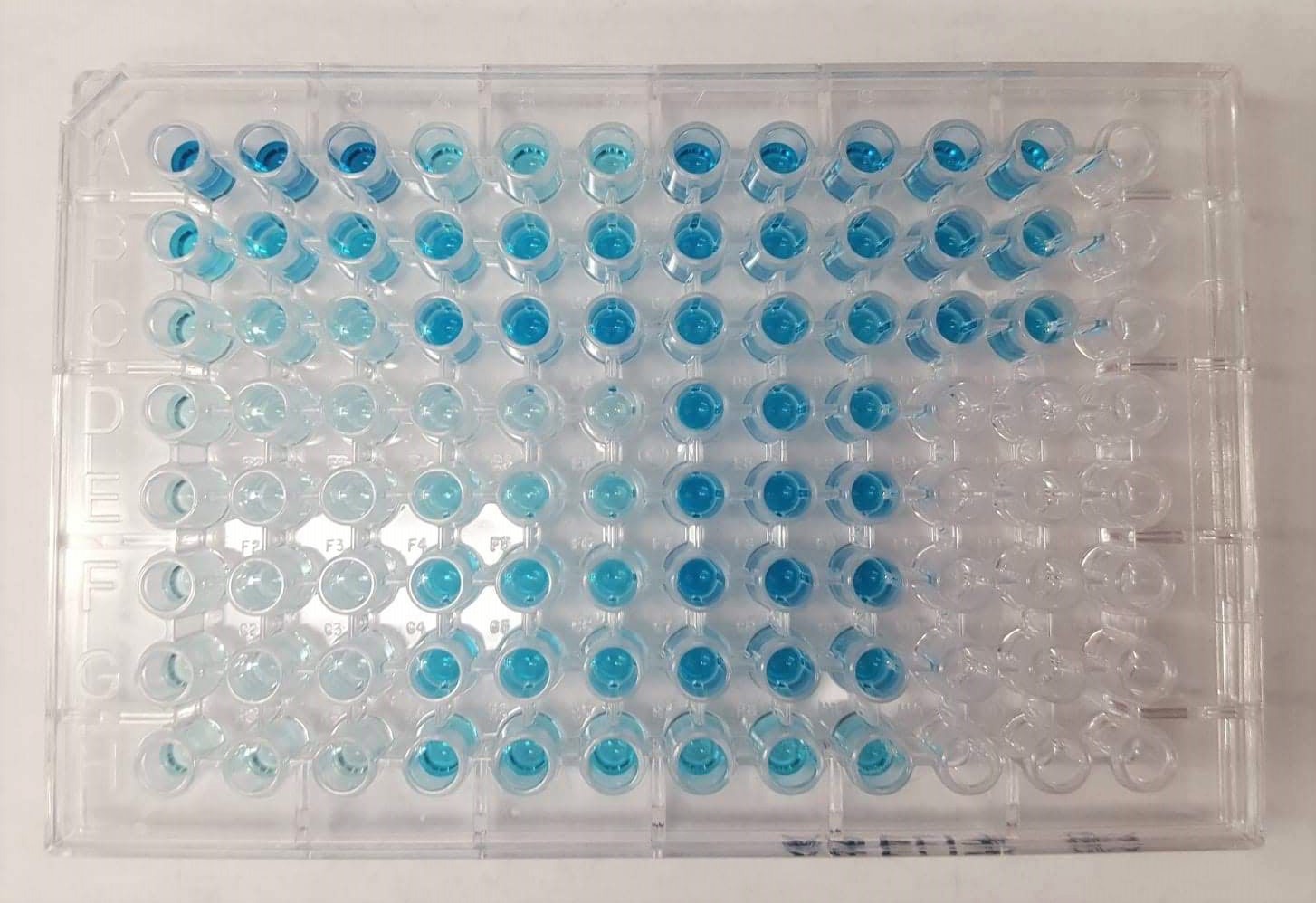
Researchers typically perform ELISA tests in microplates — commonly 96-well or 384-well formats — where either the antigen or the capture antibody is immobilized at the bottom of each well. An ELISA plate reader measures the optical signal generated by the enzymatic reaction, helping determine the concentration of the target analyte.

An ELISA plate reader is essential across multiple fields including clinical diagnostics, vaccine development, and food safety. For example, they are used to identify conditions such as HIV/AIDS, Lyme disease, anemia, rotavirus, and various types of cancer, and they are also employed in detecting food allergens. Before we examine their key advantages, let’s briefly look at how they work.

How Do ELISA Plate Readers Work?

ELISA plate readers, also known as microplate readers, function by measuring changes in light absorption, fluorescence, or luminescence after a sample interacts with a specific reagent. The absorbance or emission is directly proportional to the analyte concentration, enabling precise quantification.

These instruments analyze liquid samples to detect the presence of antigens, antibodies, hormones, or proteins through enzyme-linked reactions. The use of colorimetric, fluorometric, or luminescent substrates allows for sensitive signal detection, which the reader quantifies across multiple wells in a microplate format.

What Are the Benefits of Using ELISA Plate Readers?

ELISA microplate readers are essential tools in developing new drugs and therapies. They also offer some considerable benefits that make life easier for researchers working in a lab.

1. Minimal Sample Volume Requirement

ELISA plate readers require only a small sample volume — typically 2 to 100 microliters per well. This reduces sample waste, conserves expensive or limited biological materials, and is particularly valuable when working with rare patient samples or high-cost reagents.

2. Enhanced Quantitative and Qualitative Analysis

The role of these tools in precision medicine is undeniable. ELISA plate readers can simplify sample analysis for researchers, both quantitatively and qualitatively. Researchers can use these readers to measure signals correlating with the target analyte’s concentration, like absorbance, fluorescence, or luminescence. This feature allows researchers to quantify the analytes in a sample precisely.

ELISA plate readers can also deliver qualitative data by signaling the presence or absence of specific analytes based on predefined threshold values.

3. High-Throughput Capabilities

ELISA plate readers allow researchers to analyze multiple samples simultaneously. These assays generally use a standard microplate format with 96 wells, which enables a high sample throughput. This feature allows researchers to process several samples in one run, thus reducing processing time and improving productivity.

4. Automation Capabilities

Several ELISA plate readers with automation features, such as robotic arms and plate-handling devices, are available on the market. These capabilities help limit manual handling, thus lowering the chances of human error. Automated features further help researchers automate sample loading, assay incubation, and data gathering. The intuitive software used in ELISA plate scanners also simplifies data management, analysis, and interpretation.

5. Superior Precision

Well-designed and calibrated ELISA plate readers can provide superior precision, speed, and sensitivity. The reader’s optical systems and detectors are optimized to identify and quantify the signals the assay produces. This practice guarantees accurate and reliable results. Since ELISA plate readers offer faster data processing and reading, researchers can complete analyses faster using these readers.

Conclusion

In scientific research and clinical diagnostics, precision, efficiency, and reproducibility are paramount. ELISA plate readers address all three by enabling researchers to:

  • Minimize sample waste
  • Obtain accurate and reliable measurements
  • Scale up their experimental capacity
  • Automate routine workflows

As technology continues to evolve, next-generation ELISA readers will play an even greater role in advancing precision medicine, drug development, and clinical testing. These tools are no longer just lab conveniences—they are critical components of modern biomedical research.


Editor’s Note: The opinions expressed here by the authors are their own, not those of Impakter.com — Cover Photo Credit: Wikimedia Commons.

Tags: ELISAELISA plate readersEnzyme-Linked Immunosorbent Assayfood safetyplate readersvaccine development
Previous Post

The Weird Way That Penguin Poop Might Be Cooling Antarctica

Next Post

Why is Blended Finance Key for Asian Market Growth?

Related Posts

Tax-Efficient Investments
Business

How Traders Are Diversifying Into Long-Term Tax-Efficient Investments

March 17, 2026
Corporate Liability and renewable energy challenge.
Business

From Pollution to Precedent: Corporate Liability in Environmental Wrongful Death

March 16, 2026
Nearshore hubs for tech development
Business

Solving the Talent Shortage: How Nearshore Hubs are Bridging the Seniority Gap in 2026

March 16, 2026
Next Post
ESG news regarding Hamburg backs blended finance, INERATEC Europe’s biggest e-fuel plant opens, saithe loses MSC certification, top cities for green tourism

Why is Blended Finance Key for Asian Market Growth?

Related News

ESG news regarding FedEx launching reusable packaging for sustainable B2B logistics, EV adoption in Australia reducing reliance on foreign fuel, Trafigura and Venezuela’s Minerven launching responsible gold‑sourcing programme, and Tesla and LG Energy Solution signing a $4.3 billion U.S. battery deal.

FedEx Launches Reusable Packaging for B2B Shipping

March 17, 2026
Tax-Efficient Investments

How Traders Are Diversifying Into Long-Term Tax-Efficient Investments

March 17, 2026

Impakter informs you through the ESG news site and empowers your business CSRD compliance and ESG compliance with its Klimado SaaS ESG assessment tool marketplace that can be found on: www.klimado.com

Registered Office Address

Klimado GmbH
Niddastrasse 63,

60329, Frankfurt am Main, Germany


IMPAKTER is a Klimado GmbH website

Impakter is a publication that is identified by the following International Standard Serial Number (ISSN) is the following 2515-9569 (Printed) and 2515-9577 (online – Website).


Office Hours - Monday to Friday

9.30am - 5.00pm CEST


Email

stories [at] impakter.com

By Audience

  • TECH
    • Start-up
    • AI & MACHINE LEARNING
    • Green Tech
  • ENVIRONMENT
    • Biodiversity
    • Energy
    • Circular Economy
    • Climate Change
  • INDUSTRY NEWS
    • Entertainment
    • Food and Agriculture
    • Health
    • Politics & Foreign Affairs
    • Philanthropy
    • Science
    • Sport
    • Editorial Series

ESG/Finance Daily

  • ESG News
  • Sustainable Finance
  • Business

About Us

  • Team
  • Partners
  • Write for Impakter
  • Contact Us
  • Privacy Policy

© 2026 IMPAKTER. All rights reserved.

No Result
View All Result
  • Environment
    • Biodiversity
    • Climate Change
    • Circular Economy
    • Energy
  • FINANCE
    • ESG News
    • Sustainable Finance
    • Business
  • TECH
    • Start-up
    • AI & Machine Learning
    • Green Tech
  • Industry News
    • Entertainment
    • Food and Agriculture
    • Health
    • Politics & Foreign Affairs
    • Philanthropy
    • Science
    • Sport
  • Editorial Series
    • SDGs Series
    • Shape Your Future
    • Sustainable Cities
      • Copenhagen
      • San Francisco
      • Seattle
      • Sydney
  • About us
    • Company
    • Team
    • Partners
    • Write for Impakter
    • Contact Us
    • Privacy Policy

© 2026 IMPAKTER. All rights reserved.