
This Week’s Regulatory Updates
- Trump to Fast-Track Permits for Deep-Sea Mining in International Waters: Trump moves to fast-track U.S. deep-sea mining permits in international waters, igniting a clash between critical minerals security and ocean environmental protections.
- ECB to Intensify Monitoring of Physical Climate Risk Impact: European banks’ green transition plans and ability to manage growing physical and nature-related climate risks will come under increasing scrutiny
- The UK ETS Authority Issues Communication and Reminders to Stakeholders: operators must submit accurate ALR and MMP data by 31 March 2026 to maintain free allocation under UK ETS rules.
- Indonesia Removes Mining and Plantation Permits After Sumatra Floods: 28 permits were removed after an audit by a special task force, with President Prabowo Subianto giving the green light.
Trump to fast-track permits for deep-sea mining in international waters
The Trump administration finalised a new National Oceanic and Atmospheric Administration (NOAA) rule on January 21, 2026, expediting permits for U.S. companies mining polymetallic nodules such as nickel, copper, and cobalt in international deep-seabed waters, following a Trump executive order targeting China’s critical minerals dominance.
The consolidated single-review licensing process modernises oversight under the Deep Seabed Hard Minerals Resource Act of 1980 and the U.S. Outer Continental Shelf framework, with the Metals Company (NASDAQ: TMC) advancing its bid to become the first approved developer. Environmental groups warn of irreversible biodiversity loss and demand bans, whilst supporters cite reduced land-mining impacts.
However, the issue here is not environmental; it is legal. As stated in the UNCLOS part XI section 2 article 136, “The Area and its resources are the common heritage of mankind,” and article 137 “1) No State shall claim or exercise sovereignty or sovereign rights over any part of the Area or its resources…”; “2) All rights in the resources of the Area are vested in mankind as a whole, on whose behalf the Authority shall act…”; “3) No State or natural or juridical person shall claim, acquire or exercise rights with respect to the minerals recovered from the Area except in accordance with this Part…”
Click here to read the full UNCLOS text
***
Further reading: Trump to speed permits for deep-sea mining in international waters
ECB to intensify monitoring of physical climate risk impact

The European Central Bank (ECB) is tightening scrutiny of banks’ climate risk management, including assessing prudential transition plans in relation to energy and fiscal costs, strengthening macro and data work on growing physical climate risks, and deepening analysis of nature-related and water risks.
The priorities built on its 2024‑2025 Climate and Nature Plan, under which the ECB embedded climate and nature risks into core tasks, introduced a “climate factor” in the Eurosystem collateral framework, and committed to reducing emissions from its €331 billion corporate bond portfolio by 7% per year.
The ECB reports that banks have “improved their ability to assess climate and nature risks” but warns that “the economic and financial consequences of climate change and nature degradation continue to grow.”
As part of the intensified work, the ECB will analyse banks’ capabilities to tackle physical risks in greater depth and explore further integration of climate considerations into its operational framework. The ECB stresses that it “needs to account for the effects of climate change and nature degradation in the conduct of its tasks within its mandate,” noting that climate change has “profound implications for price stability” via impacts on economic structure, cycles, and the financial system.
***
Further reading: ECB to Intensify Monitoring of Physical Climate Risk Impact, Transition Plans for Banks
Klimado – Navigating climate complexity just got easier. Klimado offers a user-friendly platform for tracking local and global environmental shifts, making it an essential tool for climate-aware individuals and organizations.
UK ETS authority issues communication and reminders to stakeholders

The UK’s Offshore Petroleum Regulator for Environment and Decommissioning (OPRED), on behalf of the UK’s Emissions Trading Scheme Authority (ETSA), has issued environmental compliance reminders to UK installations, stressing that timely and accurate Activity Level Reporting (ALR) and robust Monitoring Methodology Plans (MMPs) are core regulatory duties.
Operators must submit ALRs by 31 March 2026 using the new template on GOV.UK, with Type 1 incumbents such as existing free allocation and unchanged generator status reporting via the online system, and Type 2 incumbents such as new or “reclassified for free allocation,” using a regulator-issued manual template that includes 2024–2025 data and 2023 as the historical activity-level baseline for 2026 free allocation.
The ETSA underlines in Article 7 of the Free Allocation Regulation and Annex VII that “operators are required to use the highest accuracy data sources practicably available for MMPs, and may only revert to less accurate sources where this is technically infeasible or would entail unreasonable cost, supported by a written justification or a completed unreasonable costs tool.”
Thus, this announcement reminds operators that ALR and MMP requirements are essential for enforcing UK climate policy, ensuring accurate emissions data for the UK ETS, and securing continued free allocation for compliant operators.
***
Further reading: UKETS Authority publication and Monitoring Methodology Plan (MMP) reminder

Indonesia removes mining and plantation permits
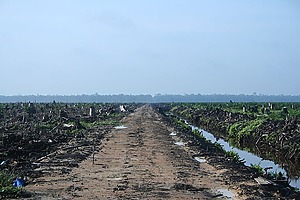
Following the Sumatra flood in late 2025 that killed over 1,000 people, an audit by a dedicated task force resulted in 28 companies having their permits removed by Indonesia’s State Secretariat Minister Prasetyo Hadi, on behalf of Indonesia’s President Prabowo Subianto. The types of companies that had their permits removed include mining, logging, and plantation companies, as well as existing hydropower concessions.
Among those that had their permits removed are PT Agincourt Resources, operator of the Martabe Gold Mine under Astra International and pulp producer PT Toba Pulp Lestari, resulting in shares of Astra falling by as much as 13% following the announcement.
The government plans to restore about 900,000 hectares of forest, with 82,000 hectares in Tesso Nilo National Park, and is pursuing US $280 million in damages from six firms. This announcement marks one of Jakarta’s largest ESG enforcement actions to date and reflects President Prabowo Subianto’s broader crackdown on governance failures in Indonesia’s resource sector.
Furthermore, civil society groups have pressed for a delay on new permits, emphasising the increase in domestic and investor scrutiny of how Indonesia balances natural resource exploitation with climate resilience.
***
Further Reading: Indonesia revokes gold mine, plantation permits after floods; Indonesia revokes permits of 28 firms after deadly floods
Editor’s Note: The opinions expressed here by the authors are their own, not those of impakter.com — In the Cover Photo: President Donald Trump attends a roundtable with energy officials and executives from the oil industry in the East Room of the White House, Friday, January 9, 2026. Cover Photo Credit: White House / Molly Riley