Today’s ESG Updates
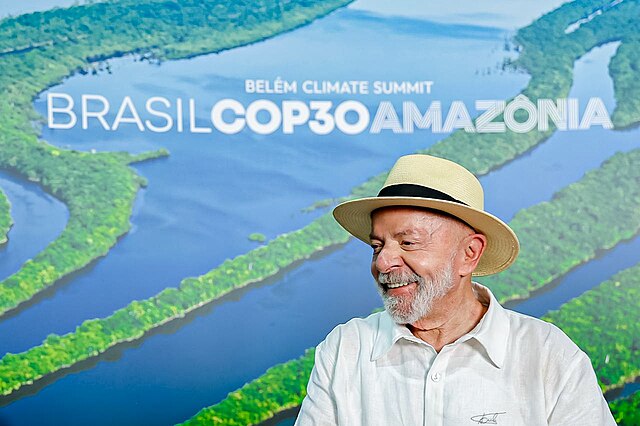
- COP30 Launch: First global circularity protocol for business aims to save 120bn tonnes of materials and avoid up to 76 Gt CO₂ by 2050.
- Help By Apple For AU/NZ: Victoria solar to help match device charging with 100% clean power by 2030 and to restore Fund backs 8,600 ha NZ forest.
- Nike Signs Multi-Year Deals: With Syre & Loop for textile-to-textile recycled polyester.
- China Emissions: CO₂ flat or falling for 18 months, record renewables (240 GW solar, 61 GW wind YTD) signal early peak, but 2020–25 intensity goal at risk.
Global Circularity Protocol Launches at COP30 to Help Companies Cut Waste
World Business Council for Sustainable Development (WBCSD) and the One Planet Network (hosted by UNEP) launched the Global Circularity Protocol for business (GCP) in Belém, creating a single, harmonized way for companies to track and improve circular performance. Co-developed with 150+ experts from 80+ organizations and piloted by industry leaders, the GCP gives practical metrics and steps to cut waste, reduce emissions, and build resilient value chains. Impact analysis suggests widespread adoption could save up to 100–120 billion tonnes of materials and avoid 67–76 gigatons of CO₂ by 2050, while supporting jobs and growth. WBCSD’s Peter Bakker called the GCP a new benchmark for credible, comparable reporting. One Planet Network’s Jorge Laguna-Celis said it fills the long-standing gap on how to measure and disclose circularity. Early supporters such as Philips, Tomra, and Vale highlight sector uses from healthcare to mining. The launch was co-hosted at the COP30 Japan Pavilion by Japan’s Ministry of the Environment, WBCSD, and UNEP’s One Planet Network.
***
Further reading: WBCSD and One Planet Network announce launch of the Global Circularity Protocol for business (GCP) at COP30
Apple Expands Clean Energy in Australia & Backs New Zealand Forest Restoration

Apple will grow its Australian renewables with a new solar project in Lancaster, Victoria, developed with European Energy and due to generate power next year. The build supports Apple’s plan to match all electricity used to charge its products with 100% clean energy within five years and contribute over 1 million MWh of new clean power annually in Australia by 2030. Product use accounts for 29% of Apple’s carbon footprint, a key focus of its 2030 net-zero ambition across business, the supply chain, and the product life cycle. Through its Restore Fund, Apple also backed a New Zealand project restoring 8,600 hectares of forest across five sites—blending redwood forestry with conservation of 3,000 hectares of native forest. Apple shared an update on a separate Queensland Restore Fund project converting 1,700 hectares of former sugarcane land to macadamia orchards, including a 100-hectare restoration area managed with Indigenous partner W.Y.L.D.
***
Further reading: Apple Invests in Renewable Energy, Forest Projects in Australia and New Zealand
Klimado – Navigating climate complexity just got easier. Klimado offers a user-friendly platform for tracking local and global environmental shifts, making it an essential tool for climate-aware individuals and organizations.
Nike Taps Syre and Loop for Recycled Polyester at Scale

Nike signed new agreements with Syre and Loop Industries to source recycled polyester made from textile waste. The move supports Nike’s 2030 targets (-65% operations, -30% supply chain emissions vs. 2015) and its push to cut materials’ impact (raw materials were 34% of its 2024 footprint). Under the deal, Syre becomes Nike’s lead strategic supplier for textile-to-textile polyester, with step-by-step integration into core performance lines over the next few years. Loop Industries will supply its Twist virgin-quality circular polyester resin; Nike will serve as anchor customer for Loop’s India-based Infinite Loop plant, expected to deliver an 81% GHG reduction versus fossil polyester and up to 418,600 t CO₂ saved annually. The partnerships build on Nike’s recent Aero-FIT launch—elite apparel made from 100% textile waste—as the brand scales circular materials across footwear and clothing.
***
Further reading: Nike Signs Deals for Recycled Materials with Cleantech Startups Syre, Loop

China’s CO₂ Emissions Hold Flat or Fall for 18 Months
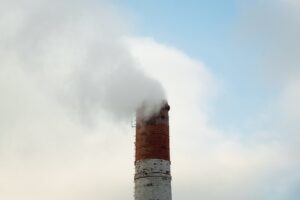
China’s CO₂ emissions have been flat or falling for 18 months, helped by rapid growth in clean power even as electricity demand rose. In Q3 2025, solar output jumped 46% and wind 11%. China added 240 gigawatts (GW) of solar and 61 GW of wind in the first nine months of 2025, after installing 333 GW of solar in 2024. Analysis for Carbon Brief by CREA’s Lauri Myllyvirta finds Q3 emissions were unchanged year on year as travel, cement and steel declined. Full-year emissions could edge down if usual seasonal patterns hold. China looks on track to peak CO₂ well before its 2030 deadline and keeps its 2060 net-zero goal, but is likely to miss the 2020–25 carbon-intensity target, implying steeper cuts later. Sector signals are mixed: transport oil demand fell 5% in Q3 while petrochemicals rose about 10%. With COP30 underway, attention shifts to China’s 15th Five-Year Plan for 2026–2030, where officials hint at a stronger push on low-carbon energy systems.
***
Further reading: China’s CO2 emissions have been flat or falling for past 18 months, analysis finds
Editor’s Note: The opinions expressed here by the authors are their own, not those of impakter.com — In the Cover Photo: WBCSD Logo. Cover Photo Credit: Creative Commons Zero