Today’s ESG Updates
- Trump Pushes U.S. Firms Toward Venezuelan Oil: Trump is urging hesitant oil executives to invest in Venezuela’s struggling oil sector.
- Venezuela’s Oil Carries Heavy Environmental Costs: Venezuela’s extra-heavy oil is among the world’s most carbon-intensive.
- Kawasaki Advances Global Hydrogen Shipping: Kawasaki Heavy signed a contract to build the world’s largest liquefied hydrogen carrier.
- China Unveils Climate Reporting Rules: China introduced new corporate climate disclosure standards aligned with IFRS.
Trump’s push to revive Venezuela’s oil industry meets resistance
President Donald Trump is pressuring U.S. oil companies to invest in Venezuela’s struggling oil sector, following the military capture of Venezuelan President Nicolás Maduro. After informal discussions with oil CEOs, Energy Secretary Chris Wright and Interior Secretary Doug Burgum are reaching out for official talks. While Trump claims that U.S. oil giants will “spend billions of dollars” in Venezuela, executives remain hesitant due to Venezuela’s unstable political climate, the risks posed by the Maduro regime, and concerns over security for personnel and assets. An estimated $183 billion over 10 years would be needed to increase Venezuela’s oil output from the current 1 million barrels a day to its previous 3 million barrels a day. Despite the White House’s optimism, many companies remain unconvinced about the potential rewards. Dennis Nuss, a spokesperson for ConocoPhillips, stated that it would be “premature to speculate on any future business activities or investments.”
***
Further reading: Trump administration launches new bid to pressure US oil companies on Venezuela
Venezuelan oil and environmental implications
Two years ago, President Trump called Venezuela’s oil the “dirtiest in the world.” With high carbon and sulfur content, Venezuela’s extra-heavy oil generates more carbon emissions than conventional oils. The country currently holds the world’s largest oil reserves, estimated at 300 billion barrels. As the sector struggles, environmental issues have grown. According to Venezuela’s state-owned oil company, Petróleos de Venezuela, there were over 46,000 oil spills between 2010 and 2016, contaminating drinking water and destroying habitats. From 2016 to 2020, illegal gold mining destroyed approximately 346,000 acres of forest as the Maduro administration turned away from the oil sector. Jason Bordoff, founding director of the Center on Global Energy Policy at Columbia University, said that if a democratically elected government attracts foreign investment, the climate impact of Venezuela’s oil industry could improve.
***
Further reading: Venezuela’s ‘Dirtiest’ Oil and the Environment: Three Things to Know
Klimado – Navigating climate complexity just got easier. Klimado offers a user-friendly platform for tracking local and global environmental shifts, making it an essential tool for climate-aware individuals and organizations.
Kawasaki to begin construction on world’s largest liquefied hydrogen carrier

Kawasaki Heavy Industries signed a contract with Japan Suiso Energy (JSE) to build the world’s largest liquefied hydrogen carrier. The carrier will be built in western Japan at Kawasaki’s Sakaide Works and have a capacity of 40,000 cubic metres. In 2021, Kawasaki built the world’s first liquefied hydrogen carrier, demonstrating safe exports of the substance from Australia to Japan. The construction of the new, larger vessel is intended to meet anticipated growth in liquefied hydrogen demand. JSE, operator for the government-backed New Energy and Industrial Technology Development Organization’s Green Innovation Fund project, aims to conduct ocean-going trials and liquefied hydrogen loading and unloading demonstrations by March 2031. Through this partnership, Kawasaki seeks to develop a commercial-scale liquefied hydrogen supply chain to meet escalating demand in the 2030s.
***
Further reading: Kawasaki signs deal to build world’s largest liquefied hydrogen carrier

China releases corporate climate reporting standards
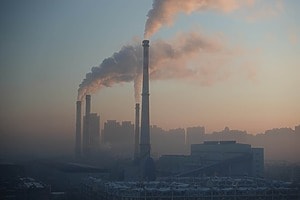
China’s Ministry of Finance released its “Corporate Sustainable Disclosure Standard No. 1 – Climate (Trial)” this week. The new climate reporting standard is designed to support China’s green targets and aligns with the International Financial Reporting Standards Foundation’s climate reporting standard (IFRS S2). China aims to reach carbon neutrality by 2060, cutting peak emissions by seven to ten per cent in 2035. The Ministry hopes that the new standard will combat greenwashing and encourage companies to invest in climate-positive projects. Industry-specific standards are being phased in across sectors, including automotive, power, coal, hydrogen, steel, cement, and more. For the past 18 months, China’s emissions have been flat or falling, and the introduction of a new reporting framework for climate-related risks, opportunities, and impacts is expected to sustain this trend.
***
Further reading: China unveils corporate climate reporting standard
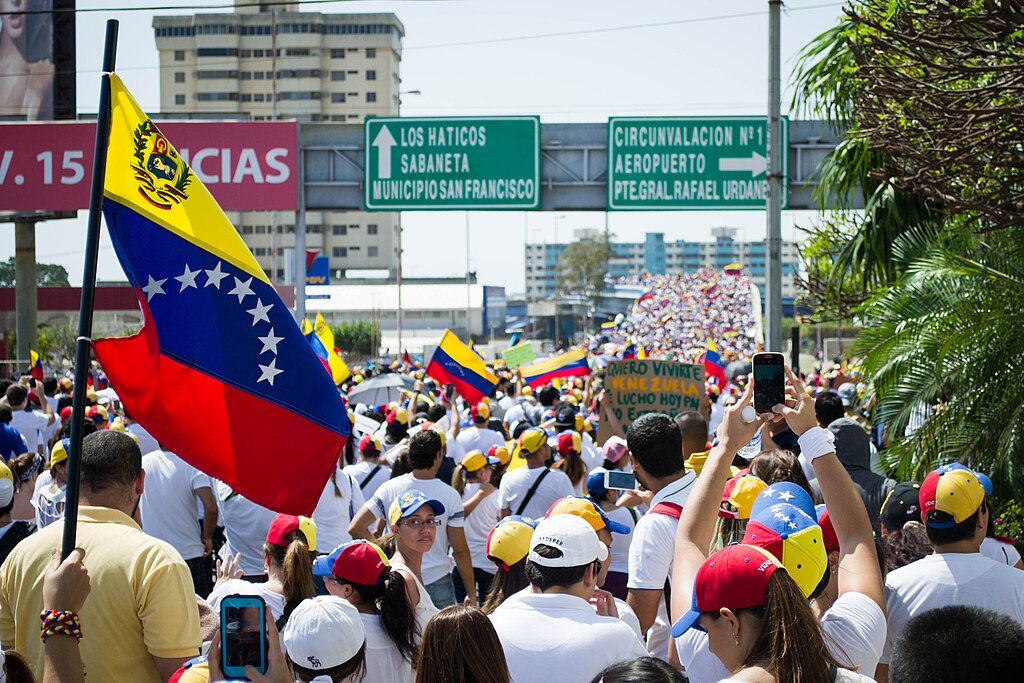
Editor’s Note: The opinions expressed here by the authors are their own, not those of impakter.com — In the Cover Photo: Protests in Venezuela in 2014. Cover Photo Credit: Wikimedia Commons