Today’s ESG Updates
- UK Accelerates Nature Recovery: The government commits £500m to Landscape Recovery and targets 250,000 hectares of restored wildlife habitat.
- Mauritania Lands Major Rail Investment: The EIB and AfDB will invest $275m to modernize Mauritania’s key mining railway corridor.
- EU Carbon Border Tax Faces Criticism: Industry groups warn that overly low default emissions values could weaken the effectiveness of the EU’s CBAM.
- EU Approves 235 Energy Projects: The European Commission designates major cross-border energy projects as PCIs/PMIs, unlocking faster permitting and funding.
UK government pledges £500 million for Landscape Recovery
The UK’s Department for Environment, Food & Rural Affairs (Defra) published an updated Environmental Improvement Plan (EIP) on Monday. The plan includes new interim targets and delivery plans to meet 2030 environmental goals. Some significant commitments include £500 million for Landscape Recovery projects, £85 million for peatland restoration, and £3 million to improve access to nature. The government aims to create or restore 250,000 hectares of wildlife habitats, reduce the establishment of invasive species by 50%, and strengthen air quality targets, limiting the concentration of fine particulate matter (PM2.5) to 10 micrograms per cubic metre. The plan also includes measures to combat ‘forever chemicals’ or PFAS. Environmental groups warn that the EIP’s ambitions could be undermined by nuclear projects in the UK. In an effort to speed up nuclear development in the UK, Prime Minister Keir Starmer has vowed to remove “unnecessary red tape, [and] well intentioned, but fundamentally misguided environmental regulations.”
***
Further reading: Government confirms wave of new environmental targets and delivery plans
EIB Global and African Development Bank to invest $275 million in Mauritania’s railway corridor
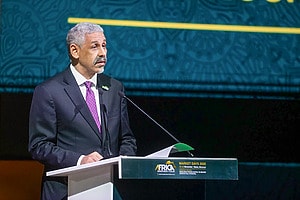
The European Investment Bank (EIB Global) and the African Development Bank (AfDB) have co-signed a $275 million investment to modernize Mauritania’s railway corridor. The corridor links the country’s main iron ore mining site in Zouerate to the Atlantic export terminal in Nouadhibou. The joint financing package will be used to purchase modern trains and maintenance equipment, rehabilitate existing tracks, and create 42 kilometers of new tracks to connect future mining sites. The project will be implemented by the Société Nationale Industrielle et Minière (SNIM), the largest employer in Mauritania and a key player in the country’s economic development. President Sidi Ould Tah of the African Development Bank Group said that the project will “strengthen Mauritania’s role in regional trade, and accelerate the country’s transition toward more sustainable and competitive growth.”
***
Further reading: EIB Global and African Development Bank invest US$ 275 million to modernise Mauritania’s main railway corridor
Klimado – Navigating climate complexity just got easier. Klimado offers a user-friendly platform for tracking local and global environmental shifts, making it an essential tool for climate-aware individuals and organizations.
Critics warn of weakened carbon border tariffs
Beginning next year, the EU’s Carbon Border Adjustment Mechanism (CBAM) will impose carbon fees on imported cement, steel, aluminum, and fertilizers. The CBAM aims to prevent cheaper, high-carbon goods from undermining EU producers, who pay about €80 per ton of carbon dioxide emitted. Critics from Europe’s energy-intensive industries warn that the CBAM could be weakened by overly generous emissions standards for countries such as the United States, China, and Brazil. Industry experts found that some exports were assigned implausibly low carbon footprints, raising doubts and questions. EU countries have asked the Commission to revise current emissions data prior to the adoption of the tax. Companies monitoring their carbon emissions can look to ESG solutions for guidance.
***
Further reading: EU carbon border tax goes easy on dirty Chinese imports, industry warns

European Commission approves 235 cross-border energy projects
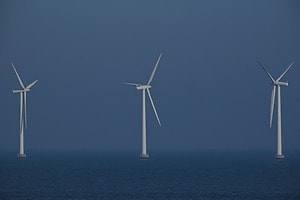
The European Commission has approved 235 cross-border energy initiatives as Projects of Common Interest (PCIs) or Projects of Mutual Interest (PMIs). The projects aim to strengthen EU energy connectivity while supporting energy security, competitiveness, and decarbonisation. The status of PCI or PMI will enable projects to obtain faster permitting and access to funding from the Connecting Europe Facility. Projects include 113 electricity and smart grid projects to integrate renewables, 100 hydrogen and electrolyser initiatives, 17 CO₂ transport projects for carbon capture and storage, and three gas grid upgrades. The Commission predicts that infrastructure for electricity, hydrogen, and CO₂ will require an investment of €1.5 trillion between 2024 and 2040. The list now goes to Parliament and Council for approval or rejection.
***
Further reading: Commission boosts energy interconnectivity across Europe and beyond by supporting 235 cross-border projects
Editor’s Note: The opinions expressed here by the authors are their own, not those of impakter.com — In the Cover Photo: Scottish Wilderness. Cover Photo Credit: Gary Ellis