Today’s ESG Updates
- Winter Storm Cuts Power to Over 400,000: A severe storm hit much of the U.S., causing over 400,000 outages and $105–115 billion in preliminary damages.
- Doomsday Clock Hits 85 Seconds to Midnight: Rising nuclear, climate, and biotech risks, along with global nationalism, pushed the symbolic clock closer to midnight.
- Kazakhstan Oil Loss Eases Supply Glut: Damage to the Caspian Pipeline cut 40 million barrels, lowering global stock build forecasts to 700,000 bpd in H1 2026.
- Most “Recycled” Plastic in Europe Is Fossil-Based: Chemical recycling makes up only 5% of feedstock and emits 6–8% more CO₂ than new plastic.
Winter storm cuts power to over 400,000 across U.S.
A powerful winter storm has swept across much of the U.S., from the Ohio Valley and mid-South to New England, bringing snow, sleet, and freezing rain. It left more than 400,000 customers without power. Nashville Electric Service (NES) in Tennessee reported approximately 109,000 outages of its 463,455 customers, while Entergy had over 104,000 outages among its 3.05 million customers. According to NES, both the company and contractor lineworkers continue their work to restore electricity to those still without power. Preliminary damage and economic losses are estimated at between $105 billion and $115 billion, making the snowstorm the costliest severe weather event since the Los Angeles-area wildfires in early 2025.
***
Further reading: More than 400,000 US customers still without power as winter storm freezes much of the US
Doomsday clock hits 85 seconds to midnight amid rising global risks

The Doomsday Clock has been set to 85 seconds to midnight, the closest it has ever been since 1947, the year the tradition began. The Bulletin of the Atomic Scientists, a non-profit organisation founded by Albert Einstein and other scientists, warned that international cooperation regresses when it comes to nuclear weapons, climate change, and biotechnology. According to the Bulletin, the trends towards aggression and nationalism in countries like Russia, China, and the U.S. contributed to the clock moving closer to midnight.
Furthermore, global climate action suffers as well. None of the three most recent UN climate summits focused on phasing out fossil fuels or monitoring carbon dioxide emissions. Additionally, U.S. President Donald Trump’s decision to wage war against renewable energy and sensible climate policies further damaged the attempts to combat climate change.
However, despite this, renewable energy, especially wind and solar, saw record growth in 2024, and renewable and nuclear energy together surpassed 40% of global electricity generation for the first time.
***
Further reading: Symbolic Doomsday Clock moves closer to midnight amid ‘catastrophic risks’
Klimado – Navigating climate complexity just got easier. Klimado offers a user-friendly platform for tracking local and global environmental shifts, making it an essential tool for climate-aware individuals and organizations.
Kazakhstan’s oil export loss eases global supply glut

Kazakhstan has lost more than 40 million barrels of crude exports due to damage along the Caspian Pipeline Consortium. That drop is helping ease the global oil supply glut, Kieran Gallagher, the Head of Asia for the energy trader Vitol, said at a conference. As a result, global crude stock builds in the first half of 2026 are now expected to rise by about 700,000 barrels per day (bpd), down from earlier forecasts above 1 million bpd. The International Energy Agency had predicted a supply surplus of 4.25 million bpd in the first quarter of 2026.
***
Further reading: Kazakhstan export loss to ease global oil supply glut, Vitol executive says

Most “recycled” plastic packaging in Europe still comes from fossil fuels, experts warn
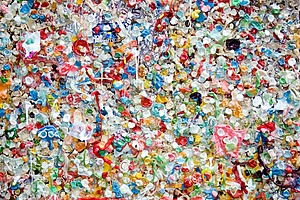
Many European brands label their plastic packaging as recycled or sustainable, but most of it is still made from fossil fuels. Chemical recycling via pyrolysis can produce recycled feedstock, but it accounts for at most 5% of the total, with 95% coming from virgin naphtha. Companies use accounting methods like mass-balance bookkeeping to claim products are fully recycled, even though the physical recycled content is minimal. For example, Sabic used only 2,600 tonnes of recycled material compared with 4 million tonnes of naphtha, virgin feedstock. According to the carbon footprint calculation, the entire process, from pyrolysis to cracking, actually produces 6–8% more carbon emissions than making plastic from new fossil fuels. The only reason it seems better is that avoided incineration is counted, which yields a net saving of about 2 kg of CO₂ per kilogram of recycled plastic.
***
Further reading: Europe’s supermarket shelves packed with ‘misleading’ claims about recycled plastic packaging
Editor’s Note: The opinions expressed here by the authors are their own, not those of impakter.com — Cover Photo Credit: Cara Rodriguez