
Today’s ESG Updates
- PRA to Ease Reporting for UK Banks: Prudential Regulation Authority has agreed to remove 37 reporting templates entailing Financial and Common Reporting templates. This change was set into effect by a review of the banking regulatory reporting data.
- EU Slashes Sustainability Reporting Requirements: Lawmakers have reached a provisional agreement to significantly reduce the scope of ESG reporting and due diligence laws.
- EU Proposes Exempting AI Gigafactories from Environmental Checks: The European Commission has unveiled plans to exempt data centres, AI gigafactories, and affordable housing from mandatory environmental impact assessments to speed up development and cut costs.
PRA cuts 37 banking report templates with data review results
The Prudential Regulation Authority (PRA) has finalized plans to delete 37 regulatory reporting templates for UK banks, marking it the first tangible outcome of the Future Banking Data programme. The Program is aimed towards reducing compliance costs whilst maintaining regulatory compliance. The mentioned changes in regulation will take into effect on December 31, 2025 and consist of changes to Financial Reporting (FINREP) templates and a few Common Reporting (COREP) forms also being affected.
All five consultation respondents agreed to the proposal, considering that it would eliminate unnecessary burdens and contribute to the modernisation of the UK’s regulatory reporting regime. The regulator also plans to merge the remaining FINREP obligations into one Rulebook chapter and synchronise submission dates for reports.
The magnitude of this change will be determined by how well the PRA implements the later stages of the Future Banking Data programme. These stages include reviews of Pillar 3 disclosures and potential shifts toward transaction-level data reporting among others. Some respondents also said that the real cost savings may be lower than the projections because there will be fixed system costs and the underlying data requirements will remain unchanged.
***
Further reading: PS27/25 – Future banking data review: Deletion of banking reporting templates
Klimado – Navigating climate complexity just got easier. Klimado offers a user-friendly platform for tracking local and global environmental shifts, making it an essential tool for climate-aware individuals and organizations.
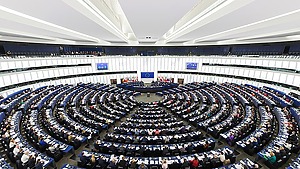
EU lawmakers aim to reduce “red tape” to boost competitiveness
Lawmakers in the European Parliament and Council have reached a provisional agreement on the Omnibus proposal. The move is designed to drastically reduce scope of the EU’s flagship sustainability laws. Under the new terms, Corporate Sustainability Reporting Directive (CSRD) will apply only to companies with at least 1,000 employees and €450 million in revenue. Corporate Sustainability Due Diligence Directive (CSDDD) will jump to companies with 5,000 employees and €1.5 billion in revenue, removing the majority of firms that were originally targeted.
The agreement waters down several aspects that it originally planned to regulate. It removes the CSDDD requirement for companies to draft climate transition plans and scraps the EU-wide liability regime which means penalties will now be left to the discretion of national authorities. The companies no longer need to do a systematic auditing of partners and can only focus on supply chain checks where they think adverse impacts are most likely.
The EU is still to find a balance between climate ambitions and economic competitiveness. By narrowing the targeted pool of companies so aggressively, the EU risks creating a two-tier system where only the largest companies are loosely held accountable for their environmental footprint.
***
Further reading: EU Lawmakers Strike Deal to Cut Sustainability Reporting, Due Diligence Laws


The EU aims to speed up permits for fast-growing sectors like AI
The European Commission has proposed a new package of deregulatory measures that could exempt AI gigafactories, datacentres, and affordable housing projects from mandatory environmental impact assessments. Member states are responsible for assessing whether these sectors require environmental scrutiny or permitting processes can be sped up.
The proposal also includes repealing a database tracking hazardous chemicals in products. Jessika Roswall, the Environment Commissioner, defended the move by saying, “Make no mistake: this is not a dilution of our environmental rules. However, we must adapt to a rapidly changing world.”
However, environmental groups are sounding the alarm. Sabien Leemans from WWF described the move as “deregulation madness” that risks dismantling essential protections. The Commission estimates these cuts will save businesses €1 Billion annually. On the other hand, critics cite studies suggesting the cost of ignoring environmental laws could reach €180 Billion.
***
Further reading: EU proposes loosening rules on AI gigafactories in green rollback
Editor’s Note: The opinions expressed here by the authors are their own, not those of impakter.com — Cover Photo Credit: Emil Bruckner