Today’s ESG Updates
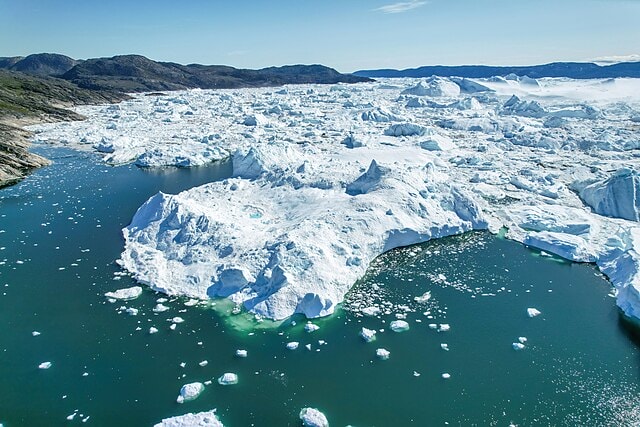
- Vast Resources Under Greenland’s Ice: Untapped critical and rare-earth mineral deposits emerge, along with questions about mining in a rapidly warming Arctic.
- Oil Settles Down Trump’s Statements on Venezuelan Oil: Oil prices slip over 1% as Trump’s $2 billion Venezuelan crude deal boosts U.S. supply expectations and keeps global markets on the defensive.
- Acumen Raises $250 million to Bring Clean Energy Access to Underserved Markets: The initiative will use blended finance to deliver first-time access to clean energy to tens of millions in remote African communities.
- BP and Corteva Launch “Etlas”: Etlas will convert feedstocks like canola, mustard, and sunflower into “sustainable fuels”, targeting 1 million tonnes a year by the mid-2030s without expanding farmland.
The vast resources hiding under Greenland’s ice
Greenland holds vast but hard-to-access mineral and fossil-fuel riches, driving renewed US interest and Donald Trump’s threats to annex the Danish territory, which Denmark warns could spell the end of the NATO alliance. The island, roughly the size of the Democratic Republic of Congo, contains “critical” and rare-earth minerals needed for the national security of certain countries and the energy transition, with global demand for such resources expected to quadruple by 2040.
Yet only about 20% of Greenland is ice‑free. There are no intercity roads, and for every 100 mineral exploration projects, only one may become a mine, making development slow, risky, and capital‑intensive. Past mines left heavy metal pollution still detectable 50 years later, fueling public skepticism.
Because of climate change, the Arctic is warming nearly four times faster than the global average, and the Greenland ice sheet is losing approximately 30 million tonnes of ice an hour, opening new and important sea routes, but deepening environmental risks.
Note: The article was first published on 22 January 2025 but was updated and republished on 6 January 2026 with the latest comments from US President Donald Trump and his European allies.
***
Further reading: The mineral riches hiding under Greenland’s ice
Oil prices falls after Trump’s statements on Venezuelan oil
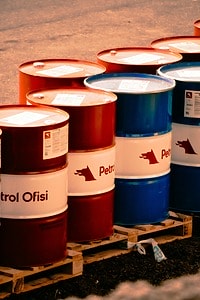
Oil fell for a second day as Trump’s deal to import up to $2 billion of Venezuelan crude signalled higher U.S. supplies, with Brent down 1.2% to $59.96 per barrel and WTI (West Texas Intermediate) off 2% to $55.99 per barrel. Trump said Venezuela will be “turning over between 30 million and 50 million barrels of sanctioned oil” to the U.S., likely rerouted from China, keeping crude “on the defensive,” according to BOK Financial’s
The U.S. also seized an empty Russian‑flagged Venezuela‑linked tanker as part of its broader control over Caracas’ exports after Maduro’s capture, which Venezuelan officials call a “kidnapping.” Data from the U.S. EIA (Energy Information Administration) showed a 3.8 million‑barrel drop in U.S. crude stocks versus expectations for a 447,000‑barrel build, but gasoline and distillates rose 7.7 million and 5.6 million barrels, respectively.
Venezuela’s Merey crude is selling at about $22 below Brent, and BMI warns that cheap flows could “raise the expected price of oil over the medium term” if the regime endures.
***
Further reading: Oil settles down more than 1% after Trump’s statements on Venezuelan oil
Klimado – Navigating climate complexity just got easier. Klimado offers a user-friendly platform for tracking local and global environmental shifts, making it an essential tool for climate-aware individuals and organizations.
Acumen raises $250 million to bring clean energy access to underserved markets
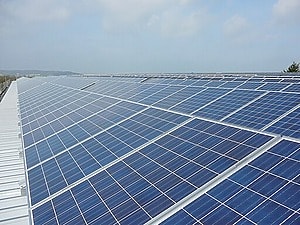
Acumen has raised $250 million in blended capital for its “Hardest-to-Reach (H2R) Initiative” to expand access to clean, affordable energy for low-income, off-grid communities in sub-Saharan Africa. Launched at COP28 with a $65 million anchor investment from the Green Climate Fund, H2R aims to reach nearly 70 million people, including 50 million first-time energy users across 17 countries, and to avoid 4 million tonnes of CO₂ emissions.
The initiative combines two strategies: Catalyse, which uses a tailored mix of equity, debt, and grants as catalytic capital, and Amplify, a debt fund now closed at $180 million, supported by a new $7.8 million commitment from the Swiss Agency for Development, and an additional $18 million in grant capital for impact-based rewards. As Jiwoo Choi (Chief of Strategic Initiatives and Head of the H2R Initiative at Acumen) stated, “we brought together partners who aligned behind one goal: to unlock energy access to the most remote and vulnerable areas.”
***
Further reading: Acumen Raises $250 Million to Bring Clean Energy Access to Underserved Markets

BP and Corteva launch biofuel feedstock platform
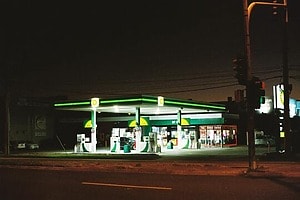
US‑based pure‑play agriculture technology company Corteva Inc. (NYSE: CTVA) and UK oil and gas conglomerate British Petroleum (BP) (NYSE: BP, BP: LON) have formed Etlas, a 50:50 joint venture to produce oil from canola, mustard, and sunflower for sustainable aviation fuel (SAF) and renewable diesel (RD), aiming for 1 million tonnes of feedstock annually by the mid-2030s, enough for over 800 thousand tonnes of biofuel.
Initial supply will start in 2027, targeting a SAF market expected to grow from about 1 million tonnes in 2024 to as much as 10 million tonnes by 2030, while RD could rise from 17 million to 35 million tonnes in the same period. Etlas will use intermediate crops grown on existing cropland “between main food cropping seasons,” providing farmers “a new revenue stream” without “additional demand for land.” BP’s Philipp Schoelzel calls it “a capital-light joint venture” that strengthens BP’s biofuels value chain.
At the same time, Etlas CEO Ignacio Conti says “farmers have a critical role to play in delivering reliable, sustainable aviation fuel and renewable diesel.”
***
Further reading: Corteva and BP launch biofuel feedstock joint venture Etlas™
Editor’s Note: The opinions expressed here by the authors are their own, not those of impakter.com — Cover Photo Credit: Wikimedia Commons