Today’s ESG Updates
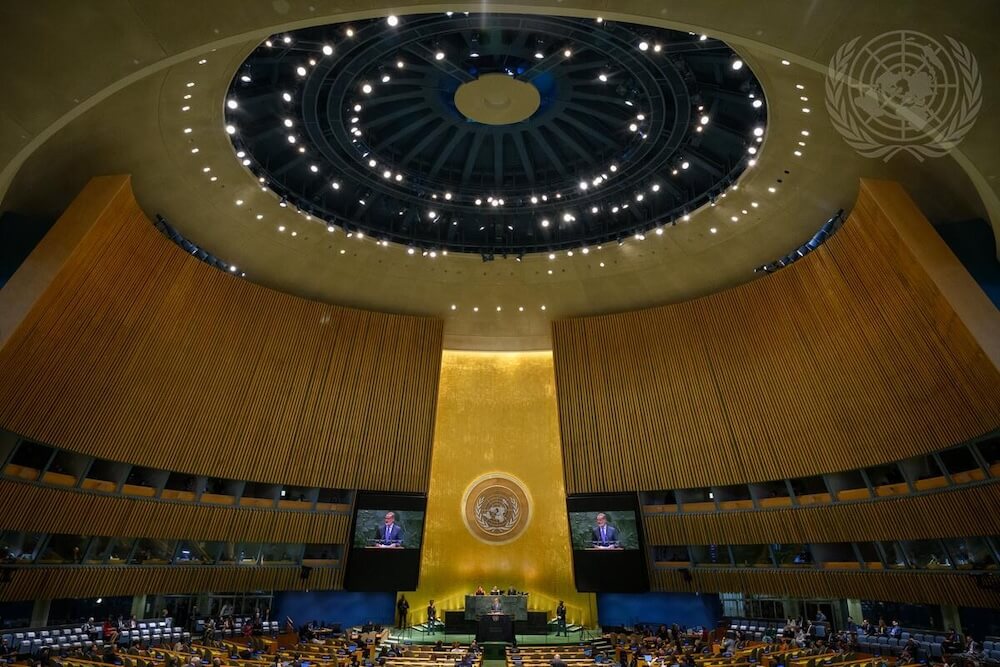
- U.N. General Assembly Updates: Trump absent as 121 countries pledged new emissions targets on Wednesday.
- Malaysia Praises EU Anti-Deforestation Law Delay: Malaysian palm oil producers argue that the regulation has operational and structural flaws.
- California Drives Pushback Against Trump’s Climate Denial: The State promises more lawsuits against federal climate deregulation at Climate Week.
- China Sets Modest Clean-Tech Targets: Xi Jinping announces wind, solar, and EV goals.
U.S. isolation on full display at global climate summit
At the U.N. General Assembly in New York on Wednesday, 121 countries, including China, Russia, Japan, and Germany, pledged to accelerate emissions cuts, all without U.S. participation. While small island states and the world’s poorest countries attended the climate summit, the U.S. was absent. The Trump Administration’s withdrawal from the Paris Agreement and Trump’s blatant denial of climate science have left the U.S. diplomatically isolated. President Xi announced that by 2035, China would reduce its greenhouse gas emissions by 7-10% from peak levels and increase its share of “non-fossil fuels” to more than 30%. The EU has not officially finalized targets, but has agreed to reduce emissions by 66-72% by 2035, compared to 1990 levels. The global shift remains towards clean energy leadership, even as the U.S. doubles down on oil and gas exports.
***
Further reading: At Global Climate Summit This Week, U.S. Isolation Was on Full Display
Malaysia reacts positively to the EU Anti-Deforestation Law delay

Malaysia’s Palm Oil Council welcomed the EU’s second delay of its anti-deforestation law, emphasizing the opportunity to address operational and structural flaws. The council argued that the current EUDR framework imposes heavy compliance costs and fails to reward responsible sustainability efforts, despite prior industry investments in sustainable practices. Malaysia, one of the world’s largest palm oil producers, had previously raised objections to its “standard risk” classification, which triggers stricter inspection rules. The recently announced delay provides exporters with additional time to adapt and underscores the ongoing tension between global regulatory frameworks and industry realities.
***
Further reading: Malaysia palm oil body says EU delay on deforestation rule key to address concerns
Klimado – Navigating climate complexity just got easier. Klimado offers a user-friendly platform for tracking local and global environmental shifts, making it an essential tool for climate-aware individuals and organizations.
California leads regulatory pushback against Trump’s climate rollbacks
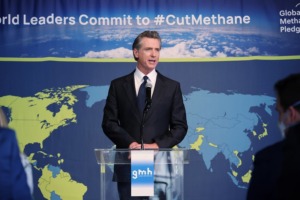
California Attorney General Rob Bonta has emerged as the main state-level counterweight to the Trump administration’s environmental rollbacks. Bonta announced ongoing lawsuits against federal deregulation measures and plans additional legal action targeting misleading plastics recycling practices, including a high-profile case against ExxonMobil. Leading coalitions of counties and cities, California, under the leadership of Governor Gavin Newsom, is actively enforcing climate and environmental laws to protect public health and hold corporations accountable. Bonta emphasized that, despite potential Supreme Court challenges, the state will continue to use facts, science, and law to oppose federal policies that undermine climate action and environmental integrity. California’s leadership is crucial as the Trump administration continues to spread disinformation about climate science and science more broadly.
***
Further reading: California Attorney General Bonta: More Trump and plastics lawsuits are coming, says Bonta

China sets low clean-tech targets, leaving growth to market forces
China announced renewable energy and EV targets for 2035 that are easily achievable without additional policy support. The plan calls for 3,600 GW of wind and solar capacity and aims to make EVs the mainstream vehicle option. While China’s goals signal a continued commitment to clean energy, the targets mark a slowdown from past growth trends. Analysts note that clean-tech firms will rely on market dynamics, not government mandates, to drive expansion amid domestic price competition and geopolitical challenges. The targets provide minimal new incentives or policy backing to spur investment, innovation, or scaling in China’s clean-tech sector. Companies and investors interested in clean energy trends and government commitments can rely on ESG tools to inform their decisions.
***
Further reading: China’s Meek Climate Targets Offer Little Support to Clean Tech
Editor’s Note: The opinions expressed here by the authors are their own, not those of impakter.com — In the Cover Photo: The UN General Assembly in New York, September 24, 2025. Cover Photo Credit: United Nations