Today’s ESG Updates
- EU Weakens Sustainability Law: EU lawmakers scaled back the CSDDD, narrowing its scope to only large companies and removing mandatory climate-plan requirements after pressure from industry and global suppliers.
- Voya Energy Raises $13M for Metal Fuels: The startup secured seed funding to convert recycled metals into carbon-free fuels, enabling clean and flexible power solutions independent of the grid.
- U.S. Chamber Seeks to Halt California Climate Laws: The Chamber petitioned the U.S. Supreme Court to pause SB 253 and SB 261—regulations requiring major companies to disclose emissions and climate risks—arguing the laws violate free-speech rights and burden over 4,000 firms.
- Germany Scales Back Gas Buildout: Germany reduced its planned natural gas capacity expansion to 10 GW and mandated hydrogen-ready plants to balance decarbonization needs with energy security concerns.
EU Lawmakers Approve Additional Rollbacks to Disputed Sustainability Rules
On Thursday, EU lawmakers decided to reduce the bloc’s corporate sustainability rules after months of pressure from companies and some governments who wanted less strict requirements. The Corporate Sustainability Due Diligence Directive (CSDDD), which was adopted last year, requires companies to address human rights and environmental risks in their supply chains or risk fines of up to 5% of their global revenue.
The law has become a political issue, as countries like the United States and Qatar have pushed for more changes and warned that strict rules could put their gas exports to Europe at risk. In the latest vote, the European Parliament agreed that the directive should apply only to companies with at least 5,000 employees and €1.5 billion ($1.75 billion) in turnover. Lawmakers also removed the requirement for covered companies to publish plans for meeting climate commitments.
***
Further reading: EU lawmakers back further weakening of contentious sustainability laws
Voya Energy Scores $13M to Pioneer Carbon-Free Metal Fuels

Voya Energy, a cleantech startup, has launched and raised $13 million in seed funding to develop its technology for making carbon-free “metal fuels.” Working with founding investor Energy Impact Partners (EIP), this California company is developing a way to turn recycled metals into a safe, long-lasting, and powerful fuel. The system can deliver electricity quickly and flexibly, without needing traditional grids or pipelines. Voya says its technology could help meet the growing global need for clean, decentralized energy.
The company’s leadership team has strong experience in energy and battery innovation. CEO Richard Wang was previously head of battery firm Cuberg. Chief Commercial Officer Matt Horton was CEO of Voltera and EVP of Energy and Charging Solutions at Rivian. Chief Technology Officer Steven Kaye was formerly CTO at energy storage company Our Next Energy.
***
Further reading: Voya Energy Raises $13 Million to Turn Metal into Carbon-Free Fuels
Klimado – Navigating climate complexity just got easier. Klimado offers a user-friendly platform for tracking local and global environmental shifts, making it an essential tool for climate-aware individuals and organizations.
U.S. Chamber Petitions Supreme Court to Block California Climate Disclosure Rules

The U.S. Chamber of Commerce asked the Supreme Court to stop California’s new climate disclosure laws after the Ninth Circuit refused to grant a preliminary injunction. Although the appeals court agreed to hear the case quickly in January 2026, that date is still after the first reporting deadlines. Because of this, the Chamber wants the laws paused until the appeal is finished.
The laws, SB 253 and SB 261, were approved in 2023 and signed in 2024. SB 253 requires companies in California with over $1 billion in revenue to report Scope 1 and 2 emissions starting in 2026, and Scope 3 emissions in 2027. SB 261 requires companies earning more than $500 million to submit climate-risk reports beginning January 1, 2026.
California’s Air Resources Board estimates that more than 4,000 U.S. companies will be affected. The Chamber says the rules violate First Amendment rights by forcing companies to share complex and subjective climate information.
***
Further reading: U.S. Chamber of Commerce Asks Supreme Court to Stop California’s Climate Reporting Laws

Germany Cuts Gas Power Plans in Bid to Balance Energy Security and Climate Goals
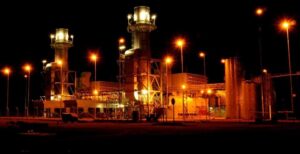
Germany has reduced its planned gas-fired power expansion to 10 gigawatts, which is about half of the amount proposed earlier this year. The government is trying to balance cutting emissions with making sure there is reliable backup for renewable energy. Chancellor Friedrich Merz and his Social Democrat partners reached this compromise after debates between those wanting a faster transition and those worried about energy security for industry.
Merz said that all new plants must be able to use hydrogen, which addresses concerns that adding gas capacity would lead to long-term emissions. The EU has shown support for the new plan, which also includes 2 gigawatts of technology-neutral capacity, such as battery storage.
Since facilities that are used only occasionally are not profitable, the plan will need billions in subsidies. Tenders for 8 gigawatts will start next year, with the goal of having the plants running by 2031 and reaching carbon neutrality by 2045. Another 2 gigawatts will be offered in 2026 and 2027, with a quick switch to hydrogen, and there will be an extra open tender in 2029.
***
Further reading: Germany scales back plans for new gas-power generation in decarbonisation compromise
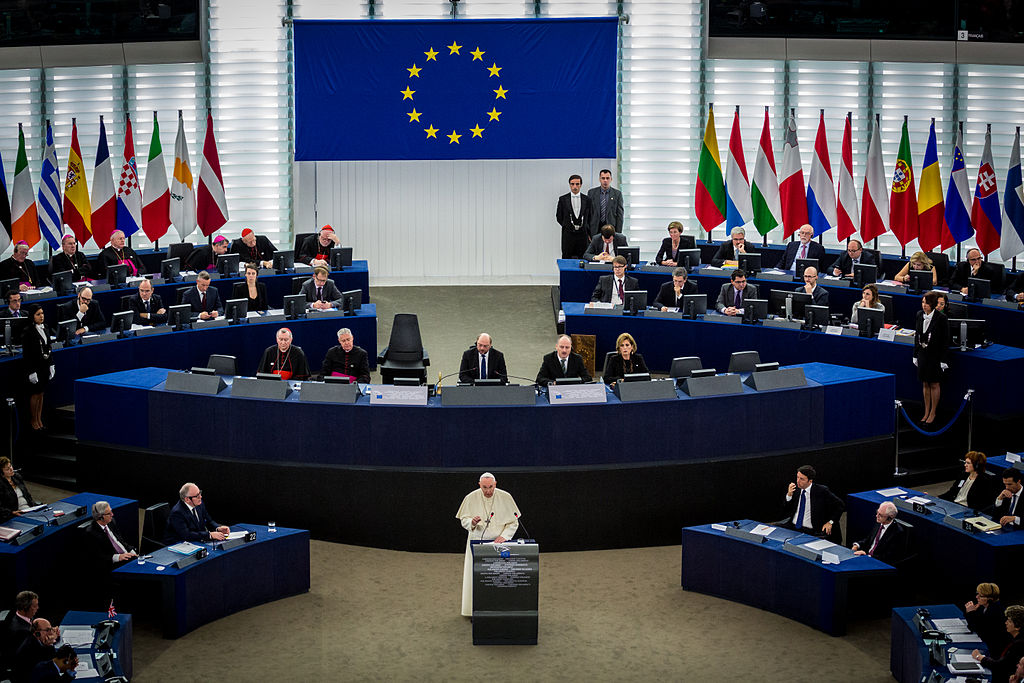
Editor’s Note: The opinions expressed here by the authors are their own, not those of impakter.com — In the cover photo: Pope Francis speaks to European Parliament. Cover Photo Credit: Wikimedia Commons