Today’s ESG Updates
- EFRAG Unveils ESRS Knowledge Hub: Centralized EU platform to support CSRD-aligned sustainability reporting.
- Bank of England Tests Climate Resilience of Private Equity: New stress test targets leveraged credit and PE exposures.
- Singapore Introduces Green Power Rules for Data Centers: New facilities must run on cleaner energy sources to curb emissions.
- Amazon Faces Climate Rift with Tech Rivals: Dispute intensifies over how data centers disclose and source renewable power.
EFRAG launches ESRS knowledge hub to centralize sustainability reporting standards
European Financial Reporting Advisory Group (EFRAG) officially launched the ESRS Knowledge Hub, a single point of access that provides companies with clearer guidance on complying with the European Sustainability Reporting Standards under the Corporate Sustainability Reporting Directive. It brings together authoritative documents, implementation guidance, educational materials, and interpretations in one place to help organizations navigate one of the most comprehensive sustainability reporting frameworks in the world.
With thousands of EU companies now entering the first phase of mandatory sustainability disclosure, the Knowledge Hub aims to bridge the gap between regulation and practical implementation with standardized resources. The platform includes sector-agnostic ESRS material and will later expand to sector-specific standards, enabling both SMEs and large multinationals to adapt efficiently.
***
Further reading: EFRAG Launches ESRS Knowledge Hub to Centralize Sustainability Reporting Standards
Bank of England launches stress test of private equity and credit

The BoE has launched its first climate-related stress test on the private equity and private credit sectors, in one of the biggest expansions of regulatory scrutiny beyond traditional banks and insurers. The exercise will focus on evaluating how leveraged finance exposures would withstand severe economic and climate-related shocks, particularly in high-risk portfolios.
The move reflects increasing concerns that private equity firms are underprepared for transition and physical climate risks, particularly given their steadily rising influence in European and global capital markets. The test also assesses how fund managers model long-term risk across energy-intensive assets and whether current disclosures are aligned with the UK’s climate goals. The results will be used in shaping future regulatory expectations.
***
Further reading: Bank of England launches stress test of private equity and credit
Klimado – Navigating climate complexity just got easier. Klimado offers a user-friendly platform for tracking local and global environmental shifts, making it an essential tool for climate-aware individuals and organizations.
Singapore sets green power rules for new data centers
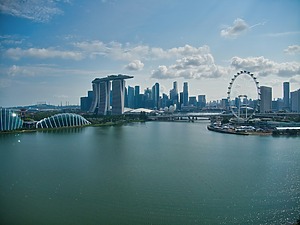
Singapore has enacted new green power requirements for all future data centers, marking a major shift in the country’s technology and energy strategy. Under the rule, companies applying for new data center capacity must demonstrate their facilities will be powered through low-carbon energy sources, including renewable energy imports or high-efficiency generation systems.
This policy follows Singapore’s three-year pause on new data center approvals, driven by concerns over energy use and emissions from one of the world’s most data-dense hubs. Authorities will now grant development slots only to operators who meet strict sustainability criteria, including limits on power usage effectiveness (PUE) and carbon-reduction plans. According to industry observers, the new policy will shape regional investment flows along with the global trajectory toward green, high-efficiency data center operations.
***
Further reading: Singapore sets green power rules for new data centers

Climate rift opens between Amazon and rivals in row over data center power

A growing dispute over climate change has emerged between Amazon Web Services and a host of major tech competitors over how cloud providers source, report, and disclose the energy use of their data centers. At the heart of the conflict is a perception that Amazon resists more granular transparency requirements on renewable energy procurement and carbon accounting, particularly in markets where data center demand is straining local power grids.
Competitors say the inconsistent reporting frameworks let AWS overstate progress toward its renewable energy goals as it leans on fossil-fuel-heavy grids in key markets. Amazon contends its approach is in line with international standards and that rivals misstate the technical realities of matching clean power.
***
Further reading: Climate rift opens between Amazon and rivals in row over data center power
Editor’s Note: The opinions expressed here by the authors are their own, not those of impakter.com — Cover Photo Title: Atomium, Brussels, Belgium, Cover Photo Credit: Ezgi Deliklitas