Impakter
  • Environment
    • Biodiversity
    • Climate Change
    • Circular Economy
    • Energy
  • FINANCE
    • ESG News
    • Sustainable Finance
    • Business
  • TECH
    • Start-up
    • AI & Machine Learning
    • Green Tech
  • Industry News
    • Entertainment
    • Food and Agriculture
    • Health
    • Politics & Foreign Affairs
    • Philanthropy
    • Science
    • Sport
  • Editorial Series
    • SDGs Series
    • Shape Your Future
    • Sustainable Cities
      • Copenhagen
      • San Francisco
      • Seattle
      • Sydney
  • About us
    • Company
    • Team
    • Global Leaders
    • Partners
    • Write for Impakter
    • Contact Us
    • Privacy Policy
No Result
View All Result
Impakter logo
No Result
View All Result
Shock After Shock After Shock, Warns ECB

Shock After Shock After Shock, Warns ECB

European Central Bank (ECB) to increase supervision of financial institutions to safeguard against the growing threats to the economy

Puja DoshibyPuja Doshi
November 28, 2025
in Business, Climate Change, ESG News, Sustainable Finance
0

Today’s ESG Updates

  • Higher Threat of Shocks to the Economy: The ECB warns of the high level of threats to the economy from different contributing factors. 
  • Avian Influenza: Researchers and doctors assure that it is unlikely to affect humans on a large scale and vaccines would be more available. 
  • A photosynthetic bacterium: Common microbe reveals a promising first step toward biological PFAS cleanup.
  • Our beaches could be gone: Coastlines around the planet are eroding as climate-driven sea level rise combines with human settlement growth in coastal zones.  

The European Central Bank warns of greater economic fragility amid existing threats

The European Central Bank (ECB) in its Supervisory priorities 2026-28 report warns that the threat of shocks to the economy, financial markets, and banks is at an all-time high. “Global uncertainties have surged to exceptional levels, creating an environment of heightened fragility, where risks once considered remote are becoming more likely,” the ECB said. The risks come from “geopolitical tensions and shifting trade policies, climate and nature-related crises, demographic change and technological disruptions”, which are pronouncing vulnerabilities in already fragile systems. “Uncertainty is elevated. This combination of factors heightens the risk of sudden and severe disruptions with far-reaching consequences for economies, financial markets and banks alike. It echoes the call to banks over the past years to remain vigilant and to avoid complacency,” said the ECB report.

The ECB mentions they will strengthen the supervision of banks to ensure regulations and policies are followed. Most banks show an inadequate aversion to climate– and nature-related risks, given the growing frequency of natural disasters and the slow progress towards net-zero goals. “Going forward, supervisors will continue to monitor banks’ progress and remediation of shortcomings, while focusing targeted supervisory exercises on prudential transition planning requirements and persisting challenges to banks’ compliance,” it said.

***

Further reading: Global risk of shocks is unprecedentedly high, warns ECB
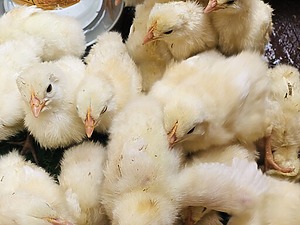

Mutation of Bird flu could spread to humans causing another pandemic. Photo Credit: Narek75

Avian influenza could be the next pandemic

“The bird flu virus that has been spreading among wild birds, poultry and mammals could lead to a pandemic worse than COVID-19 if it mutates to transmit between humans” the head of France’s Institut Pasteur respiratory infections centre said. Avian influenza, commonly called bird flu, has led to the culling of hundreds of millions of birds in the past few years, disrupting food supplies and driving up prices. “What we fear is the virus adapting to mammals, and particularly to humans, becoming capable of human-to-human transmission, and that virus would be a pandemic virus,” Marie-Anne Rameix-Welti, medical director at the Institut Pasteur’s respiratory infections centre. People have antibodies against common H1 and H3 seasonal flu strains, but none against the H5 bird flu affecting birds and mammals, as they had none against COVID-19. “We need to be prepared to respond early enough. But for the time being, you can happily walk in the forest, eat chicken and eggs and enjoy your life. Pandemic risk is a possibility. But in terms of probability, it’s still very low,” said Gregorio Torres, head of the Science Department at the World Organisation for Animal Health.

***
Further reading: Bird flu virus could risk pandemic worse than COVID if it mutates, France’s Institut Pasteur says


Featured ESG Tool of the Week:
Klimado – Navigating climate complexity just got easier. Klimado offers a user-friendly platform for tracking local and global environmental shifts, making it an essential tool for climate-aware individuals and organizations.
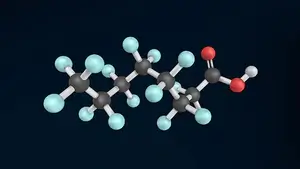
Natural microbes will eventually be guided or engineered to help reduce PFAS pollution. Photo Credit: ScienceDaily

Biological tools that might one day tackle toxic contamination 

Scientists working in the labs of Rajib Saha and Nirupam Aich have found that a widespread photosynthetic bacterium, Rhodopseudomonas palustris, can interact with perfluorooctanoic acid, a highly resistant member of the PFAS family. The discovery offers a possible solution to protect water quality and public health by using natural microbes to help reduce PFAS pollution. During controlled lab tests, the researchers observed that R. palustris removed about 44% of PFOA from its surroundings within 20 days. Much of that absorbed chemical later returned to the environment, most likely because the cells broke apart. “This gives us a foundation to explore future genetic or systems biology interventions that could improve retention or even enable biotransformation” said Saha, Richard L. and Carol S. McNeel Associate Professor. 

***

Further reading: This tiny microbe may be the key to fighting forever chemicals


LinkedIn For the latest updates, visit our LinkedIn page

Climate change and human settlement and causing loss in bio-diversity. Photo Credit: Camille Minouflet

Our beaches are under threat from climate change and increasing human settlement

Concern about the threat on diverse life that depends on sandy environments, was raised by Uruguayan marine scientist Omar Defeo, a professor at Uruguay’s University of the Republic (UdelaR), during the opening sessions of the FAPESP Day Uruguay symposium, on November 13 in Montevideo. “Almost half of the beaches will disappear by the end of the century. We in Uruguay, Brazil, and Argentina share these resources. Therefore, we must work in partnership with Brazilian scientists to manage and conserve coastal ecosystems,” Defeo said. A study led by Brazilian researcher Guilerme Corte, shows that increased numbers of beachgoers have the strongest negative impact on species richness and biomass, especially in submerged zones. Buildings constructed directly on the sand and mechanical beach cleaning also reduce species richness and biomass.

***

Further reading: Scientists warn half the world’s beaches could disappear


Editor’s Note: The opinions expressed here by the authors are their own, not those of impakter.com — Cover Photo Credit: European Central Bank.
Tags: Avian Influenzabiological toolsclimate riskECBESGEUMicrobesSandyBeaches
Previous Post

Severe Floods Threaten $140M of Thailand’s Rubber Production

Next Post

EU Redefines ESG Rules, Expanding Eligibility to Controversial Weapon Producers

Related Posts

ESG News regarding EC’s public consultation for climate resilience, e.on ceo deprioritizing solar and wind, EIB funding Polish offshore wind farm, and Taiwan restarting nuclear program
Business

European Commission Opens Climate Resilience Consultation

Today’s ESG Updates EU Invites Public to Shape Climate Policy: The European Commission launched a consultation to gather public input...

bySarah Perras
December 2, 2025
How Vaccinating Animals Can Protect Humans: A One Health Strategy
Biodiversity

How Vaccinating Animals Can Protect Humans: A One Health Strategy

Accelerating human and animal vaccine development against the myriad of zoonotic diseases has been a prime strategy contained within the modern One...

byDr. Bruce Kaplan - Epidemiologist formerly at the CDC/EIS and USDA-FSIS Office of Public Health and Science & Co-Founder of the One Health Initiative
December 2, 2025
Bird Flu: What the First Death From Rare H5N5 Strain Reveals About US Public Health
Health

Bird Flu: What the First Death From Rare H5N5 Strain Reveals About US Public Health

A resident of Washington State died last week after contracting the H5N5 avian influenza, according to the Washington State Department...

byRichard Seifman - Former World Bank Senior Health Advisor and U.S. Senior Foreign Service Officerand1 others
November 27, 2025
COP30 softens climate language; Private climate data firms see surge; South Korea partners on sustainable aviation fuel; Freedom Holding publishes 2025 sustainability report.
Business

COP30 Draft Drops Fossil-Fuel Language, Alarming Climate Advocates

Today’s ESG Updates COP30 Draft Drops Fossil-Fuel Language: Weakening climate signals sparks concern for corporate transition plans. Private Climate Data...

byMuhammad Umer Aslam
November 24, 2025
Can Government Efforts to Regulate AI in the Workplace Make a Difference?
AI & MACHINE LEARNING

Can Government Efforts to Regulate AI in the Workplace Make a Difference?

An overview of AI regulations and laws around the world designed to ensure that the technology benefits individuals and society,...

byRichard Seifman - Former World Bank Senior Health Advisor and U.S. Senior Foreign Service Officer
November 21, 2025
ESG News regarding: EU proposes to re-examine SFDR; Insurers struggle with mapping and managing climate risk in Africa; Fire at the climate summit in Brazil; UN demands Iran to disclose nuclear material stockpile.
Business

SFDR Re-examination Proposed by EU

Today’s ESG Updates Simplify ESG Reporting: The EU proposes simplifying ESG reporting for the financial sector.  Climate Risk in Africa:...

byPuja Doshi
November 21, 2025
EU Parliament cuts corporate sustainability reporting; BlackRock relaxes ETF ESG exclusions; Aegon sets 2025 US growth targets; Google proposes adjusting EU AdTech policy.
Business

EU Parliament Slashes Corporate Sustainability Reporting, Shaking ESG Landscape

Today’s ESG Updates EU Parliament Cuts Sustainability Reporting: Lawmakers reduce corporate ESG reporting and due diligence obligations. BlackRock Eases ESG...

byMuhammad Umer Aslam
November 17, 2025
ESG news regarding weakened EU sustainability laws, new metal-fuel funding, legal challenges to California climate rules, and Germany scaling back gas capacity plans.
Business

Europe Retreats: Lawmakers Slash Corporate Climate Obligations

Today’s ESG Updates EU Weakens Sustainability Law: EU lawmakers scaled back the CSDDD, narrowing its scope to only large companies...

byEge Can Alparslan
November 14, 2025
Next Post
EU Redefines ESG Rules, Expanding Eligibility to Controversial Weapon Producers

EU Redefines ESG Rules, Expanding Eligibility to Controversial Weapon Producers

Recent News

ESG News covering Great British Energy’s 2030 clean-power strategy, UK government investment, nationwide renewable expansion, community energy projects, offshore wind development, and job creation in the energy transition.

Great British Energy Unveils 2030 Clean Power Strategy

December 4, 2025
Crypto Portfolio Margin Access defined

What Is Crypto Portfolio Margin Access?

December 4, 2025
Governments Are Hiding Data, Threatening Democracy. Here’s How It Affects You

Governments Are Hiding Data, Threatening Democracy. Here’s How It Affects You

December 4, 2025
  • ESG News
  • Sustainable Finance
  • Business

© 2025 Impakter.com owned by Klimado GmbH

No Result
View All Result
  • Environment
    • Biodiversity
    • Climate Change
    • Circular Economy
    • Energy
  • FINANCE
    • ESG News
    • Sustainable Finance
    • Business
  • TECH
    • Start-up
    • AI & Machine Learning
    • Green Tech
  • Industry News
    • Entertainment
    • Food and Agriculture
    • Health
    • Politics & Foreign Affairs
    • Philanthropy
    • Science
    • Sport
  • Editorial Series
    • SDGs Series
    • Shape Your Future
    • Sustainable Cities
      • Copenhagen
      • San Francisco
      • Seattle
      • Sydney
  • About us
    • Company
    • Team
    • Global Leaders
    • Partners
    • Write for Impakter
    • Contact Us
    • Privacy Policy

© 2025 Impakter.com owned by Klimado GmbH