
Today’s ESG Updates
- CSRD Reporting Proves Difficult: Deloitte finds that many European companies failed to quantify ESG-related capital and operating expenditure in their first CSRD reports.
- EU Parliament Scales Back Reporting Rules: Lawmakers approve the “Omnibus” package, raising thresholds for CSRD and CSDDD to reduce reporting obligations for smaller companies.
- Deforestation Law Delayed: EU member states approve a 12-month delay to the EU Deforestation Regulation, shifting full application to December 2026.
- China’s Battery Industry Expands: Battery demand surges as power market reforms and data center growth drive record exports in 2025.
Deloitte Study on CSRD Reporting
A recent Deloitte study covering Central and Eastern Europe reveals that European companies faced significant challenges in the first year of mandatory reporting under the CSRD. Most companies successfully submitted sustainability reports, but Deloitte found that integrating sustainability information into financial reporting remains limited.
The reports reviewed showed that only 42% disclosed quantitative information on capital expenditures related to ESG, and even fewer disclosed quantitative information on operating expenses related to sustainability risks. Most companies struggled to assess the financial impact of climate-related risks and transition measures, as well as social factors, especially when trying to connect the risks to long-term business planning.
In most cases, Deloitte noted that this data is gathered separately from financial data, making it difficult to meet the CSRD’s requirement for consistent and comparable disclosures. The report concludes that if internal systems do not get much stronger and coordination between finance and sustainability teams is not closer, CSRD reporting risks remaining a compliance-driven exercise rather than a decision-useful reporting tool.
***
Further reading: Deloitte study: the first year of ESG reporting in accordance with CSRD was challenging for companies
EU Parliament Approves ESG Reporting Omnibus
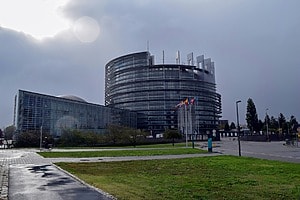
The European Parliament has voted through the so-called “Omnibus” simplification package, formally dialing back some key elements of the European Union’s corporate sustainability reporting framework. The vote raises the financial thresholds for defining a “large” company, effectively taking thousands of smaller firms out of the scope of the Corporate Sustainability Reporting Directive and the Corporate Sustainability Due Diligence Directive.
The move drew criticism from sustainability groups and transparency advocates who said that narrower reporting requirements will reduce access to comparable ESG data. The decision reflects increased political pressure within the EU to balance sustainability objectives with economic concerns, as companies continue to push back against the costs and complexity of ESG compliance.
***
Further reading: EU agrees to scale back sustainability reporting requirements
Klimado – Navigating climate complexity just got easier. Klimado offers a user-friendly platform for tracking local and global environmental shifts, making it an essential tool for climate-aware individuals and organizations.
EU Delays Deforestation Regulation
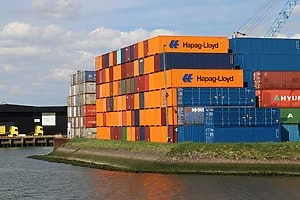
The EU member nations have officially approved the one-year deferment of the EU Deforestation Regulation (EUDR) and its full implementation in December 2026. The EU Deforestation Regulation requires businesses that import commodity-linked products such as coffee, cocoa, soybeans, and palm oil to ensure they do not contribute to deforestation.
For proponents of the delay, it would give firms enough time to develop due diligence systems and prevent possible supply chain disruption. However, environmental campaigners argue that due to the delay, “one of the EU’s strongest instruments in fighting global deforestation has been undermined.”
***
Further reading: EU countries approve year-long delay to deforestation law

China’s Battery Industry Sees Surge in Demand

China’s battery producers have also reported a major jump in demand, driven not only by the rising popularity of electric cars but also by increased investments in data centers and changes in the electricity sector. The sector has become more profitable due to recent changes, prompting electricity companies to invest in batteries.
Advances in artificial intelligence and cloud computing are driving increased electricity consumption in data centers. This further increases demand for reliable energy storage. It has prompted an augmentation in battery systems across China to enable the integration of renewable energies. This situation underscores the importance of the energy storage system in the energy transition. For companies, this trend only underscores the importance of battery supply chains.
***
Further reading: China’s power reforms, global data centre buildout usher in battery boom
Editor’s Note: The opinions expressed here by the authors are their own, not those of impakter.com — Cover Photo Credit: Anastassia Anufrieva