Today’s ESG Updates
- COP30 Draft Drops Fossil-Fuel Language: Weakening climate signals sparks concern for corporate transition plans.
- Private Climate Data Firms See Surge: U.S. government pullback drives commercial demand for high-resolution emissions monitoring.
- South Korea Partners on Sustainable Aviation Fuel: Collaboration aims to scale SAF production for aviation decarbonization.
- Freedom Holding Publishes 2025 Sustainability Report: Smaller listed firms showcase ESG disclosures and initiatives.
COP30 draft drops fossil-fuel language
The newly released COP30 draft text omits any direct mention of fossil fuels, raising alarm among climate advocates and investors. As this softens the language, the net-zero signal, on which companies need a coordinated global message to base their corporate transition planning, is weakened. Observers say the lack of mention of fossil fuels could delay the momentum toward decarbonization in hard-to-abate sectors such as energy, transport, and heavy industry.
With negotiations still in flux, the draft underlined tensions between climate diplomacy and political compromise, leaving businesses and investors in limbo. Businesses may have to intensify internal targets and independently verifiable strategies, rather than rely on international mandates. The development underlined that proactive transition planning and transparent sustainability reporting are increasingly crucial as global climate signals unfold.
***
Further reading: Sustainable Switch Climate Focus: COP30 draft deal removes all fossil fuel reference
US government pullback from climate science fuels boom for private data firms
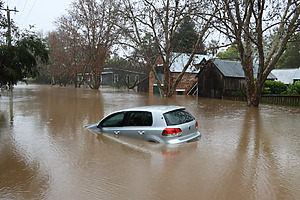
The retreat of the U.S. government from public climate science and growing political pressure on NOAA and NASA have opened a widening gap that private companies are rapidly moving to fill. Constrained federal programs have led corporations to turn to commercial climate-risk platforms, advanced modeling tools, and proprietary datasets to inform decisions across insurance, infrastructure, agriculture, and energy, among other sectors. This has accelerated the rise of private climate-intelligence firms offering high-resolution projections and disaster-risk analytics well beyond traditional government data.
But the proliferation of for-profit providers has raised significant questions about the privatization of critical climate information. The use of paywalled datasets would reduce access for communities and smaller organizations, undermining what once was considered a public good. As financial and market pressures intensify, many warn that an increasing reliance on unregulated, opaque commercial models could weaken rather than strengthen transparency in the disclosure of climate-related risk. As the U.S. steps away from its decades-long leadership in federal climate science, a central question now emerges: Who will own and control the climate data that will shape resilience?
Companies navigating climate-risk data gaps can leverage ESG tools to make informed, resilient sustainability decisions.
***
Further reading: US government pullback from climate science fuels boom for private data firms
Klimado – Navigating climate complexity just got easier. Klimado offers a user-friendly platform for tracking local and global environmental shifts, making it an essential tool for climate-aware individuals and organizations.
South Korea SAF partnerships accelerate aviation decarbonization

South Korea is making rapid strides to widen the use of sustainable aviation fuel through a series of recent partnerships aimed at reducing emissions and underpinning long-term decarbonization in aviation. The initiative brings together government agencies, major airlines, and energy companies to scale SAF production and secure more stable supply chains. Key industry players are working on domestic SAF blending, refinery upgrades, and technology cooperation, with the mutual aim of reducing reliance on imported fuel and accelerating compliance with future international aviation standards.
The partnerships illustrated South Korea’s determination to place SAF at the center of its climate strategy. Officials said SAF deployment will be key to achieving carbon-neutral growth, while airlines underlined the requirement for predictable costs and broader regional supply. At the same time, significant challenges persist-things like high production costs and limited feedstock- the partnerships signal increasing momentum toward a more resilient and lower-carbon aviation ecosystem.
Aviation and energy companies can use ESG solutions to track SAF deployment, monitor emissions, and strengthen transparency.
***
Further reading: 2 South Korean firms partner for sustainable aviation fuel production

Freedom Holding Corp publishes 2025 Sustainability Report on ESG initiatives

Freedom Holding Corp. has presented its Sustainability Report for 2025, focusing on 27.87 billion tenge (USD 57.6 million) directed to ESG-oriented projects in education, technology, social development, and environmental protection. The company positions sustainability as a guiding philosophy, where long-term investment in the community and responsible growth go hand in hand. This includes funding an AI research facility, supporting the ICPC World Finals 2024, expanding the digital literacy program, and developing social infrastructure, such as flood recovery, cultural facilities, and youth sports, including facilities for people with disabilities.
Environmentally, the group invested in green energy, reforestation, and biodiversity restoration, while continuing to improve internal workforce metrics. Of its staff, 95% are based in Kazakhstan, while it also saw a substantial growth in young professionals and improved gender balance. Overall, the report positions Freedom Holding as a business aiming to further establish itself as a regional ESG leader through continued, focused investment.
***
Further reading: Freedom Holding Corp Publishes 2025 Sustainability Report on ESG Initiatives
Editor’s Note: The opinions expressed here by the authors are their own, not those of impakter.com — In the Cover Photo: Belém Climate Summit, COP30 (Brazil) Cover Photo Credit: Wikimedia Commons