The unique cruelty that human beings visit upon each other so pervades the United States this Summer that I retreated to three books about animals to restore my spirits: Peter Wohlleben’s “The Inner Life of Animals: Love, Grief, and Compassion,” Ed Yong’s “An Immense World: How Animal Senses Reveal the Hidden Worlds Around Us,” and Shelby Van Pelt’s “Remarkably Bright Creatures.”
There are times when we try each other’s souls so painfully that we seek comfort in nature in the field and forest, like the courtiers in Shakespeare’s “As You Like It“:
Come hither, come hither, come hither:
Here shall he see
No enemy
But winter and rough weather.
And, when we are there, we take solace that the animals all around us are (or seem to be?) leading morally simpler lives than ours.
Animal Joy?
Scientists long assumed that animals act only by instinct, feel little physical pain and are spared our emotional turmoil. In other words, they are automatons. It turns out, however, that animals not only feel pain acutely (even fish!) but also experience many of the same feelings that we do.
In his book on “The Inner Life of Animals: Love, Grief, and Compassion,” German forester/scientist Peter Wohlleben reminds us that an “operating code” of ancestral programming “still works in us — and in all the other species whose family trees branched from our lineage in the past few million years.”
That is why we can observe, and, in many cases, scientifically prove, that pigs feel grief, horses get jealous, dogs rebel against unfairness, and crows demonstrate gratitude. Since emotions arise from the limbic system rather than from the neo-cortex, animals share the same wide range of feelings as humans. Although we can never fully understand the minds of other species, when we attribute maternal tenderness to a squirrel or mutual sympathy to mice we are not imposing our own perspectives upon them in a myopic anthropomorphism, but recognizing their reactions as similar to our own.
A lot of animal emotions, including ours, arise from and serve evolutionary purposes, especially in group relations. A hunting and gathering band of humans who plan together and share their food is more likely to survive than a quarreling bunch of leaderless individualists.
We see an innate sense of law and order even in very young children when they insist that everyone in a game follow agreed-upon rules. Shouts of “it’s not fair” are heard in every playground for the same reason that Wohlleben’s horses are disgruntled when one is fed more than the other; this is a sense of justice that has been scientifically documented among dogs as well.

Similarly, pairs of crows were taught to get cheese treats by pulling at a string together, but when one gobbled up both of their portions, its victim reacted to this unfairness by refusing to cooperate anymore.
Several species of squirrels share my backyard — Eastern Greys (with their black phase siblings), Red Squirrels, Fox Squirrels, and the closely related Chipmunks.
The other day, I noticed two of the Eastern Greys at one of their favorite games, chasing each other around and around a wide tree trunk, freezing in place when they lost sight of each other (which seemed to be their goal), then starting all over again.

A couple of days later, I spotted one of them playing this vigorous game of hide-and-seek with a Red Squirrel. I thought they were lunging about for the sheer fun of it until I came across a video of a squirrel and hawk similarly engaged. It turns out that squirrel hide-and-seek has a survival purpose — they are practicing moves for when a bird of prey tries to grab them.
The thing is, animals at play — gamboling lambs, squirrel tag, robins splashing in my bird bath, rabbits leaping over each other’s backs — seem to be experiencing the same kind of glee we felt as children tearing around our playground, throwing ourselves down the slides, and climbing every tree in sight: legs we stretched to kick a ball or bodies, flung upside down on the top bar of the jungle gym, simply tingling with joy, and all without an evolutionary thought in our heads.
Is it possible that when animals and children play, we are just having fun?
Wohlleben writes about crows that drag pieces of cardboard up onto a roof for gleeful toboggan rides, and others who nip the ends of dogs’ tails to get them whirling around, and all for no (evolutionary) purpose whatsoever.
And, then, there is sex.
According to Wohlleben, animals open themselves to all kinds of danger when engaging in their vigorous courtship rituals and when, absorbed in the act itself, they become oblivious to their surroundings. It needs something more than mere instinct for them to make themselves so vulnerable, and that something is oxytocin: “the trigger for such behavior is a cocktail of hormones that gives rise to feelings of exquisite satisfaction and joy.”
[Given the pleasure, joy, and loss of oneself in the arms of another that comes with sex, the now popular and ubiquitous use of the “F” word, with its connotation of dominance and violence, comes across to me as a desacralization.]
Was it the sense of intense pleasure released by oxytocin that made us hurl ourselves into play as children? Was our sense of joy, like the joy of sex later in our lives, a mere evolutionary advantage?
Wohlleben rests his case for pure joy on the tobogganing and dog-teasing crows; I rest mine on something of no evolutionary value that I observed, one summer day, from my screen porch. A male and a female Cardinal were mating enthusiastically on the telephone wire near where I was sitting.
OK: oxytocin to override fear and get the evolutionary job done, but what did it mean when the male hopped off and the female, sitting on the wire beside him, lifted her head to him endearingly and burst into a splendidly enthusiastic song?
Animal Magnetism
In addition to a world of emotions we never expected of birds, mammals, and (yes!) even reptiles and insects, the creatures all around us are endowed with complex sensory attributes far beyond our merely human range. When autumn comes, we will hear barely audible trills from high up in the trees or from deep in the bushes, which are the contact calls of tiny warblers that have dropped down from the wind on their epic migrations from Canada and Northern Michigan to South America, Mexico, and the southern United States.
Ed Yong, in “An Immense World: How Animal Senses Reveal the Hidden Worlds Around Us,” explains bird migration for us:
“Every winter, thrush nightingales must cross the immense Sahara Desert on their way from Europe to Southern Africa. Once they sense the magnetic field of northern Egypt, they react by packing on more fat, in anticipation of the arduous desert crossing ahead. Other migrating songbirds can use these magnetic maps to adjust their bearing if they’re blown off course by strong winds…”

“An Immense World” is full of such wonders, from octopus sentience to bacteria strewing fields of magnetic crystals, all based on the idea that each species of creature operates within a distinct Umwelt, the world that it experiences through its unique constellation of senses.
We learn, for example, that one ant might tap at another “with the tips of its clubby antennae. This action, delightfully known as antennating, is the ant equivalent of a sniff:” Too, “female lobsters urinate into the faces of males to tempt them with a sex pheromone.” (Fortunately, every species operates within a different Umwelt – What would happen if we humans tried that on each other?)
Related Articles: Are the Orca Boat ‘Attacks’ Purposeful or Just Playful? | It’s Time to Rethink How We Live With Animals | Engaging the ‘Unusual Suspects’: An Interview With Azzedine Downes | Animals in Space: We Owe Them Now And In Future
It has been known for quite a while that cells contain magnetic substances and that creatures like birds and turtles navigate by responding to “magnetic signposts” on routes governed by a magnetic pull from their birthplace. Sea turtles always return to the exact beach where they emerged from their eggs, and if a salmon is hatched in a tank containing water from a specific river, it will return to that river to spawn.
And did you know that “life exists within a planetary electric field and is affected by it”? Bees, for example, become positively charged by bumping into bits of dust and debris in the air, while flowers are negatively charged from being grounded in water. “When positively charged bees arrive at negatively charged flowers, sparks don’t fly, but pollen does” — just picture all those tiny flecks of pollen responding to bee magnetism in a golden explosion!
Wohlleben’s and Yong’s analyses of the complex emotional and sensory lives of the creatures all around me are comforting at a time when my country is extending its universal cruelty not only to human beings but also, in abandoning climate science and carbon mitigation, to our beloved planet. Although the vision of the whole thing burning to a crisp haunts me day and night, I take (desperate) comfort in the hope that nature, with a good portion of its creatures, will survive even if we humans perish.
Octopus Utopia?
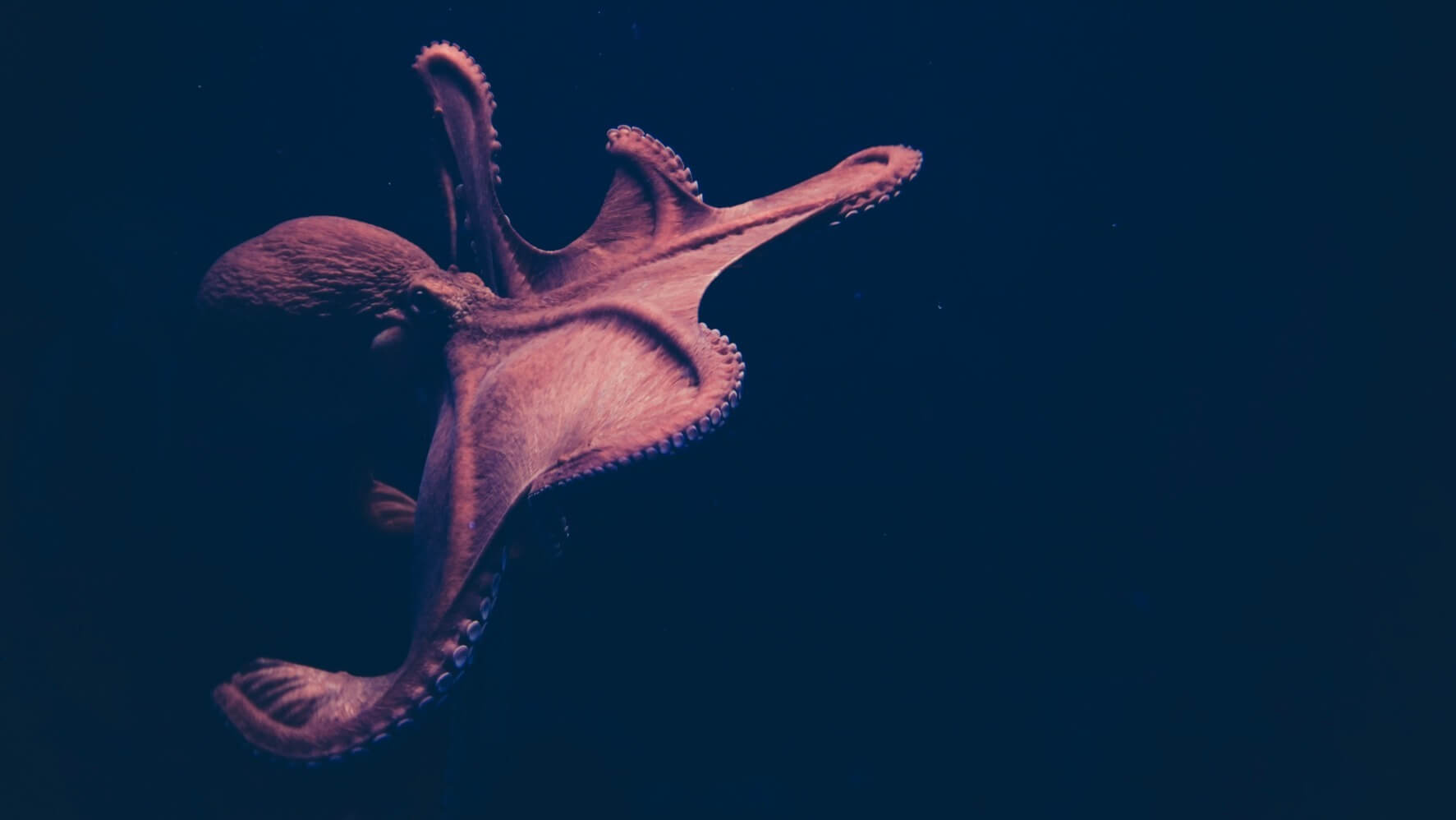
Oxford Zoologist Tim Coulson, author of “The Universal History of Us,” (2024), argues that “octopuses could potentially develop a civilization if humans were to go extinct, using their remarkable intelligence and adaptability. Octopuses possess complex nervous systems, with about 500 million neurons, enabling problem-solving, tool use, and learning through observation.” Of course, they are solitary, and only live about five years, but there is no reason, he argues, that they couldn’t evolve “social structures if evolutionary pressures favored it.”

Shelby Van Pelt bases her novel “Remarkably Bright Creatures” on a similar conviction that not only are octopuses intelligent (there have been reports of octopuses aiming hoses to put out lights that irritate them and engineering complex escape routes from their tanks) but also capable of emotion. When Tova, the cleaning lady at the aquarium where Marcellus is kept, rescues him from cords he has gotten entangled with during one of his nocturnal explorations, he becomes remarkably loyal to her, and they develop a friendship.
This is, of course, fantasy, as is the idea of an octopus civilization; however, it does provide (if only momentary) a much-needed escape from political despair. The lives of our animal relatives, being free from human malice, are just what we need. Like Shakespeare’s courtiers, we take joy in escaping to the Greenwood:
Who doth ambition shun
And loves to live i’ the sun,
Seeking the food he eats,
And pleased with what he gets,
Come hither, come hither, come hither:
Here shall he see
No enemy
But winter and rough weather.
Editor’s Note: The opinions expressed here by the authors are their own, not those of impakter.com — Cover Photo Credit: Isabel Galvez.