Impakter
  • Environment
    • Biodiversity
    • Climate Change
    • Circular Economy
    • Energy
  • FINANCE
    • ESG News
    • Sustainable Finance
    • Business
  • TECH
    • Start-up
    • AI & Machine Learning
    • Green Tech
  • Industry News
    • Entertainment
    • Food and Agriculture
    • Health
    • Politics & Foreign Affairs
    • Philanthropy
    • Science
    • Sport
  • Editorial Series
    • SDGs Series
    • Shape Your Future
    • Sustainable Cities
      • Copenhagen
      • San Francisco
      • Seattle
      • Sydney
  • About us
    • Company
    • Team
    • Global Leaders
    • Partners
    • Write for Impakter
    • Contact Us
    • Privacy Policy
No Result
View All Result
Impakter logo
No Result
View All Result
Ecuador takes new steps to protect wildlife, creating a ‘sea highway’

Ecuador takes new steps to protect wildlife, creating a ‘sea highway’

The ‘sea highway’ will help animal migration and curb fishing in 20,000 square miles of ocean around the Galàpagos

Elizabeth PartschbyElizabeth Partsch
January 26, 2022
in Climate Change, Environment
0

Rich and abundant with biodiverse wildlife, the Galápagos is home to some of the most unique sea life in the world. 

On Jan. 14, the Ecuador government announced it would ‘curb fishing’ in roughly 20,000 square miles of ocean in order to protect the expansive sea life in the Galápagos.

In simple terms, the highway would incorporate guardrails to form an underwater animal highway between Ecuadors’ Galápagos Islands and Costa Rica’s Cocos Island. 

This new expanse of protected area will prohibit fishing in half of the newly protected area and longline fishing will be prohibited in the other half.  

Why are the Galápagos Islands so special?

The Galápagos Islands are an archipelago or chain of islands in the Eastern Pacific Ocean. The Galápagos Islands include thirteen major islands and several smaller islands. The largest Island, Isabella, is approximately 80 miles long — 120 kilometers. 
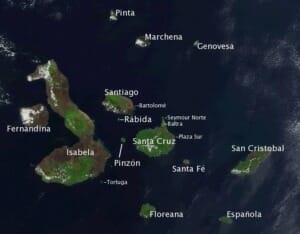
Known for its biodiverse sea life, many of the animals are considered endemic, unique to the Galápagos region. Some of these animals include the giant Galápagos tortoise (Chelonoidis nigra), the marine iguana (Amblyrhynchus cristatus), the flightless cormorant (Phalacrocoraz harrisí) and the Galápagos penguin (Spheniscus mendiculus).

Due to its environmental conditions, the Galápagos make up a unique ecosystem. Residing near the equator, they receive cool ocean currents — an interesting contradiction to its location. With the combination of cool and hot temperatures colliding, a diverse array of plants and animals has formed on the islands, unlike any place in the world. 

In order to keep the biodiverse ecosystem the way it is, it is essential for Galápagos islands to be protected — but the rise of fishing in the area is sea life’s biggest threat.

Since 1998, 50,000 square miles of sea around the Galápagaos have been set aside as a marine reserve — but the areas between the archipelagos are not protected. When sea life migrates between different islands, many of them remain unprotected and vulnerable — an easy opportunity for fishers to capitalize on. 

One of the animals most threatened in Ecuadorian waters is sharks. There are more than 40 species of sharks in Ecuador, 90% of which are on the IUCN Red List, the list of endangered species maintained by the International Union for Conservation of Nature. The sharks can be used for eating purposes, but harvesting their fins is more popular. Considered a delicacy in Asia, fishers typically haul fins to Asia to sell for the popular dish fin soup.

Between 1979-2004, about half a million sharks were killed annually in Ecuador, oftentimes their fins being the sole purpose.   

Over the rising concern, in 2004 the President of Ecuador signed a decree for a complete ban on the exports of shark fins. 

Despite new protections, in the 2020 World Wildlife Crime Report by the United Nations Office on Drugs and Crime, it was reported that illicit poaching in conservation areas is a continuous danger to wildlife, with 7,000 species of animals and plants reported in illegal trade in 120 different countries.

With illegal poaching still occurring in protected areas, the creation of the ‘sea highway’ is just a first step. The Ecuadorian government plans to announce steps to better fund conservation efforts in the coming month. 

Besides Ecuador, other countries are taking steps to protect wildlife

Many nations are now taking the initiative to protect biodiversity and marine areas as a part of a global agreement called the Convention on Biological Diversity and to meet their 2020 goals. 

Alongside Ecuador, countries such as Colombia, Costa Rica and Panama are joining the effort to link their marine reserves together and protect a portion of the Pacific Coast. 

Countries such as Chile, New Zealand and the United States have also made recent efforts to protect marine life.

Similar to the Galápagos Islands, New Zealand is home to a plethora of endemic species. Currently, over 15,000 species have been identified in New Zealand’s waters, though scientists estimate there could be as many as 65,000 species. 

New Zealand has a number of conservation measures in place to protect marine wildlife. Most recently, in 2017, they put in place the New Zealand Sea Lion / Rapoka Threat Management Plan to protect the endemic and treasured species from illegal fishers. 

Between 2004 and 2012, they also increased areas of protected land — increasing 4.2% of marine reserves to encompass over 8.5 million hectares of sea.

Although more countries are taking ocean conservation steps, they are still too few. Factors such as plastic pollution, acidic waters and illegal fishing still continue to wreak havoc on marine life everywhere, highlighting the need for yet more countries to join in the conservation efforts if the SDG goal of sustainable life in the seas is to be achieved. It is still a long journey to travel, but Ecuador’s continued efforts to protect marine life are certainly an example many countries can look to follow.


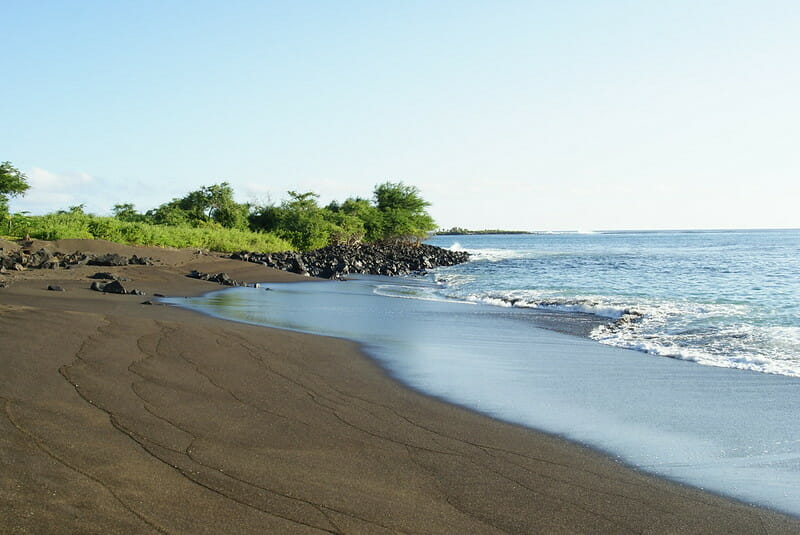
Editor’s Note: The opinions expressed here by Impakter.com contributors are their own, not those of Impakter.com. — Featured Photo: Galápagos Islands on June 3, 2011. Source: Dallas Krentzel, Flickr.
Tags: EcuadorGalapagosmarine wildlifesea highway
Previous Post

Why Is Colombia The Most Dangerous Country For Environmentalists?

Next Post

US Environmental Protection Extended to Environmental Justice

Related Posts

Australia’s Clean Energy Push Faces Setback for COP31
Business

Australia’s Clean Energy Push Faces Setback for COP31

Today’s ESG Updates Australia-Turkey Standoff Puts COP31 Hosting at Risk: Australia’s plan to host next year’s climate summit is delayed...

byJana Deghidy
November 13, 2025
environmental crime
Environment

Historic Amazon Raid Nets 94 Arrests, But Defenders Still Under Attack

A growing wave of violence and environmental crime is endangering Indigenous defenders and biodiversity in the Amazon Basin, as recent...

byAlessandro Camillo
July 31, 2025
ocean conservation
Biodiversity

We’re Protecting the Ocean Wrong

Ocean ecosystems and the marine wildlife that depend on them are under threat as never before. Between overfishing, climate change,...

byThe Revelator
August 7, 2024
The Galapagos: How It Contributes To The Environmental Movement
COP27

The Galapagos: How It Contributes To The Environmental Movement

The Galápagos Islands, formed by a volcanic eruption some 600 miles off the coast of Ecuador, is a protected natural...

byRichard Seifman - Former World Bank Senior Health Advisor and U.S. Senior Foreign Service Officer
December 10, 2022
COVID-19 Waste Catastrophic for World’s Oceans
Environment

COVID-19 Waste Catastrophic for World’s Oceans

The pandemic has led to an increased demand for single-use plastics. Research has revealed that around 25,900 tonnes of COVID-19...

byHenrietta McFarlane
November 13, 2021
In the Face of COVID-19, Farmers in Ecuador Innovate a Whole New Food System
Climate Change

In the Face of COVID-19, Farmers in Ecuador Innovate a Whole New Food System

This article is part of an editorial collaboration with Heifer International. It was first published on the Heifer International blog.  There...

byJason Woods
February 16, 2021
OPIM: Forming Sustainable Partnerships for Development
NGO & Charities

OPIM: Forming Sustainable Partnerships for Development

While the challenges of eradicating hunger, malnutrition and achieving food security are now high on the humanitarian and development agenda,...

byRodrigue Vinet - Head of the Knowledge Management and Capacity Building for Action and Support
September 26, 2016
An Interview with Juan Oliphant: Underwater Photographer and Conservationist
Art

An Interview with Juan Oliphant: Underwater Photographer and Conservationist

Juan Oliphant is more than an underwater photographer. While his photographs aptly capture the beauty in marine wildlife and his Instagram following...

byJames Manson - Psychology Student at Stanford University
April 27, 2016
Next Post
US Environmental Protection Extended to Environmental Justice

US Environmental Protection Extended to Environmental Justice

Recent News

Diamond Painting Designs

7 Beautiful Diamond Painting Designs You’ll Love Working On 

January 13, 2026
ESG News regarding the DOJ’s investigation into Federal Reserve Chair Jerome Powell, Orsted’s U.S. offshore wind lawsuits, Stegra’s Non-Prime Steel Deal With thyssenkrupp, and Ghana repaid $1.47 of energy debt

US Federal Reserve Chair Under Investigation

January 12, 2026
Steakhouse in Tucson

7 Factors That Define a Premium Steakhouse Experience

January 12, 2026
  • ESG News
  • Sustainable Finance
  • Business

© 2025 Impakter.com owned by Klimado GmbH

No Result
View All Result
  • Environment
    • Biodiversity
    • Climate Change
    • Circular Economy
    • Energy
  • FINANCE
    • ESG News
    • Sustainable Finance
    • Business
  • TECH
    • Start-up
    • AI & Machine Learning
    • Green Tech
  • Industry News
    • Entertainment
    • Food and Agriculture
    • Health
    • Politics & Foreign Affairs
    • Philanthropy
    • Science
    • Sport
  • Editorial Series
    • SDGs Series
    • Shape Your Future
    • Sustainable Cities
      • Copenhagen
      • San Francisco
      • Seattle
      • Sydney
  • About us
    • Company
    • Team
    • Global Leaders
    • Partners
    • Write for Impakter
    • Contact Us
    • Privacy Policy

© 2025 Impakter.com owned by Klimado GmbH