Impakter
  • Environment
    • Biodiversity
    • Climate Change
    • Circular Economy
    • Energy
  • FINANCE
    • ESG News
    • Sustainable Finance
    • Business
  • TECH
    • Start-up
    • AI & Machine Learning
    • Green Tech
  • Industry News
    • Entertainment
    • Food and Agriculture
    • Health
    • Politics & Foreign Affairs
    • Philanthropy
    • Science
    • Sport
  • Editorial Series
    • SDGs Series
    • Shape Your Future
    • Sustainable Cities
      • Copenhagen
      • San Francisco
      • Seattle
      • Sydney
  • About us
    • Company
    • Team
    • Global Leaders
    • Partners
    • Write for Impakter
    • Contact Us
    • Privacy Policy
No Result
View All Result
Impakter logo
No Result
View All Result
E-Waste Recycling Could Save Key Metals

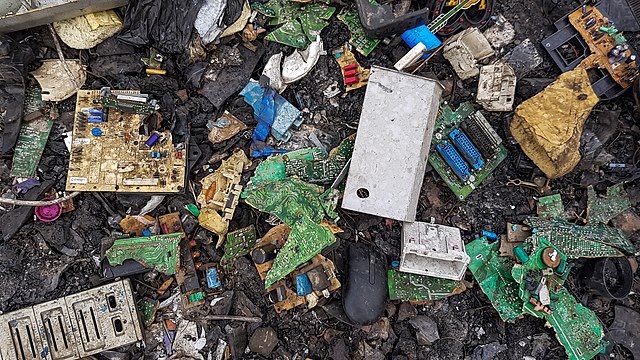
Electronic waste in Ghana.

E-Waste Recycling Could Save Key Metals

New campaign in the UK promotes recycling on basis of new research that found it is more sustainable than mining new metals

Elizabeth PartschbyElizabeth Partsch
May 10, 2022
in Climate Change, Environment
0

The Royal Society of Chemistry (RSC) in the United Kingdom is running a campaign to draw attention to e-waste recycling and the importance of mining minerals contained in electronic technology rather than continuing to mine minerals from the Earth.

The new campaign comes in light of research conducted by the RSC that found some of the Earth’s key elements such as lithium are running out. A survey also done by the RSC discovered a high demand in consumers for more sustainable electronic products.

The RSC hopes to resolve such problems with the new campaigns’ focus on promoting more e-waste recycling plants across the UK.

What is e-waste and why is it hazardous?

E-waste is known as electronic waste — anything ranging from computers, television, phones, home appliances and practically anything with a cord or plug. 

In order to produce electronic devices, many different chemicals and metals are used as components in the making of such products, yet the metals and chemicals used prove to be hazardous to human health. 

Harmful metals in e-waste include gold, silver, mercury, nickel, arsenic, etc which if not properly recycled or disposed of can cause carcinogens in the air and pose overall environmental and human health problems. 

https://www.youtube.com/watch?v=-uyIzKIw0xY

Currently, the UK is the second-largest producer of e-waste in the world with 23.9 kg of e-waste per household being produced in 2019. 

Worse than the UK in this race to the bottom is Norway, the largest producer of e-waste in the world. Although Norway is considered one of the world’s most sustainable countries — with a high focus on green energy and recycling — data suggests the 26 kg of e-waste per capita in 2019 is a result of the popularity of electric vehicles in the country. 

Yet due to the complicated and meticulous nature of recycling lithium batteries, oftentimes electric vehicles produce e-waste — Norway now facing a surplus of e-waste. Norway’s problem only confirms the argument for why focusing on recycling e-waste needs to be more common.

RSC campaign hopes to promote the importance of e-waste recycling through statistics 

Studies done prior to the release of the RSC campaign found that the amount of e-waste generated is growing by about two million tonnes every year, with less than 20% of it actually getting recycled. 

In reaction to such numbers, RSC conducted a survey which found a high demand of consumers wanting more sustainable technology — out of 10,000 people across 10 different countries, 60% said they would switch to a more sustainable tech brand. The survey also found that most consumers didn’t know how to properly dispose of their e-waste. 

The campaign encourages consumers to recycle e-waste through recycling centers and informs consumers of where in the UK such recycling centers are located.

Another important factor the RSC campaign pointed out was the decrease of precious metals in the Earth used to produce electronic devices. Pointing to the latest geopolitical unrest, the war in Ukraine has caused huge spikes in the price of precious metals like nickel — an important element used in electric vehicles.

This upset is causing disruptions in the supply chain that make it more difficult to produce electronic devices. The changes in market are also disturbing the prices of other important metals like lithium — another key ingredient in the making of electric vehicles. 

Especially as precious metals are crucial for developing green-energy products, the demand for metals is surging — demand now outweighs supply. Crucial metals found in smartphones that could run out in the next century include gallium (used in solar panels, LED lights), arsenic, silver, indium (LED lights, camera lenses) and tantalum. 

The RSC campaign suggests instead of mining metals from the Earth which has now become hard to obtain, focus should shift on repurposing metals found in e-waste that countries already have plenty of access to — especially since disposing of e-waste currently is a waste of critical metals.

Not only would recycling e-waste help solve supply chain issues of precious metals, but it would also encourage a sustainable way of disposing e-waste. The RSC campaign sheds light on an important solution to e-waste and the development of green energy that demands attention if countries like the UK are serious about a switch to more sustainable green energy and places like Norway needing a viable way to dispose of electric vehicle batteries.


Editor’s Note: The opinions expressed here by Impakter.com columnists are their own, not those of Impakter.com — In the Featured Photo: Electronic waste in Agbogbloshie, Ghana on December 18, 2018. Source: Muntaka Chasant, Flickr.
Tags: e-wasteelectric vehiclesmetalsrecycleRSCUnited Kingdom
Previous Post

Painless Periods: Natural Remedies to Ease Menstrual Discomfort

Next Post

Move Over, Clean Beauty: Why Ethical Beauty is Taking Over

Related Posts

Solid-State Batteries: The Bet Promising to Change Electric Vehicles
Energy

Solid-State Batteries: The Bet Promising to Change Electric Vehicles

The way we power cars is changing. Not only because electric vehicles are becoming more common, but because the technologies...

byLuis Guillermo Valdivia Chavez
January 8, 2026
The Robotaxi Race: America vs. China
Business

The Robotaxi Race: America vs. China

Electric vehicles (EVs) are not a new concept; their existence goes as far back as the 19th century. But modern...

byMaaz Ismail
December 1, 2025
EU Parliament Supports One-Year Delay to Deforestation Regulation
ESG News

EU Parliament Supports One-Year Delay to Deforestation Regulation

Today’s ESG Updates EU Parliament Backs Delay to Deforestation Law: Lawmakers support a one-year extension for EUDR compliance.  UK Opens...

byLena McDonough
November 27, 2025
Extreme Weather Costs Europe €44.5 Billion a Year
ESG News

Extreme Weather Costs Europe €44.5 Billion a Year

Today’s ESG Updates Europe’s Extreme Weather Costs Soar: Annual damages more than doubled this decade, hitting €44.5B between 2020 and...

byLena McDonough
September 29, 2025
ESG news regarding Google facing antitrust fines, U.S. House approves new Alaskan mining road, Proton Malaysia opens first EV plant, and Brazil’s Vale invests $12 billion in mining
Business

Google Faces Massive Fines Over Privacy and Cookies

Today’s ESG Updates Google Faces $804M in Fines for Global Privacy Breaches: A U.S. jury and France's data regulator fined...

bySarah Perras
September 4, 2025
ESG news regarding the rise of food prices due to climate change, the new regulator for the UK’s private water sector, the growth of Chinese EV manufacturing in Brazil, and Canadian deep-sea mining firm under legal scrutiny for trying to bypass permits
Business

Rising Climate Risks, Rising Grocery Bills

Today’s ESG Updates Climate Change Drives Global Food Price Surge: Since 2022, flash floods, droughts, and heatwaves have led to...

bySarah Perras
July 22, 2025
China’s CATL Commences $6B Battery Project in Indonesia
ESG FINANCE

China’s CATL Commences $6B Battery Project in Indonesia

Today’s ESG Updates $6B CATL Battery Plant Bolsters Indonesia’s Clean Energy Ambitions: The facility will produce enough batteries for 250,000-300,000...

byLena McDonough
June 30, 2025
Malaysia’s Prime Minister Announces $10.1B in Grid Modernization
Business

Malaysia’s Prime Minister Announces $10.1B in Grid Modernization

Today’s ESG Updates Malaysia Commits to  $10.1 B Grid Upgrade: TotalEnergies, Petronas announce important developments at the Energy Asia conference in...

byLena McDonough
June 16, 2025
Next Post
Move Over, Clean Beauty: Why Ethical Beauty is Taking Over

Move Over, Clean Beauty: Why Ethical Beauty is Taking Over

Recent News

The Era of ‘Global Water Bankruptcy’ Has Begun

The Era of ‘Global Water Bankruptcy’ Has Begun

January 30, 2026
ESG news regarding: New Report Urges Urgent Action to Halt PFAS Contamination Across EU, US Proposes New Rule to Force Greater Transparency in Pharmacy Benefit Manager Fees, EU and Brazil Seal Landmark Deal Creating World’s Largest Free Data Flow Zone, Beijing Suspends Import and Use of Sun Pharma Alzheimer’s Treatment

Without Regulation, ‘Forever Chemicals’ Will Cost Europe €440 billion by Mid Century

January 30, 2026
Food Waste in India

India’s Food Waste Is Turning Into an Environmental Time Bomb

January 30, 2026
  • ESG News
  • Sustainable Finance
  • Business

© 2025 Impakter.com owned by Klimado GmbH

No Result
View All Result
  • Environment
    • Biodiversity
    • Climate Change
    • Circular Economy
    • Energy
  • FINANCE
    • ESG News
    • Sustainable Finance
    • Business
  • TECH
    • Start-up
    • AI & Machine Learning
    • Green Tech
  • Industry News
    • Entertainment
    • Food and Agriculture
    • Health
    • Politics & Foreign Affairs
    • Philanthropy
    • Science
    • Sport
  • Editorial Series
    • SDGs Series
    • Shape Your Future
    • Sustainable Cities
      • Copenhagen
      • San Francisco
      • Seattle
      • Sydney
  • About us
    • Company
    • Team
    • Global Leaders
    • Partners
    • Write for Impakter
    • Contact Us
    • Privacy Policy

© 2025 Impakter.com owned by Klimado GmbH