On March 7, the European Union (EU) Council of Ministers was set to vote on the “European Green New Deal,” a regulation that would officially ban the sale of new petrol and diesel cars in the EU from 2035. This would achieve a 100% cut in CO2 emissions from cars in the 27-country bloc.
Cars currently account for around 15% of all CO2 emissions in the EU. Cutting their emissions down would have an enormous impact on the EU’s sustainability and climate fight.
The legislation has already been finalised and agreed upon in October 2022 and approved by the Parliament in February 2023. The only missing piece was the Council’s approval, which now hangs in the air after Germany, backed by Italy, Poland and Bulgaria, threatened to block the vote.
Why? Because of their significant automotive industry heritage.
Fuelling the Heritage
Porsche and Ferrari are names that carry tremendous weight both in the global car industry and in their own countries’ politics.
Reluctant to give up their roaring engines and crackling exhausts by using batteries instead of internal combustion engines (ICE), their economic and social status was enough to sway their governments’ stance in the upcoming vote.
Instead of transforming their iconic models, like the Porsche 911, into battery-powered vehicles, the carmakers decided to invest in a different approach to the decarbonisation of the transportation industry: e-fuels.
Although Porsche has already invested over $75 Million into an e-fuel plant in Chile, this alternative to battery vehicles is gathering criticism from activists, politicians and even the car industry itself. There are too many factors that render this an unreliable option for the transition to carbon-free transport.
Related Articles: EU ‘Greening Corporate Fleets’ Initiative: Progressive or State-Sponsored Greenwashing? | Greenwashers Beware: Your Sustainability Exaggerations Are About to Get Expensive | Climate Change’s Catch-22 | How Close Are The Most Sustainable Car Brands To Achieve Net Zero by 2050?
E-fuels are made by combining captured carbon dioxide with hydrogen that was split from water, creating a synthetic hydrocarbon fuel. When burned in the combustion engine, CO2 is released, but it is considered climate neutral, as it is offset by the previously captured one.
Since the creation process requires energy, the fuel will only be carbon neutral if the energy used is 100% renewable.
Additionally, since e-fuels are operationally similar to gasoline and diesel, distribution and refuelling can be done through existing logistics, pipelines and gas stations, thus bypassing the costs of setting up the new infrastructure required for electric vehicles (EVs).
Although this may seem like a great solution, it has multiple drawbacks.
Firstly, e-fuel production is still very costly as it is in the beginning stages. Secondly, monitoring the production of the fuel can make the process even more costly, as it is imperative for renewable energy to be used rather than fossil fuels.
Finally, an analysis conducted by Transport&Environment revealed that, by 2035, there will only be enough e-fuel to power 2% of cars in Europe. Only five million out of the EU’s projected fleet of 287 million cars could be powered by e-fuels.
Synthetic fuel has been deemed a “Trojan Horse” used to delay the transition to zero-emission technologies by oil companies and engine-makers.
So why do Ferrari and Porsche attribute such importance to this fuel?
Keeping up the appearance of a transition towards green transportation is only one side of the coin for Ferrari. Their underlying goal is to preserve their heritage.
The super-power density of e-fuels is much more appealing to German and Italian sports cars than the heavy lithium-powered batteries.
Even Formula 1, the world’s most renowned international car race, has promised to switch to e-fuels for their 2026 season. This, unfortunately, won’t make any real difference for their CO2 emissions that come primarily from their air travel across the world to partake in races.
FIA technical director Gilles Simon has revealed that F1 engine manufacturers have been supplied with first samples of E-fuel (produced by FIA) to begin dyno testing. Introduction of E-fuels in F1 is planned for 2025.
AMuS interview (in German): https://t.co/9TOwCqcftl
— Tobi Grüner 🏁 (@tgruener) February 23, 2021
Porsche has insisted that operating combustion engines in a climate-neutral way could help reuse their existing vehicle stock and accelerate decarbonisation.
This ambition is becoming quite costly for Porsche, having already invested 75 million in an electricity-based fuel plant operated by HIF Global LLC. They plan to begin with production of over 34,000 gallons of fuel a year. In the next few years, creating new plants in Texas, Australia, and Chile would lead to an eventual production of 150,000 barrels of fuel a day.
In comparison, the US consumed over 8.8 million barrels of gasoline daily in 2021. E-fuels can’t even make a dent in this consumption, despite Porsche’s best marketing efforts.
Driving the Politics
Still, clinging onto the heritage of these iconic cars has been reason enough to create some turmoil in German politics.
The pro-business FDP party has vocally opposed the ban on combustion engines. Christian Linder, the leader of the party and an avid Porsche 911 lover, has even come under recent fire for regularly texting Porsche AG Chief Executive Officer Oliver Blume during coalition negotiations.
German Chancellor Olaf Scholz risks derailing the EU’s green deal with his government’s push to allow combustion cars running on e-fuels to continue to be sold after 2035, a lawmaker warns https://t.co/4suXhOwxXV
— Bloomberg (@business) March 6, 2023
The FDP party is tapping into the underlying opinions of the country when threatening to block the EU legislation. Indeed, three-quarters of the German population want their next car to be one with a combustion engine rather than a battery-powered one, according to a November 2022 survey.
Another reason behind Germany’s, Italy’s and Poland’s threats to block the vote is the negative effect the legislation could have on employment. Making an internal combustion engine requires more parts and, thus, more workers. As the automotive industry is very significant in these countries, the fear of losing employment in these sectors is partially justified.
E-fuel or EV
Despite Porsche’s and Ferarri’s bids to switch to e-fuel, electric vehicles are ultimately better for both the environment and the wallet. Aside from the obviously high cost of Porsche and Ferrari cars, the cost of e-fuel will not be competitive enough when compared to the cost of EVs.
Although EVs, until recently, cost almost twice as much as ICE, by 2026, they are expected to be 10-30% cheaper than their fossil fuel counterparts.
Additionally, EVs harness around 95% of the energy used when driving, compared to ICE cars that lose two-thirds of their energy, wasted as heat.
Although the names Porsche and Ferrari will always be venerated in the car industry, there are now much cheaper and more environmentally friendly options that are catching the public’s attention.
From Tesla to Kia’s e-Niro, MG Motor’s MG4, or Ora’s Funky Car, there are countless options designed to fit a variety of tastes and needs of sports, family or small hatchback cars. A plethora of new models are hitting the markets at much more affordable prices and with the promise of future sustainability.
Although Porsche and Ferrari have been responsible for the production of some of the most iconic cars, their unwillingness to adapt may become very problematic for the EU’s environmental goals. Despite choosing to adopt carbon-neutral fuels, their models will simply not be competitive against Electric Vehicles and the demands of tomorrow.
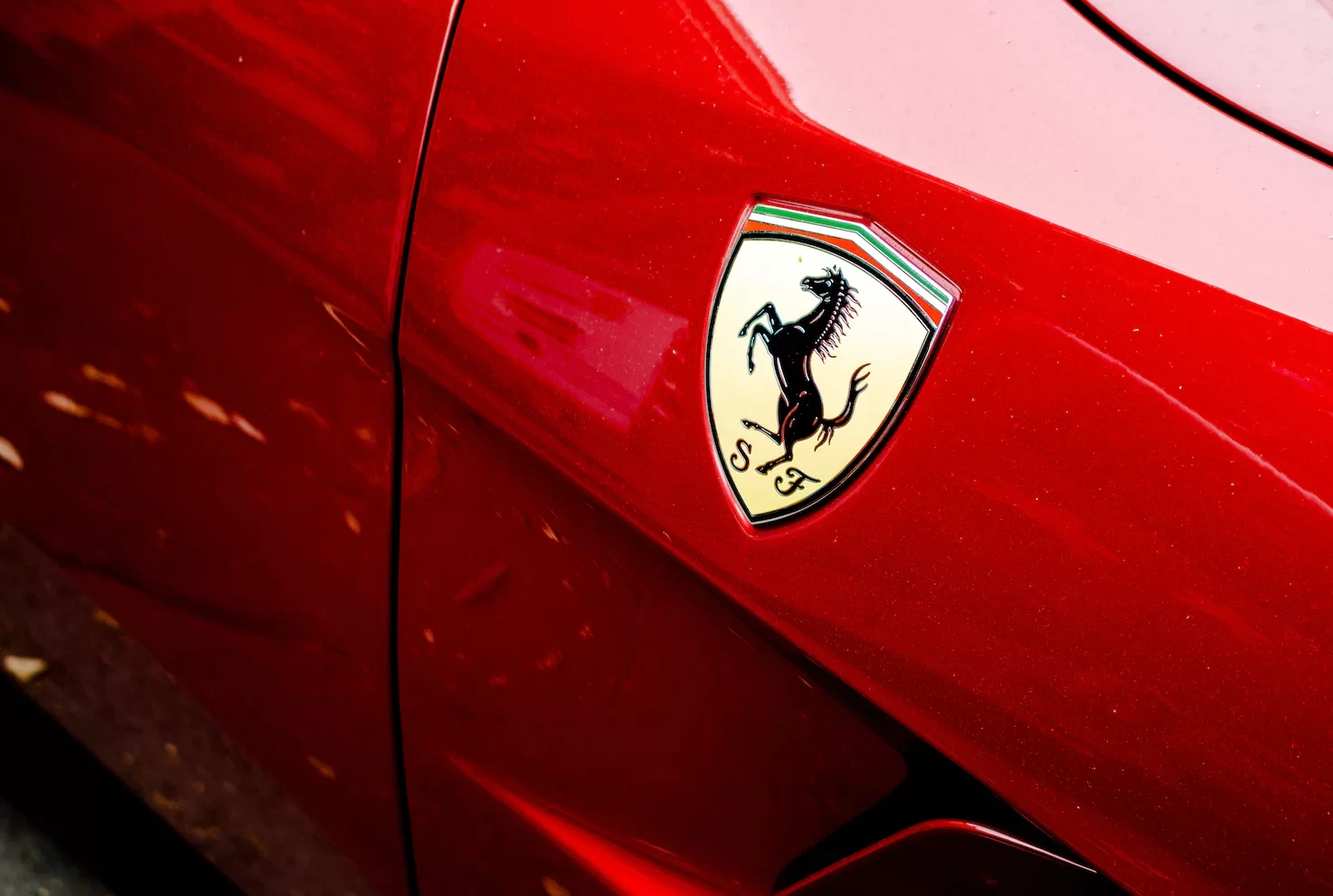
Editor’s Note: The opinions expressed here by the authors are their own, not those of Impakter.com — In the Featured Photo: Red Ferrari. Featured Photo Credit: Jannis Lucas.