Myth 1: The grid cannot handle renewables
This myth overstates the problem, as the International Energy Agency (IEA) reports from 2019, 2021, and 2022 show that grid integration is indeed a real challenge. However, in the early stages of variable renewable deployment, the grid is often manageable, particularly in well-planned systems where operators have the right tools in place. The main issue is usually not that renewables are impossible to integrate, but that grids, market rules, and permitting processes have not kept pace with deployment.
An example of this is the UK, where, according to a BBC report, the national grid is physically constrained by limited transmission capacity and was originally built around older fossil-fuel plants near demand centers, whereas wind farms are built in windy areas that are far from demand centers. As a result, Scotland’s largest wind farm was paid £65 million in 2024 to restrict its output 71% of the time. This means the problem is less about renewables themselves and more about rewiring and expanding the network so that electricity can move efficiently from the windy regions of Northern Scotland to population centers down in the central belt.
How do we solve this? According to the IEA reports, this is best addressed through better grid planning, stronger connection codes, improved forecasting and controllability, and investment in network upgrades and flexibility resources. In this sense, grid integration is less a reason to slow renewables down than a reason to modernize the power system around them.
Myth 2: Renewables are unreliable/too intermittent
This is true, and there is no workaround since the sun will not always be shining and the wind will not always be blowing; however, the IEA believes the intermittency problem is an engineering challenge with established solutions, not an inherent barrier to a reliable power grid.
A key strategy for managing variability is geographical and technological diversity. Modern power systems do not rely on a single wind farm or solar park; instead, they balance generation across wide areas and diverse technologies. According to the IEA 2023 renewables report, wind and solar generation surpassed hydropower for the first time, proving that a diverse mix of clean energy sources can provide steady energy at scale.
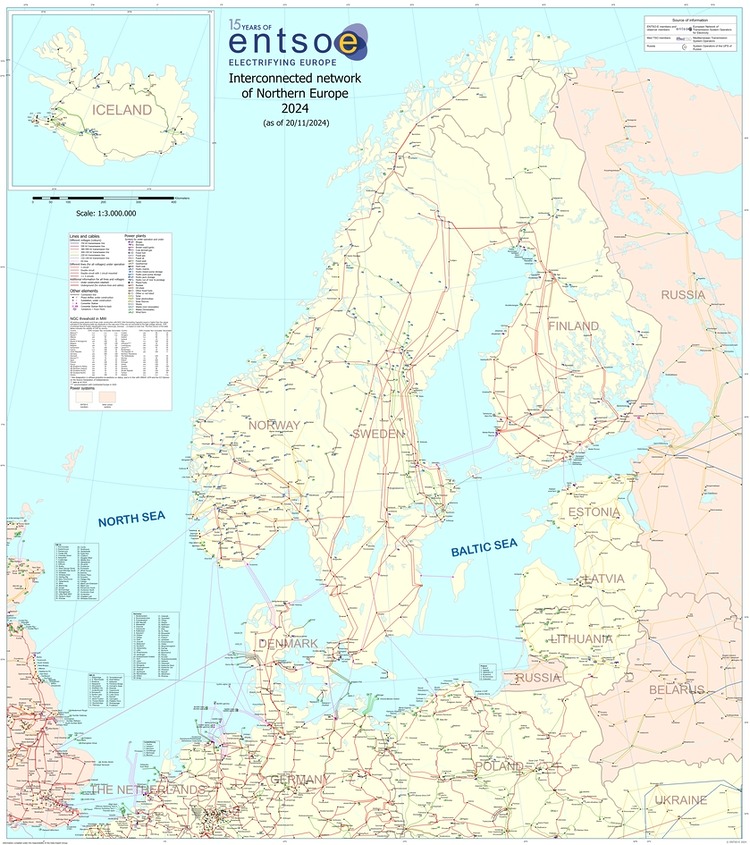
The use of international connections (interconnectors), as shown in the picture above, enables balancing of generation across borders, effectively trading electricity from where it is abundant to where it is needed, and governments are increasingly requiring developers to guarantee power availability by combining solar or wind with technologies such as batteries or pumped-storage hydro. Additionally, the cost of “behind-the-meter” storage dropped by nearly half between 2016 and 2019, allowing households and businesses to create their own mini-grids.
Myth 3: Renewables are too expensive
Whilst this myth was true in the early 2010s, according to IRENA data from 2025, renewables are now significantly cheaper than fossil fuels, debunking the myth that they are too expensive. IEA reports from 2019 to 2023 show sharp declines in the levelized cost of energy (LCOE) for solar PV and onshore wind.
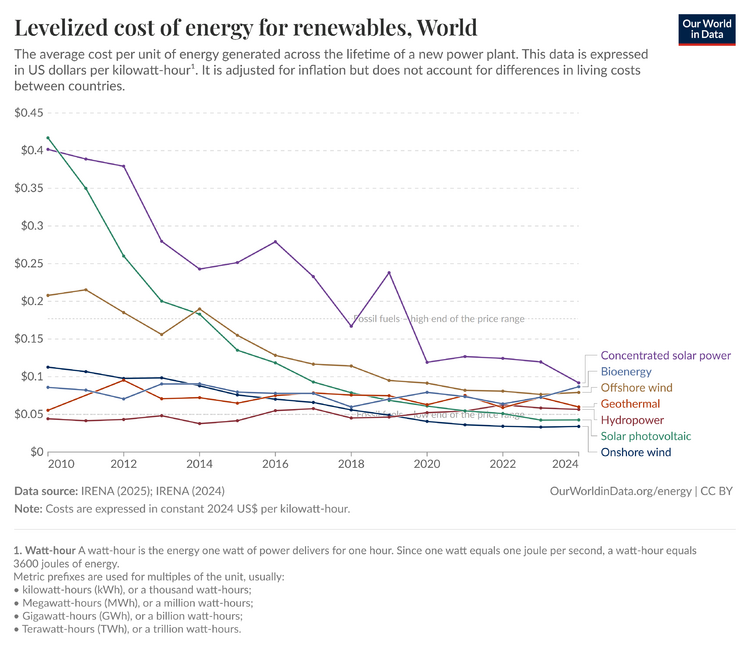
Global weighted-average LCOE for utility-scale solar PV fell from US$0.45/kWh in 2010 to US$0.05/kWh in 2022, while onshore wind dropped from US$0.105/kWh to US$0.035/kWh. In 2023, 96% of new utility-scale solar PV and onshore wind had lower generation costs than new coal or natural gas plants, and this number is expected to rise to nearly 100% by 2028. Three-quarters of these new installations already offer cheaper power than even existing fossil-fuel facilities.
The chart from Our World in Data illustrates this decline through 2024, with LCOE for solar PV, onshore wind, and offshore wind falling below US$0.05/kWh (2014 USD-adjusted), outpacing most other renewables.
Even factoring in system value like flexibility, new solar and onshore wind are estimated to remain cheaper than fossil alternatives in key markets by 2028. Auctions in regions like the Middle East and North Africa yield record-low solar bids due to rich resources and scale. Global support needs for wind and solar amounted to US$80 billion in net savings by 2022, and are projected to continue increasing as costs fall further.
These trends hold despite 2022 inflation, with renewables saving US$520 billion in fuel costs last year, according to IRENA-aligned data. Policies such as auctions and PPAs (Power Purchase Agreements) drive deployment without subsidies in competitive markets.
Related Articles
Here is a list of articles selected by our editorial board that have gained significant interest from the public:
Myth 4: Renewables need too much support to scale
The idea that renewable energy requires excessive financial support to scale is increasingly contradicted by market data. As mentioned in the previous myth, wind and solar have transitioned from niche, expensive technologies to the most cost-competitive options for new electricity generation globally. The IEA’s 2023 report estimated that 96% of newly installed utility-scale solar panels and onshore wind had lower generation costs than new coal and natural gas plants and that three-quarters of these projects offered cheaper power than even existing fossil-fuel facilities.
What about relying on subsidies? Whilst this was true in the past with schemes like the UK’s Feed-in-Tariffs, the scheme ended in 2019, and since then, market-driven mechanisms, unsubsidized business models, and economies of scale have driven down the price of renewables.
According to IEA reports from 2023 and 2024, solar panel module prices plummeted by almost 50% in 2023, and distributed solar systems have become economically attractive to residential and commercial consumers seeking to reduce their electricity bills.
The deployment of renewables is now increasingly viewed not as a financial burden but as a strategic investment in energy security and a way to diversify a country’s or company’s energy portfolio. Since 2010, non-hydro renewable additions have saved an estimated US$1.3 trillion by reducing the need for expensive fossil fuel imports.
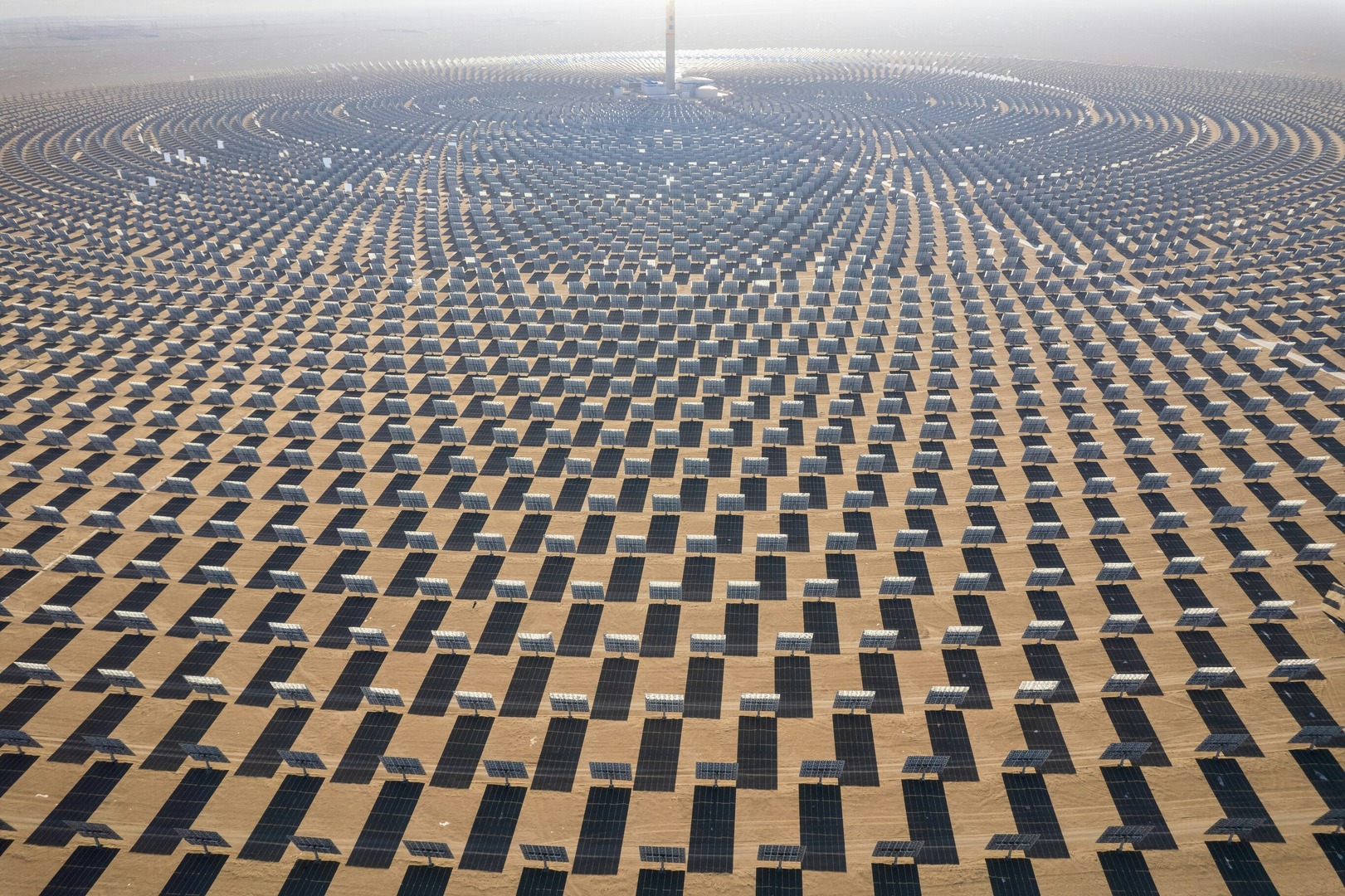
Editor’s Note: The opinions expressed here by the authors are their own, not those of impakter.com — In the Cover Photo: A concentrated solar panel array. Cover Photo Credit:ダモ リ on Unsplash