Today’s ESG Updates:
- COP30 Chief Calls on Private Sector: André Aranha Corrêa do Lago urges companies to attend the conference despite Trump’s ESG backlash.
- Pennsylvania Residents Fight $7B LNG Terminal: The project poses a threat to community health, despite Trump’s promises of jobs and revenue.
- India Awards $3.7B in Coal Deals Despite Renewable Energy Pledges: New coal projects highlight India’s energy security priorities.
- Rising U.S. Nuclear Demand Exposes Uranium Enrichment Gap: Uranium enrichment capacity is a key bottleneck in building a U.S. nuclear fuel supply chain.
Klimado – Navigating climate complexity just got easier. Klimado provides a user-friendly platform for tracking local and global environmental shifts, making it a vital tool for climate-aware individuals and organizations.
Business leaders urged to attend COP30 in Brazil
André Aranha Corrêa do Lago, head of the upcoming COP30 climate summit in Brazil, is urging CEOs worldwide to attend, despite recent political and financial pushback against ESG. With Trump halting renewable energy projects, imposing tariffs, and pressuring banks to scale back climate commitments, fears are mounting that U.S. policy shifts could derail global momentum. The COP30 chief countered that the backlash against fossil fuels signals the growing strength of clean energy and urged the private sector to “step forward, not back” in accelerating the transition. The attendance of the private sector at COP30 will signal whether corporate climate commitments are withstanding the political headwinds of the Trump administration.
***
Further reading: COP30 Chief Calls on CEOs to Come to Brazil in Rebuff to Trump
As Trump backs LNG exports, Pennsylvania residents fight $7B terminal

As the Trump administration accelerates liquefied natural gas (LNG) exports, communities in Pennsylvania are pushing back against a proposed $7 billion terminal on the Delaware River. Supporters of the LNG expansion project tout economic gains, including thousands of jobs, billions in GDP contributions, and millions in tax revenue. But community groups warn of health and safety risks in an already overburdened environmental justice zone, where polluting industries have disproportionately harmed low-income neighborhoods and communities of color for decades. Pollution from waste incinerators and refineries has driven cancer and asthma rates in these communities well above national averages. The debate highlights growing tensions under the Trump Administration between short-term economic gains and long-term risks associated with community health and climate impacts.
***
Further reading: As Trump Pushes Liquified Natural Gas Exports, Residents in Pennsylvania Towns Push Back to Stop a Proposed LNG Terminal
Adani, Torrent Power win major coal contracts as India expands fossil fuel capacity
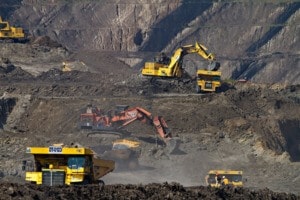
India’s energy transition faces a sharp contradiction as Adani Power and Torrent Power secured $3.7 billion in contracts to build new coal-fired plants in Madhya Pradesh. The projects, totaling 2,400 MW, mark Torrent’s largest investment to date and highlight India’s deepening reliance on coal despite global decarbonization pressures. While Prime Minister Narendra Modi has pledged 500 GW of renewable capacity by 2030, the government’s plan also calls for nearly 88 GW of new coal projects by 2032. India’s dual-track strategy highlights the risks associated with stranded fossil fuel assets and the urgent need to scale up clean energy financing.
***
Further reading: Adani, Torrent Power Bag $3.7 Billion Coal-Based Deals in India
U.S. nuclear expansion hinges on uranium enrichment
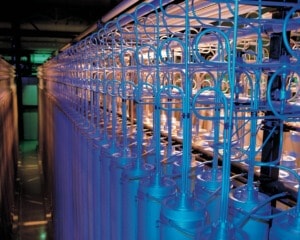
The U.S. nuclear industry is entering a pivotal phase as small modular reactors (SMRs) and micro-reactors gain momentum, promising cheaper and faster deployment of emissions-free electricity. These smaller reactors require high-assay low-enriched uranium (HALEU), a specialized fuel currently produced domestically only by Centrus Energy under a U.S. Department of Energy contract. However, with the U.S. still reliant on imports for two-thirds of its enriched uranium, supply chain bottlenecks could slow nuclear expansion. Much of the U.S.-enriched uranium comes from an enrichment plant in New Mexico, which is provided by the European company Urenco. The supply chain is also highly dependent on Russian enrichment, further threatening Trump’s promises of rapid nuclear energy expansion.
***
Further reading: U.S. Nuclear Energy Drive Set to Spur Higher Uranium Enrichment
Editor’s Note: The opinions expressed here by the authors are their own, not those of impakter.com — In the Cover Photo: André Aranha Corrêa do Lago, August 15, 2025. Cover Photo Credit: Cop30 Brasil Amazônia