Impakter
  • Environment
    • Biodiversity
    • Climate Change
    • Circular Economy
    • Energy
  • FINANCE
    • ESG News
    • Sustainable Finance
    • Business
  • TECH
    • Start-up
    • AI & Machine Learning
    • Green Tech
  • Industry News
    • Entertainment
    • Food and Agriculture
    • Health
    • Politics & Foreign Affairs
    • Philanthropy
    • Science
    • Sport
  • Editorial Series
    • SDGs Series
    • Shape Your Future
    • Sustainable Cities
      • Copenhagen
      • San Francisco
      • Seattle
      • Sydney
  • About us
    • Company
    • Team
    • Partners
    • Write for Impakter
    • Contact Us
    • Privacy Policy
No Result
View All Result
Impakter logo
No Result
View All Result
climate policies air pollution

Climate Policies Could Save up to 15,000 Lives a Year in the US

Climate policy could prevent many premature deaths caused by air pollution in the U.S., with a financial gain between $65 billion and $128 billion

Alessandro CamillobyAlessandro Camillo
December 26, 2024
in Health
0

A new study has found that the resulting air pollution reduction from net zero policies could spur a gain of between $65 billion and $128 billion in healthcare in 2035 alone in the United States.

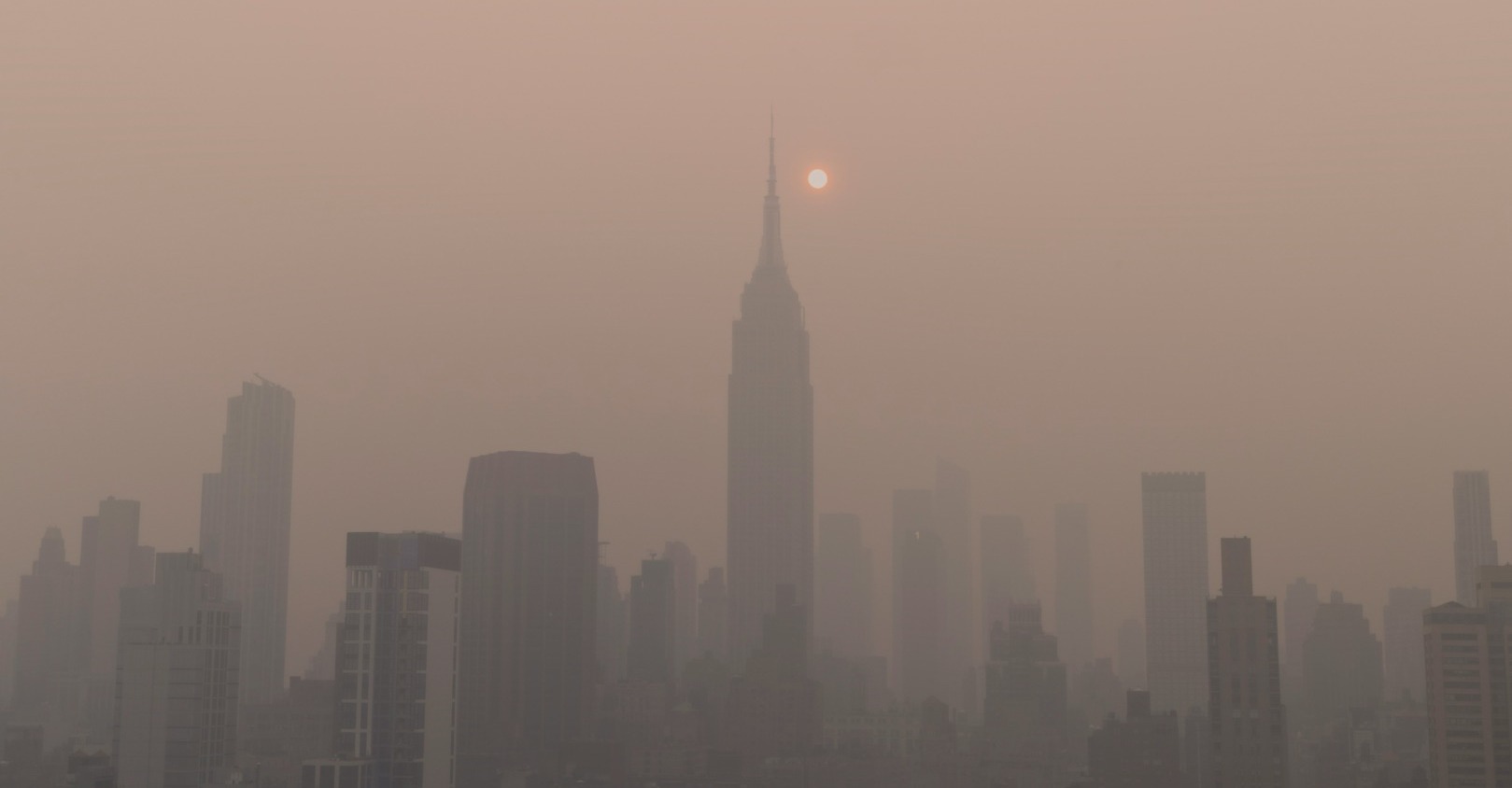
Air pollution has long been found to have adverse effects on human health. In the contiguous United States, air pollution is estimated to cause between 5% and 10% of premature mortality each year. Figures that are only getting worse as emissions increase.

According to Dr. Alex Barron, an author of the study and professor at Smith College in Massachusetts, “a decarbonised society means cleaner air…how many clean air benefits we realise and who benefits will depend on how policymakers shape this transition.”

The transition depends largely on what fuel sources the world begins to rely on. Some sources of energy, such as wind and solar, could accelerate the reduction of air pollution. Others, like biofuels, could release new emissions, even if they reduce our use of fossil fuels and gas.

Other sources of fuel and power can be much more successful in decarbonizing and reducing air pollutants. As explained by Dr. Dan Loughlin, scientist at the US Environmental Protection Agency and study author: “The modelling results were consistent: decarbonisation reduces co-emitted air pollutants and is expected to result in significant health benefits over the long term. Electrification combined with wind and solar tend to drive greater air pollutant emission co-reductions than many other decarbonisation pathways.” 

Even using fossil gas or biomass would, for example, decrease any improvements in reducing air pollution compared to current coal use. The burning of these fuels, coupled with the clearing of land for bioenergy crops and increased fertilizer use, only leads to more pollution.

Loughlin clarifies that, despite the perception of bioenergy sources as more climate-friendly, they can lead to additional emissions. “Our analysis provides a peek into this response, suggesting that greater ammonia emissions occur in scenarios with greater use of biomass,” explains Loughlin.

The good news is that positive benefits from policies that reduce air pollution could happen very quickly. Drew Shindell, a climate scientist at Duke University, explained in 2021 how “air pollution responds quickly, as we saw with noticeably cleaner air after just a few months of reduced emissions during COVID lockdowns.” 

Shindell heavily advocates for clean air policy as a priority for human health, stating that cleaner air “outweighs the costs of a transition towards a completely net zero carbon economy, even in the very first decade.”


Related Articles: Air Pollution in Europe: Exposure Kills 1,200 Children Every Year | The Invisible Killer Lurking in the Air of Our Cities | How Polluted Is the Air in Europe?

The study also expressed uncertainty about current technologies to capture and store carbon emitted into the atmosphere. Even if they could offset some air pollution if deployed at large scales, they themselves have the potential to create net emissions depending on how they are fueled.

Still, US policies for net zero by 2050 are expected to catalyze rapid gains in health among the population. The study finds that by 2035, early deaths from air pollution could drop by between 4,000 and 15,000 deaths a year. Right now, premature deaths related to air pollution are estimated to be between 90,000 and 360,000 in the United States alone, according to one study.

The financial gain from fewer negative health outcomes and early deaths, estimated to be between $65 billion and $128 billion, is at least as large as the gain from avoiding extreme climate events such as hurricanes and floods.

The benefits may be greater yet, according to the authors of the study. Seeing as the full impacts of air pollutants on human health are not fully known, it is hard to predict just how beneficial these climate action policies could be.

“It is really important to note that we are learning new things every day about the ways in which air pollution impacts our mind and our bodies,” adds Dr. Barron. “It won’t surprise me if the benefits are greater in retrospect than they appear in advance. People really value cleaner air as a near-term benefit of climate action, but the models we use to analyse climate policies don’t always make that part of the story clear to decision makers and the public.”


Editor’s Note: The opinions expressed here by the authors are their own, not those of Impakter.com — Cover Photo Credit: Ahmer Kalam.

Tags: Air pollutionclimate policiesclimate policyNet ZeroUnited States
Previous Post

Will the Future US Foreign Policy Be a One-Man Show?

Next Post

Avian Flu Spreads to Humans: Our Next Human Epidemic or Worse?

Related Posts

Coal plants get reprieve on mercury limits, Striking unions fail to halt Milei's sweeping labor bill, Sweden's regulator reviews Swedbank's compliance controls, France backs INEOS decarbonization with €300M
Business

Trump Admin Weakens Coal Plant Mercury Regulations

Today’s ESG Updates: Coal Plants Get Reprieve on Mercury Limits: Trump's EPA is rolling back mercury emission limits to cut...

byEge Can Alparslan
February 20, 2026
Farewell to Soft Power
Politics & Foreign Affairs

Farewell to Soft Power

The Caribbean and the Arctic seem to have little in common. The same cannot be said of Venezuela and Greenland,...

byMichele Gimondo, Catholic University of Sacred Heart, Milan
February 20, 2026
How Climate Change Is Reshaping Arctic Geopolitics
Climate Change

How Climate Change Is Reshaping Arctic Geopolitics

Once a remote and largely inaccessible region, the Arctic has become the focus of far-reaching international developments. In recent years, competition among...

byPier Paolo Raimondi - Senior Researcher at the Energy, Climate and Resources (ECR) Program of the Istituto Affari Internazionali (IAI)
February 20, 2026
The uncertainty created by anti-ESG statutes has complicated compliance and contract bidding strategies, particularly for firms operating across multiple states with divergent policy approaches.
Climate Change

Texas Anti-ESG Law Declared Unconstitutional

This Week's Regulatory Updates U.S. Judge Strikes Down Texas Anti-ESG Law: A federal judge has declared Texas’ anti-ESG investment law...

byFedor Sukhoi
February 13, 2026
Understanding carbon debt is key to climate policies, credible corporate reporting, and realistic public debate.
Energy

Measuring EV Emissions: A Comparative Global Analysis

Electric vehicles (EVs) are often regarded as a carbon-neutral way of transportation with zero tailpipe emissions. Yet reality is more...

byFedor Sukhoi
February 13, 2026
ESG News regarding the EPA’s plans to repeal the endangerment finding, high energy costs in the EU, Liberty Mutual’s partnership with Ara Partners, and Eurazeo’s €175 million maritime investment
Business

United States EPA To Repeal Climate Change Determination

Today’s ESG Updates EPA to Repeal Climate Endangerment Finding: Lee Zeldin's EPA plans to revoke the 2009 determination requiring greenhouse...

bySarah Perras
February 11, 2026
ESG News regarding industry pushback on weakening CBAM, Dcycle acquiring ESG-X, BNP Paribas meeting sustainability goals, US energy secretary to visit Venezuela
Business

Plans to Weaken EU Carbon Border Tax Lead to Industry Pushback

Today’s ESG Updates EU Carbon Border Tax Faces Weakening: The European Commission's proposed Article 27a exemption clause for CBAM has...

bySarah Perras
February 9, 2026
ESG News regarding Nuclear Waste Storage; Canada Replaces EV Mandate; EU and Turkey Resume Trade Modernization Talks; Startup Raises $29M for Desk-Sized Fusion Reactor
Business

Volunteers Needed for Nuclear Waste Storage

Today’s ESG Updates: US Offers Incentives for Nuclear Waste Storage: The Department of Energy is proposing a "package deal" of...

byEge Can Alparslan
February 6, 2026
Next Post
avian flu

Avian Flu Spreads to Humans: Our Next Human Epidemic or Worse?

Recent News

A woman going through the checking account guide

How Checking Accounts Work: Simple Steps to Get Started Fast

February 20, 2026
Coal plants get reprieve on mercury limits, Striking unions fail to halt Milei's sweeping labor bill, Sweden's regulator reviews Swedbank's compliance controls, France backs INEOS decarbonization with €300M

Trump Admin Weakens Coal Plant Mercury Regulations

February 20, 2026
Crowds and filmmakers on the red carpet at the 76th Berlin International Film Festival in 2026

At Berlinale 2026, Artists Refuse the Comfort of Neutrality

February 20, 2026
  • ESG News
  • Sustainable Finance
  • Business

© 2025 Impakter.com owned by Klimado GmbH

No Result
View All Result
  • Environment
    • Biodiversity
    • Climate Change
    • Circular Economy
    • Energy
  • FINANCE
    • ESG News
    • Sustainable Finance
    • Business
  • TECH
    • Start-up
    • AI & Machine Learning
    • Green Tech
  • Industry News
    • Entertainment
    • Food and Agriculture
    • Health
    • Politics & Foreign Affairs
    • Philanthropy
    • Science
    • Sport
  • Editorial Series
    • SDGs Series
    • Shape Your Future
    • Sustainable Cities
      • Copenhagen
      • San Francisco
      • Seattle
      • Sydney
  • About us
    • Company
    • Team
    • Partners
    • Write for Impakter
    • Contact Us
    • Privacy Policy

© 2025 Impakter.com owned by Klimado GmbH