
A recent Reuters investigation has found that many conservation projects in Brazil, designed to protect the Amazon rainforest through carbon credits, are linked to individuals and businesses with documented histories of illegal deforestation.
In 2023, a similar analysis by the Guardian found that 90% of rainforest carbon offsets by Verra — the world’s leading certifier that had approved carbon credits used by Gucci, Disney, and Shell (among other big corporations) — are likely “‘phantom credits’ [that] do not represent genuine carbon reductions.”
These ongoing findings raise important questions about the effectiveness of voluntary carbon offset schemes in supporting environmental protection efforts.
The Reuters investigation analyzed 36 conservation projects in the Brazilian Amazon offering voluntary carbon offsets on major global registries. Of those, at least 24 involved landowners, developers, or forestry firms that Brazil’s environmental agency, IBAMA, had previously sanctioned for illegal deforestation.
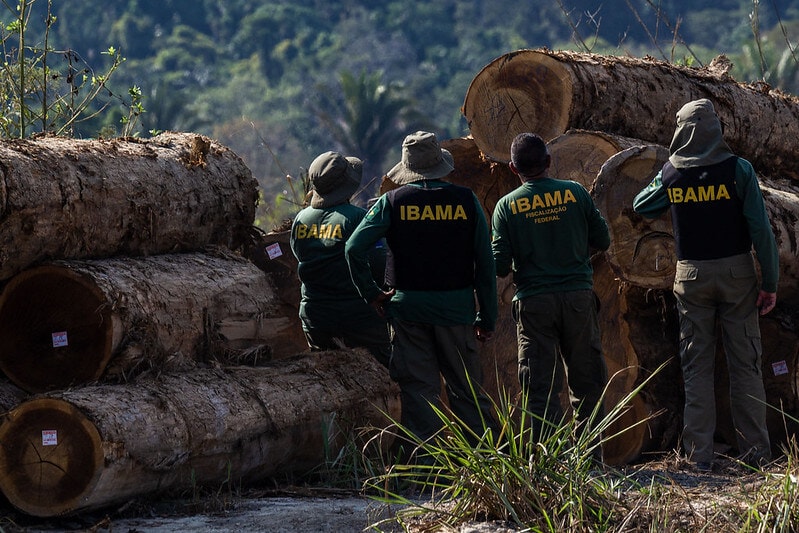
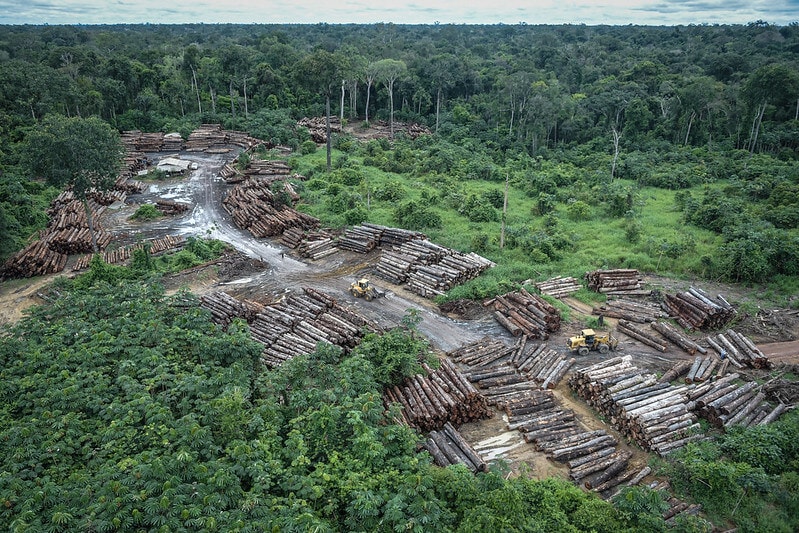
As Reuters explains, the offenses “ranged from clear-cutting the rainforest without authorization to transporting felled trees without valid permits and entering false information in a government timber tracking system.”
The analysis also revealed that key players in 20 of the projects had incurred environmental fines prior to their initiatives being registered for carbon credits. In contrast, illegal deforestation by backers of seven projects continued even after the projects were officially registered.
Voluntary Carbon Markets
Voluntary carbon markets (VCMs) allow companies, governments, and individuals to buy carbon credits, often from forest conservation, renewable energy, or land restoration projects, to “offset” their greenhouse gas emissions. If a company emits one ton of CO₂, it can fund a project that prevents the release of, or captures, an equivalent amount elsewhere.
These credits are traded outside of government-mandated emissions regulations, making them an attractive tool for corporations to meet self-imposed sustainability goals or polish their green credentials.
The Amazon rainforest is a crucial component of the voluntary carbon market, which was valued at $7.6 billion globally over the last five years, according to AlliedOffset’s market watcher.
The referees setting the standards in this global market are accrediting firms like the Washington, D.C.-based nonprofit Verra and Cercarbono from Columbia. These organizations are responsible for certifying whether projects are delivering the emissions reductions they claim, and both are at the center of the recent Reuters investigation.
Carbon Markets Can Fuel Land Grabs and Exploitation
The 2023 research by The Guardian, as well as the recent Reuters investigation, has proven that many carbon offset projects either overstate their impact or fail entirely.
The Guardian study revealed that about 94% of the credits the projects produced should not have been approved by Verra. Examining approximately two-thirds of the 87 Verra-approved projects, international researchers found that only eight projects demonstrated any reduction in deforestation, and these areas were relatively small.
Some credits are issued for protecting forests that were never at real risk of being cut down. Others come from land that’s later logged anyway, or from projects that never materialize on the ground. Under the guise of sustainability, carbon credits can lead to land grabs, the displacement of Indigenous peoples, and further environmental degradation.
The recent Reuters investigation illustrates this vividly: many carbon credit projects meant to prevent deforestation are linked to those who actively engaged in it. The study reveals that at least 24 of 36 conservation projects in the Brazilian Amazon involved landowners, developers, or forestry firms that IBAMA had previously fined for illegal deforestation.
In 5 of those projects, Brazil’s environmental agency held the backers responsible for illegal logging inside the boundaries of their own conservation projects.
Offsets Have Become a Distraction from Real Change
Perhaps the most fundamental flaw of voluntary carbon markets is that carbon credits allow companies to continue polluting under the guise of neutrality. Instead of investing in cleaner technologies, reducing emissions at the source, or reevaluating their operations, many corporations rely on cheap offsets to meet climate targets.
Voluntary carbon markets may have been born from good intentions, but they are now a dangerous distraction. As long as they continue to provide a smokescreen for inaction — and in some cases, actively increase emissions — we will remain stuck in a cycle of false solutions.
Hot Topic in the EU
The European Commission recently proposed an amendment to the European Climate Law to set an EU climate target for 2040, recommending reducing the net GHG emissions by 90% by 2040.

In this proposal, there is explicit mention of international carbon credits. The enforcement of rules remains vague, but the commission states that “domestic GHG emission reductions within the EU must remain the cornerstone of EU climate action, complemented by the enhancement of carbon removals.”
The commission states that “any potential use of international carbon credits will be subject to a detailed and thorough impact assessment.”
The EU will only permit international credits in countries with targets that align with the Paris Agreement; however, considering the recent Reuters investigation in Brazil, this may not prevent corruption and fraud from occurring throughout the process.
The Way Forward
Recent discoveries of carbon credit “fraud” show that these offset methods are not sustainable for the long-term success of any business. If companies continue to receive credits that allow them to pollute more and still meet their targets, carbon credits do more harm than good.
Eventually, the already rapidly changing climate will wreak havoc on all businesses, and “business as usual” will never be the same.
To truly address the climate crisis, companies must stop relying on creative accounting and start reducing emissions at the source. This means investing in clean energy, decarbonizing their supply chains, improving efficiency, and phasing out fossil fuels, rather than outsourcing their responsibility to a potentially broken system.
We are already witnessing the devastating consequences of climate inaction unfold in real time: historic floods in Texas, deadly wildfires in Greece, and record-breaking heat waves scorching regions across the globe. This is no longer a distant threat — it’s happening now, and the window for meaningful action is closing fast.
As Julia Jones, a professor at Bangor University, puts it:
“It’s really not rocket science. We are at an absolutely critical place for the future of tropical forests. If we don’t learn from the failures of the last decade or so, then there’s a very large risk that investors, private individuals and others will move away from any kind of willingness to pay to avoid tropical deforestation and that would be a disaster.”
Editor’s Note: The opinions expressed here by the authors are their own, not those of impakter.com — Cover Photo Credit: Ibama