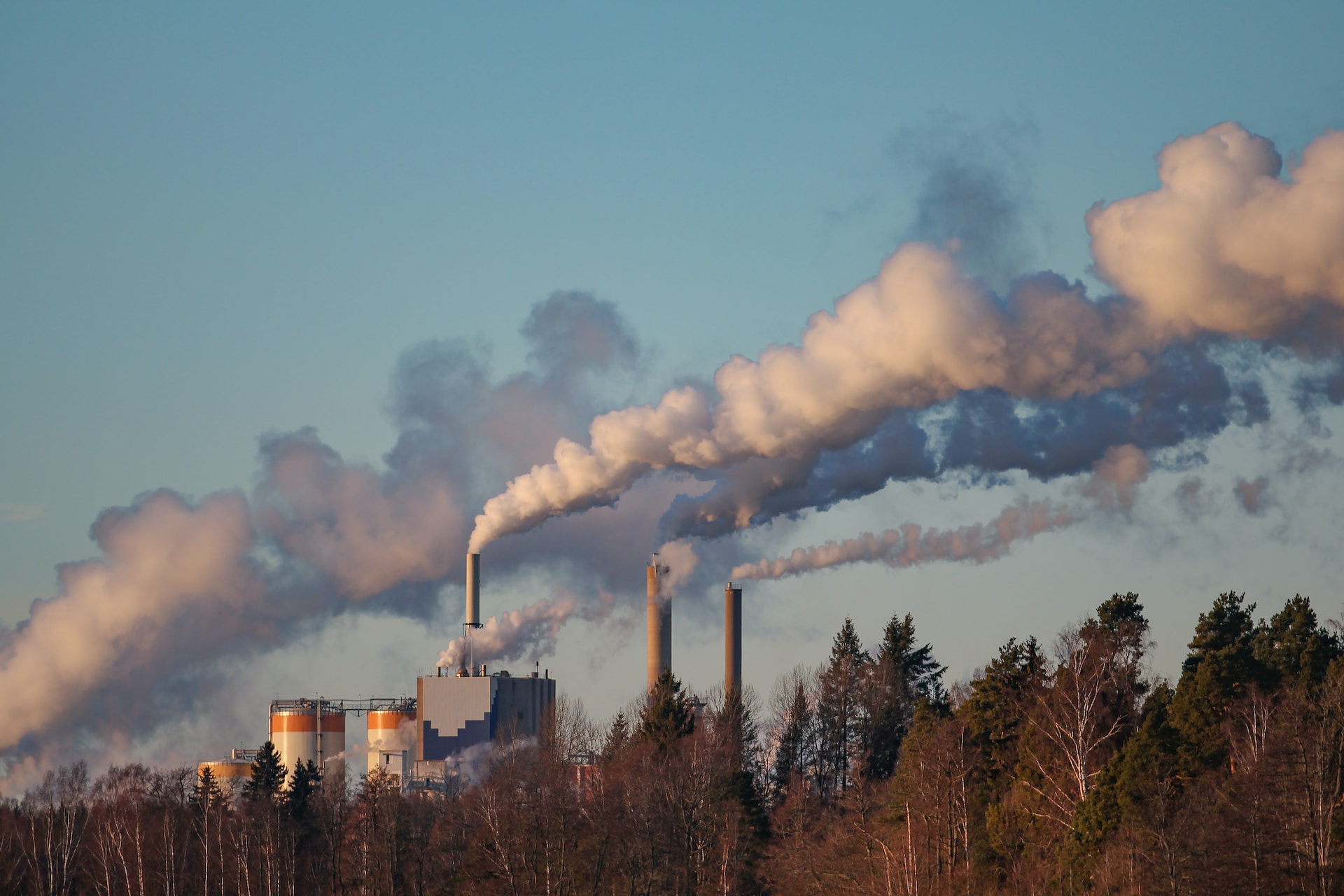
Air pollution is already widely understood to impact both our environment and health. In an urbanised world, household combustible devices, motor vehicles and industrial facilities contribute to poor air quality.
The World Health Organisation (WHO) estimates that air pollution causes seven million premature deaths each year by increasing the risk of developing heart disease, lung cancer as well as acute and chronic respiratory issues.
But now, American researchers from the National Institute of Health have found that living in areas with high air pollution can even increase the chances of developing breast cancer.
The study, published in the Journal of the National Cancer Institute, found that women who inhabited areas with high levels of fine particulate matter (PM2.5) were more likely to suffer from breast cancer than women living in areas with less PM2.5.
An increase of only 10 micrograms per cubic metre (ug/m3) “was statistically significantly associated with overall breast cancer incidence,” the study reads.
The study looked at the questionnaire responses of 567,169 retired people between 1995-1996 in six states (California, Florida, Pennsylvania, New Jersey, North Carolina, and Louisiana) and in two metropolitan areas (Atlanta and Detroit). The subject group was then revisited approximately 20 years later, during which time 15,870 of them had developed cancer.
According to the report, the average PM2.5 concentration was highest for women living in California and Pennsylvania and lowest for Floridians. The most affected demographic was postmenopausal women who accounted for 92% of breast cancer cases in the study group.
From this study, the report found that a PM2.5 increase of 10 ug/m3 across a period of 10-15 years led to an 8% increase in breast cancer incidents.
The report stresses that “breast cancer is the most commonly diagnosed malignancy among women worldwide,” with risk factors including “a woman’s reproductive history, use of exogenous hormones, alcohol intake, and obesity.”
Reduce your risk of #BreastCancer:
🚭Don't smoke
👍Maintain healthy body weight
🥃Limit or avoid alcohol
🤱🏻Breastfeed
🏃🏻♀️Be physically active
☢Avoid exposure to radiation#BreastCancerAwarenessMonth pic.twitter.com/xPLaZ9JA4l— World Health Organization (WHO) Western Pacific (@WHOWPRO) October 30, 2023
With so many factors already contributing to a woman’s risk of developing breast cancer, it is important to understand how even factors outside of individual control, like air quality, can compound the risk.
Speaking to the National Institute of Health’s press office, Rena Jones Ph.D, senior author and principal investigator of this study, said that “the ability to consider historic air pollution levels is an important strength of this research.”
The researchers were particularly interested in air pollution 10-15 years before the group enrolled in the study to see if historic air pollution had a significant effect.
“It can take many years for breast cancer to develop and, in the past, air pollution levels tended to be higher, which may make previous exposure levels particularly relevant for cancer development,” said Jones.
Air pollution in women’s workplaces
An additional study conducted by French scientists at the European Society for Medical Oncology (ESMO) found that women are not only at risk in the areas where they live but that the air quality surrounding the workplace can also have a negative effect.
In ESMO’s press release, Professor Béatrice Fervers, Head of the Prevention Cancer Environment Department, Léon Bérard Comprehensive Cancer Centre, France, said:
“[O]ur data showed a statistically significant association between long-term exposure to fine particle air pollution, at home and at work, and risk of breast cancer. This contrasts with previous research which looked only at fine particle exposure where women were living, and showed small or no effects on breast cancer risk.”
Related articles: Smokers in the UK to Receive Free Lung Screening to Detect Cancer Earlier, What Is Aspartame and Is It A Health Hazard?, Air Pollution is Leading Environmental Killer, Claiming 7 Million Lives, Why the EU Parliament Vote on Cleaner Air Rules Is Not Enough
This study, presented at ESMO’s 2023 congress last week, looked at home and workplace exposure in 2,419 women with breast cancer and compared it to the exposure in 2,984 women without cancer in 1990-2011.
It's #BreastCancerAwarenessMonth and here's a shocking fact:
🚨Breast cancer is the first or second leading cause of female cancer deaths in 95% of countries.
Source: @WHO pic.twitter.com/uDXq6NMEw8
— UN Women (@UN_Women) October 27, 2023
They found that the effect of air pollution on developing breast cancer was much higher than previously found in the American study: a 10 ug/m3 increase in PM2.5 led to a 28% increase in breast cancer risk.
Why can air pollution lead to breast cancer?
With air pollution better known for affecting the lungs, it may come as a surprise to see that non-respiratory tissues, such as the breasts, are so severely affected by poor air quality.
“[t]hese very small particles can penetrate deep into the lung and get into the bloodstream from where they are absorbed into breast and other tissues,” Professor Charles Swanton, of the Francis Crick Institute in London, said at ESMO’s Congress. “There is already evidence that air pollutants can change the architecture of the breast.”
“It is very concerning that small pollutant particles in the air and indeed microplastic particles of similar size are getting into the environment when we don’t yet understand their potential to promote cancer,” he added.
Like microplastics, harmful particles in the air are finding their way into the human body, wreaking unseen damage to an extent that scientists can’t yet fully understand. It is clear that there is still an evolving body of research on the link between cancers and air pollution as both Swanton and the researchers of the National Health Institute emphasise.
Editor’s Note: The opinions expressed here by the authors are their own, not those of Impakter.com — In the Featured Photo: White clouds rising from a factory. Featured Photo Credit: Unsplash.