Impakter
  • Environment
    • Biodiversity
    • Climate Change
    • Circular Economy
    • Energy
  • FINANCE
    • ESG News
    • Sustainable Finance
    • Business
  • TECH
    • Start-up
    • AI & Machine Learning
    • Green Tech
  • Industry News
    • Entertainment
    • Food and Agriculture
    • Health
    • Politics & Foreign Affairs
    • Philanthropy
    • Science
    • Sport
  • Editorial Series
    • SDGs Series
    • Shape Your Future
    • Sustainable Cities
      • Copenhagen
      • San Francisco
      • Seattle
      • Sydney
  • About us
    • Company
    • Team
    • Global Leaders
    • Partners
    • Write for Impakter
    • Contact Us
    • Privacy Policy
No Result
View All Result
Impakter logo
No Result
View All Result
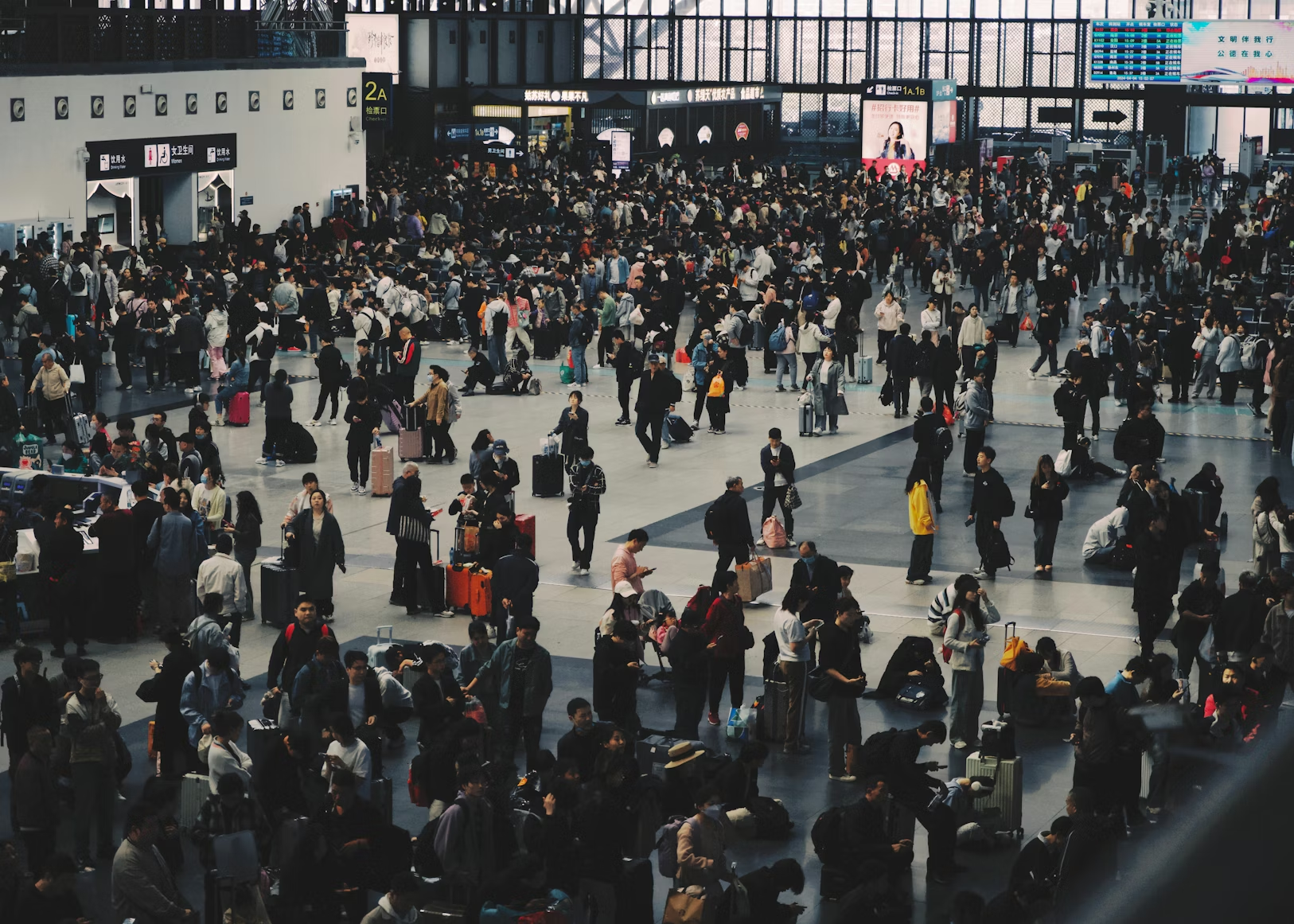
A crowded airport terminal with travelers moving through check-in areas during the holiday season.

AI is expected to support shopping, travel, and energy systems throughout the 2025 holiday season.

How AI Is Helping Christmas Run More Smoothly

From stocked shelves to smoother travel, AI is forecast to help carry much of the hidden work behind Christmas 2025

Jana DeghidybyJana Deghidy
December 22, 2025
in AI & MACHINE LEARNING, ESG News, Green Tech, Lifestyle, TECH
0

Christmas this year will look familiar on the surface. Gifts will arrive on time, supermarkets will stay stocked, airports will be busy but functional, and homes across Europe and the United States will light up for the holidays. But behind these familiar scenes, artificial intelligence (AI) is expected to play a much bigger role than most consumers realize. 

From shopping and deliveries to travel and energy use, AI systems are now working behind the scenes to support one of the busiest periods of the year. The goal is not to change traditions, but to keep them running smoothly during a season that often pushes systems to their limits. Holiday coordination has always required fast decisions and careful timing. In 2025, much of this is carried out by algorithms rather than manual planning. 

Consumers may not feel the change directly, but this Christmas will be shaped by technology more than any before.

Shopping and deliveries powered by prediction

Holiday shopping has become faster and more intuitive because retailers now rely on machine learning to anticipate demand long before customers add items to their carts. Throughout 2025, AI systems have analyzed seasonal trends to predict which products will surge, where shortages could occur, and how inventory should move across regions. These models update constantly, reacting to social media trends, weather patterns, or a sudden spike in interest around a particular toy or device. 

When demand grows rapidly, stock can be redirected between warehouses or stores days before consumers notice anything running low. This helps retailers avoid emergency restocking and reduces waste associated with overordering. Shoppers experience fewer out of stock messages and more reliable delivery times. 
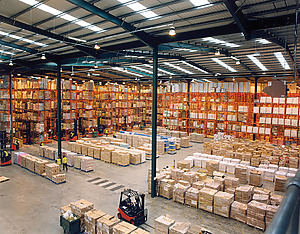
AI-powered logistics systems are helping retailers and delivery networks manage peak holiday demand more efficiently. Photo Credit: Wikimedia Commons 

Warehouses rely on AI-guided robotics to handle picking and packing at a speed that would be impossible manually during the holiday season. Robots navigate efficiently, sort products, and coordinate with human workers to keep orders flowing. If delays appear likely, systems reroute packages to different fulfillment centers, prioritizing high-demand or last-minute items. 

Delivery networks use similar prediction tools. By combining traffic patterns, weather forecasts, and historical performance, AI helps drivers navigate the most efficient routes. If a storm hits, routes can change in minutes. Delays still occur, but far fewer deliveries fail completely. For consumers, the effect is simple: Christmas orders arrive sooner than expected.

Managing holiday travel without breaking the system

Airports and rail networks face intense pressure every Christmas as millions of people travel at the same time. Passenger volumes spike, staffing shortages become more noticeable, and small delays can ripple across entire networks. In 2025, these systems will rely more heavily on AI to stay ahead of disruptions. 

Predictive analytics help travel operators estimate passenger flows, identify congestion points, and adjust staffing levels. Airports can open more security lanes at the right times, prepare terminals for heavy traffic, and anticipate when flights might cause crowding. Rail operators use AI to adjust timetables, plan maintenance around peak days, and redistribute staff when needed. 

None of this eliminates the stress of holiday travel, but it helps prevent the worst failures. Instead of reacting once crowds form, transport teams respond earlier and with better information. Travelers still experience lines and delays, but the overall system becomes more stable. 

This Christmas, many people will benefit from these improvements without ever realizing the technology behind them.

Related Articles

Here is a list of articles selected by our Editorial Board that have gained significant interest from the public:

  • The Problems With Christmas Trees
  • Environment: Make This Christmas Count
  • Christmas Consumerism: Why We Buy So Much and How We Can Avoid It
  • Zero-Waste Christmas Hacks
  • 10 Best Christmas Towns and Cities in the US

Keeping the lights on during winter peaks

One of the most important roles AI is expected to play this Christmas is in energy management. Cold weather, festive lighting, electric heating, cooking, and home gatherings all create sharp spikes in electricity demand. 

Grid operators in countries such as the UK, Germany, and France now rely heavily on AI to forecast energy use by the hour. These systems help balance supply, integrate renewable power, and prevent overloads during peak periods. They help decide when to store energy, when to draw from reserves, and when to activate backup sources. 

In 2025, many households will unknowingly support grid stability through smart meters, flexible EV charging, and home energy systems that adjust usage based on real time grid signals. These tools shift electricity demand to off-peak times without interrupting daily routines. 

When everything runs smoothly, people rarely notice. That quiet reliability is often a sign that the underlying systems are functioning well. As energy infrastructure becomes more complex and more dependent on renewables, AI is shifting from an experiment to a necessity. 

Christmas 2025 shows how deeply AI is becoming woven into everyday life. It is not replacing the human elements of the season, but it is helping infrastructure, logistics, and services keep pace with rising demand and unpredictable conditions. The real question for the coming years is how these systems can be developed transparently and responsibly as they become essential to daily life. 

Traditions will continue, families will gather, and cities will light up. AI will simply work out of sight, helping everything hold together. 


Editor’s Note: The opinions expressed here by the authors are their own, not those of impakter.com — In The Cover Photo: Crowded airport. Cover Photo Credit: Shengzhan Jiao 

Tags: AIChristmasHolidaysmachine learning
Previous Post

Orcas and Dolphins Observed Hunting Salmon Together

Next Post

Disposable Income Falls as UK Interest Rates Drop

Related Posts

ESG News regarding AI datacenters fueling U.S.-led gas power boom, Lukoil selling foreign holdings, England and Wales households paying more for water bills, and Trafigura investing $1 billion in African carbon removal projects.
Business

AI Datacenters Fuel U.S.-Led Gas Power Boom

Today’s ESG Updates U.S.-Led Gas Boom Threatens Climate: Global Energy Monitor reports 2026 could see record new gas plants, many...

byAnastasiia Barmotina
January 30, 2026
The Growing Role of AI in Business Decision-Making
Business

The Growing Role of AI in Business Decision-Making

When corporate executives arrive at Dubai on their flights, they make scores of decisions before their aircraft has a chance...

byHannah Fischer-Lauder
January 26, 2026
Billionaires Became Richer Than Ever in 2025: Who Are They and What Drove Their Wealth Growth
AI & MACHINE LEARNING

Billionaires Became Richer Than Ever in 2025: Who Are They and What Drove Their Wealth Growth

In 2025, the world’s 500 richest people increased their net worth by $2.2 trillion. Of those 500 individuals, eight billionaires...

bySarah Perras
January 14, 2026
ESG News regarding China restricting industrial renewable exports, UN warning that US climate treaty exit harms economy, UK firms lowering wage forecasts despite inflation, Meta partnering with TerraPower for new nuclear reactors.
Business

To Save the Grid, China Forces Industries to Go Off-Network

Today’s ESG Updates China Limits Grid Exports for New Industrial Solar & Wind: China is encouraging companies to store green...

byEge Can Alparslan
January 9, 2026
Is AI Hype in Drug Development About to Turn Into Reality?
AI & MACHINE LEARNING

Is AI Hype in Drug Development About to Turn Into Reality?

The world of drug discovery, long characterised by years of painstaking trial-and-error, is undergoing a seismic transformation. Recent research led...

byDr Nidhi Malhotra - Assistant Professor at the Shiv Nadar Institution of Eminence
January 8, 2026
AI data centres
AI & MACHINE LEARNING

The Cloud We Live In

How AI data centres affect clean energy and water security As the holiday season begins, many of us are engaging...

byAriq Haidar
December 24, 2025
Can Government Efforts to Regulate AI in the Workplace Make a Difference?
AI & MACHINE LEARNING

Can Government Efforts to Regulate AI in the Workplace Make a Difference?

An overview of AI regulations and laws around the world designed to ensure that the technology benefits individuals and society,...

byRichard Seifman - Former World Bank Senior Health Advisor and U.S. Senior Foreign Service Officer
December 18, 2025
How Climate Change Could Help Foster Peace in Yemen
Climate Change

How Climate Change Could Help Foster Peace in Yemen

Yemen's tragedy is traditionally depicted through the limited perspective of humanitarian need and political divisiveness, but there is a greater...

byTareq Hassan - Executive Director of the Sustainable Development Network Canada (SDNC)
December 17, 2025
Next Post
High-Engagement Campaigns

Why Social Explainer Videos Are Key for High-Engagement Campaigns

Recent News

The Era of ‘Global Water Bankruptcy’ Has Begun

The Era of ‘Global Water Bankruptcy’ Has Begun

January 30, 2026
ESG news regarding: New Report Urges Urgent Action to Halt PFAS Contamination Across EU, US Proposes New Rule to Force Greater Transparency in Pharmacy Benefit Manager Fees, EU and Brazil Seal Landmark Deal Creating World’s Largest Free Data Flow Zone, Beijing Suspends Import and Use of Sun Pharma Alzheimer’s Treatment

Without Regulation, ‘Forever Chemicals’ Will Cost Europe €440 billion by Mid Century

January 30, 2026
Food Waste in India

India’s Food Waste Is Turning Into an Environmental Time Bomb

January 30, 2026
  • ESG News
  • Sustainable Finance
  • Business

© 2025 Impakter.com owned by Klimado GmbH

No Result
View All Result
  • Environment
    • Biodiversity
    • Climate Change
    • Circular Economy
    • Energy
  • FINANCE
    • ESG News
    • Sustainable Finance
    • Business
  • TECH
    • Start-up
    • AI & Machine Learning
    • Green Tech
  • Industry News
    • Entertainment
    • Food and Agriculture
    • Health
    • Politics & Foreign Affairs
    • Philanthropy
    • Science
    • Sport
  • Editorial Series
    • SDGs Series
    • Shape Your Future
    • Sustainable Cities
      • Copenhagen
      • San Francisco
      • Seattle
      • Sydney
  • About us
    • Company
    • Team
    • Global Leaders
    • Partners
    • Write for Impakter
    • Contact Us
    • Privacy Policy

© 2025 Impakter.com owned by Klimado GmbH