Impakter
  • Environment
    • Biodiversity
    • Climate Change
    • Circular Economy
    • Energy
  • FINANCE
    • ESG News
    • Sustainable Finance
    • Business
  • TECH
    • Start-up
    • AI & Machine Learning
    • Green Tech
  • Industry News
    • Entertainment
    • Food and Agriculture
    • Health
    • Politics & Foreign Affairs
    • Philanthropy
    • Science
    • Sport
  • Editorial Series
    • SDGs Series
    • Shape Your Future
    • Sustainable Cities
      • Copenhagen
      • San Francisco
      • Seattle
      • Sydney
  • About us
    • Company
    • Team
    • Global Leaders
    • Partners
    • Write for Impakter
    • Contact Us
    • Privacy Policy
No Result
View All Result
Impakter logo
No Result
View All Result
Africa’s Agribusiness Sector to Reach US$1 Trillion by 2030: What Role Does the Youth Play?

Africa’s Agribusiness Sector to Reach US$1 Trillion by 2030: What Role Does the Youth Play?

How we can create decent employment opportunities and motivate the African youth to participate in agribusiness

Sophie NedlinbySophie Nedlin
August 16, 2022
in Food and Agriculture, SDG Series, Society
0

Africa harbors the youngest population worldwide in terms of average age, with 70% of sub-Saharan Africa’s population being under the age of 30. However, the dire employment situation hinders the continent to fully incorporate the potential of the energetic workforce, creating a fruitful ground for youth unemployment.

#InternationalYouthDay
Africa has the youngest population in the world, with 70% of sub-Saharan Africa under the age of 30. To achieve SDG #6 on clean water and sanitation for all, we need to leverage the full potential of all generations, everywhere.
📹: WaterAid Uganda pic.twitter.com/bKhqTxJspN

— WaterAid East Africa & Ethiopia (@WaterAidEA) August 12, 2022

Because of that, most of Africa’s youth resort to informal work, many are underemployed or remain in poverty despite having work due to a weak social safety net and low wages. According to the African Development Bank, the youth face roughly double the unemployment rate of adults, varying from country to country.

However, if properly supported and effectively integrated into the job market, it is the African youth that has the potential to transform Africa’s economy sustainably.

Naomi Ruhara, an indigenous vegetable farmer, explains that she has come to learn that agribusiness has the potential to create a variety of jobs and opportunities: “If youth are trained on agribusiness I think they will gain more interest in it.” She encourages the youth to involve themselves in agribusiness as it can sustain the economy and improve individual and societal livelihoods.

Agribusiness indeed holds considerable potential in providing gainful employment opportunities for African youth and presents a first step towards a structural transformation of developing countries’ economies. It can enable poverty reduction through the strengthening of entrepreneurial ecosystem and self-employment, has the potential to mitigate climate change through sustainable production practices and new technologies as well as enhance economic competitiveness and integration into regional and global supply chains.


Related Articles: Involving the Youth in Decision-Making Processes | Creating a New Social Contract for a Healthy, Just and Sustainable World

Because of its vast agricultural potential, Africa’s agribusiness sector is expected to reach US$1 trillion by 2030, fueling the motor of sustainable and inclusive growth. For that reason, growing political commitments can be observed across Africa to engage youth in agribusiness. Adding to the commitments, many African governments and development partners started focusing on various interventions to increase youth engagement, such as skills development, access to resources, and provision of new technologies. These developments could help increase innovation among the youth and attract them toward agribusiness.

UNIDO’s contribution in accelerating youth employment in agribusiness

At the 2019 Tokyo International Conference on African Development (TICAD), the United Nations Industrial Development Organization (UNIDO) and the Food and Agriculture Organization of the United Nations (FAO) officially launched a joint programme, named “Opportunities for Youth in Africa (OYA): Accelerating job creation in agriculture and agribusiness,” to accelerate efforts in the area of job creation for African youth, especially through agribusiness and entrepreneurship development.

In the Photo: A young entrepreneur presenting her business model during IDEAS convention, a pitching event concluding NextGen, OYA incubation programme in Zambia. Photo Credit: UNIDO.

The objective of the programme is to increase decent employment opportunities in the agricultural and agribusiness sector for youth through individual skills and competencies training, the strengthening of agricultural value chains, and the reinforcement of institutions in supporting youth employment creation and entrepreneurship development.

The OYA programme is a unique solution for boosting creativity and productivity by expanding horizons of opportunities and offering groundbreaking technologies and skills to young people hungry to learn, grow and become actors of change in their own countries and on the continent at large. Through demand-driven technical and vocational trainings, work-based learning and skill-enhancement courses, OYA accompanies young and aspiring entrepreneurs in turning their business ideas into sustainable and bankable business models.
Africa youth agribusiness
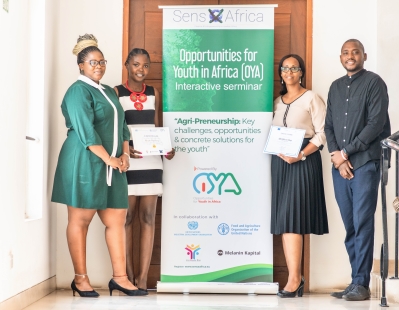
In the Photo: Opportunities for Youth in Africa interactive Seminar on Agri-preneurship and agribusiness. Photo Credit: UNIDO.

“Our expertise lies primarily in providing youth-responsive, sensitive, and action-oriented policy support to local and national governments and the identification of strategic sectors that harbour potential for growth”, says UNIDO Project Manager Siaka Bashir Conde.

Another important pillar is equipping the youth with the necessary skills for the job market. “It is important to remember that the management of successful agribusinesses can only be achieved when combined with skills development of youth,” adds Conde.

The programme also aspires to attract the youth to engage themselves in agribusiness. By conveying the importance of smart agriculture and innovative (digital) solutions as well as incorporating the youth in policy dialogues and knowledge and experience sharing, the programme supports the creation of a better enabling environment for young entrepreneurs across the continent.


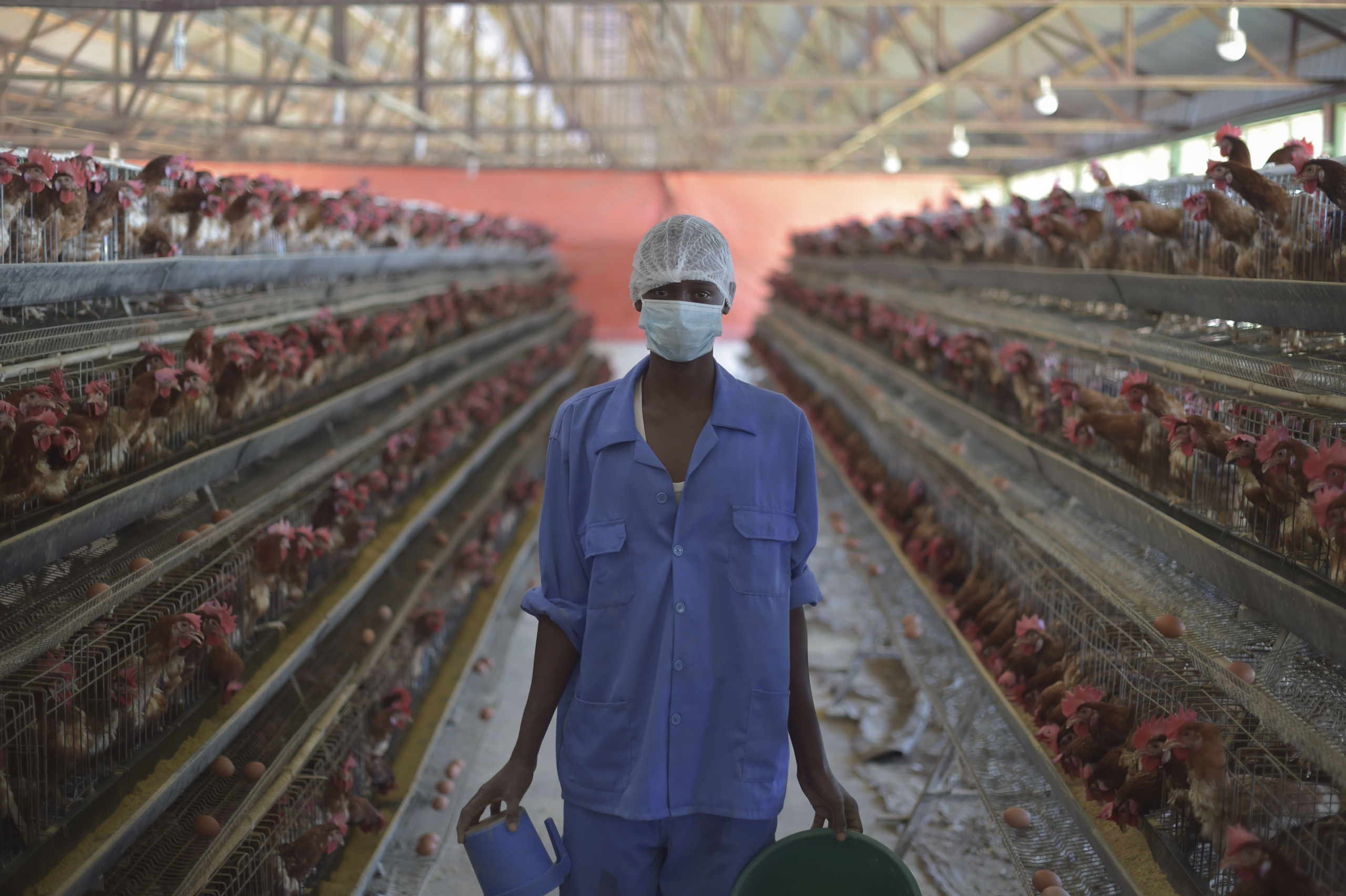
Editor’s Note: The opinions expressed here by the authors are their own, not those of Impakter.com — In the Featured Photo: A worker at the Somali Poultry Farm in Mogadishu stands between two rows of chickens in one of the farm’s chicken coops on 15 April 2018. The poultry farm, one of the first of its kind in Mogadishu, has over 30,000 chickens and is capable of producing up to 12,000 eggs a day. Featured Photo Credit: The African Union Mission in Somalia/Tobin Jones.
Tags: africaAfrican YouthAgribusinessOYA programmeSkills DevelopmentUNIDOyouth
Previous Post

To Reverse Nature Loss in High Seas, ‘Nobody’s Waters’ Must Become ‘Everybody’s Waters,’ WWF Says

Next Post

Is One Health at a Turning Point?

Related Posts

US President Donald Trump
Politics & Foreign Affairs

Trumps ‘America First’ Policy in Africa: The Consequences

The Trump Administration’s “America First” doctrine prioritizes transactional relationships and reduced engagement abroad (theoretically), which has resulted in consequential shifts...

byRichard Seifman - Former World Bank Senior Health Advisor and U.S. Senior Foreign Service Officer
December 29, 2025
India’s Youth Boom: Promise or Pressure Point?
Editors' Picks

India’s Youth Boom: Promise or Pressure Point?

India surpassed China as the world’s most populous country in 2023, a demographic milestone that is both cause for optimism and concern....

byAneesh MR - Assistant Professor at Christ University, Bengaluru
December 26, 2025
How Climate Change Could Help Foster Peace in Yemen
Climate Change

How Climate Change Could Help Foster Peace in Yemen

Yemen's tragedy is traditionally depicted through the limited perspective of humanitarian need and political divisiveness, but there is a greater...

byTareq Hassan - Executive Director of the Sustainable Development Network Canada (SDNC)
December 17, 2025
ESG News regarding the UK’s Updated Environmental Improvement Plan, modernizing Mauritania’s railway system, the EU carbon border tax, and the EU’s cross-border energy projects
Business

UK Unveils Updated Environmental Improvement Plan

Today’s ESG Updates UK Accelerates Nature Recovery: The government commits £500m to Landscape Recovery and targets 250,000 hectares of restored...

bySarah Perras
December 1, 2025
ESG News regarding: EU proposes to re-examine SFDR; Insurers struggle with mapping and managing climate risk in Africa; Fire at the climate summit in Brazil; UN demands Iran to disclose nuclear material stockpile.
Business

SFDR Re-examination Proposed by EU

Today’s ESG Updates Simplify ESG Reporting: The EU proposes simplifying ESG reporting for the financial sector.  Climate Risk in Africa:...

byPuja Doshi
November 21, 2025
ESG news regarding Microsoft and OpenAI deal, Germany and EU engine ban, Canada and oil emissions limit, India’s coal sector
Business

OpenAI Can Restructure Itself Following Non-Binding Deal with Microsoft

Today’s ESG Updates Microsoft, OpenAI Agree on For-Profit Restructure: A new non-binding deal lets OpenAI restructure as a for-profit company....

byYuxi Lim
September 12, 2025
ESG news regarding China leading the world in renewable energy, Ethiopia beginning operations on Africa’s largest hydroelectric dam, development banks making $137 billion in climate investments, and the EU’s high energy costs hindering competitiveness
Business

‘China is the Engine’ Driving the Clean Energy Shift

Today’s ESG Updates China Drives Global Renewable Shift: China is leading the global clean energy push with affordable solar, wind,...

bySarah Perras
September 9, 2025
tariffs Africa
Editors' Picks

How Africa Is Responding to U.S. Tariff Policies

Kholofelo Kugler and Tani Washington examine how African countries are responding to the Trump administration’s sweeping new tariff regime. While...

byInternational Institute for Sustainable Development (IISD)
August 14, 2025
Next Post
Is One Health at a Turning Point?

Is One Health at a Turning Point?

Recent News

ESG News regarding Dimon warning that Trump’s attacks on Fed could raise inflation and rates, Venezuelan oil shipments to China setting to plunge under U.S. blockade, UK awarding offshore wind contracts to power 12m homes, 2025 being the third-hottest year on record as climate science faces political pushback

Dimon Warns Trump’s Attacks on Fed Could Raise Inflation and Rates

January 14, 2026
Billionaires Became Richer Than Ever in 2025: Who Are They and What Drove Their Wealth Growth

Billionaires Became Richer Than Ever in 2025: Who Are They and What Drove Their Wealth Growth

January 14, 2026
When Food Waste Becomes Fashion: Emerging Innovations

When Food Waste Becomes Fashion: Emerging Innovations

January 14, 2026
  • ESG News
  • Sustainable Finance
  • Business

© 2025 Impakter.com owned by Klimado GmbH

No Result
View All Result
  • Environment
    • Biodiversity
    • Climate Change
    • Circular Economy
    • Energy
  • FINANCE
    • ESG News
    • Sustainable Finance
    • Business
  • TECH
    • Start-up
    • AI & Machine Learning
    • Green Tech
  • Industry News
    • Entertainment
    • Food and Agriculture
    • Health
    • Politics & Foreign Affairs
    • Philanthropy
    • Science
    • Sport
  • Editorial Series
    • SDGs Series
    • Shape Your Future
    • Sustainable Cities
      • Copenhagen
      • San Francisco
      • Seattle
      • Sydney
  • About us
    • Company
    • Team
    • Global Leaders
    • Partners
    • Write for Impakter
    • Contact Us
    • Privacy Policy

© 2025 Impakter.com owned by Klimado GmbH