“The era of waiting has come to an end,” announced Chenai Mukumba, Executive Director of Tax Justice Network Africa, at a tax policy conference earlier this year. “African countries no longer exist at the peripheries of global tax governance.”
Mukumba’s is just one of the many African voices that have been publicly questioning international tax rules for at least a decade. Established a century ago, these rules have maintained wealth imbalances between nations, with multinational corporations based mainly in rich countries exploiting legal loopholes to avoid paying taxes in the places they operate.
For developing countries, this amounts to hundreds of billions of dollars in lost revenues and costs Africa at least USD 23 billion per year. Prominent critics have also pointed out that the established rules fail to prevent illicit financial flows — that is, money moving across borders to conceal taxable income and illegal activities.
But as new technologies, demographics, and climate change shift the global economy, governments and international organizations have started reforming the rules to keep up — and African policy-makers are seizing the opportunity to push for a fairer system to protect public revenues.
For instance, the United Nations Economic Commission for Africa published a 2015 report highlighting the need to stem tax avoidance and evasion. The report led to the Addis Tax Initiative, a capacity-building partnership for developing countries. And since 2009, African countries have reportedly collected at least EUR 1.7 billion in additional revenue through improved tax administration, information exchange mechanisms, and rigorous offshore investigations.
Driving the UN Push for Inclusive and Effective International Tax Cooperation
In August, the United Nations (UN) Secretary-General published a much-anticipated report that outlines three options for more inclusive and effective international tax cooperation — setting standards and norms to ensure multinationals pay their fair share of tax.
The report was mandated by a 2022 UN General Assembly resolution, which also requested the Secretary-General take stock of progress made on international tax cooperation and debated the issue at the 78th session of the UN General Assembly.
It’s a little-known but noteworthy fact that this game-changing resolution was submitted by Nigeria on behalf of the Group of African States at the UN. This report sets in motion a major shift in global tax architecture by proposing that the UN should play a bigger role in international tax cooperation, empowering developing countries along the way.
These developments exemplify how collective bargaining can be a powerful tool to disrupt the traditional agenda-setting role occupied by developed economies. Moreover, by successfully driving international tax changes to address their needs, Africa is advancing a more inclusive system for the world.
The OECD’s Inclusive Framework
In June, the Organization for Economic Co-operation and Development (OECD) released the latest guidelines on implementing a global minimum corporate tax. The guidelines follow the 2021 agreement in principle by 138 nations on the foundational premise to ensure multinational corporations are liable for a minimum tax rate no matter where they operate.
African negotiators applied upward pressure, pushing for a 20% minimum tax rate (negotiators ultimately settled on 15%). And through the African Tax Administration Forum, African nations successfully advocated for including the Subject to Tax Rule to protect the primary taxing rights of developing countries and collaborated to develop a common approach to implementing key components of the global minimum tax.
Exactly half of African states are represented in the 138 supporting the OECD’s minimum tax proposal, while many others are contemplating how to protect their taxing rights once the rules come into effect.
Related Articles: The Unprecedented Potential of Africa’s Future Generations | Africa Climate Summit: Diverse Visions for a Resilient Continent
Moreover, since the IISD-ISLP guide for developing countries on the global minimum tax was published, many senior African officials have come forward wishing to discuss policy options. African countries seem to be embracing the shifting landscape as a time to explore new approaches. For instance, some countries are contemplating how to use the global minimum tax as a catalyst to strengthen their international tax regimes, both unilaterally and in cooperation with regional peers. Others are rethinking their use of tax incentives and investment promotion agencies.
Regional Trade, Investment, and Tax
At the regional level, the African continent is negotiating the monumental African Continental Free Trade Agreement, which would cover the largest trade area in the world to date, measured by the number of countries participating.
The negotiation presents a timely opportunity for African countries to contemplate the interactions between trade, investment, and tax policies and how they can promote development on the continent. The trade agreement could also be an ideal forum for African countries to consider regional strategies to implement the new international tax rules advancing through the UN and OECD.
African leaders should be applauded for their efforts to create an inclusive international tax framework. The momentum built on the international level should be maintained through ongoing continental trade negotiations — but there is a need for further research on the interactions between tax, trade, and investment policies. IISD is looking forward to examining these critical policy interactions and how they support national sustainability goals.
— —
This article was originally published by the International Institute for Sustainable Development (IISD) and is republished here as part of an editorial collaboration with IISD.
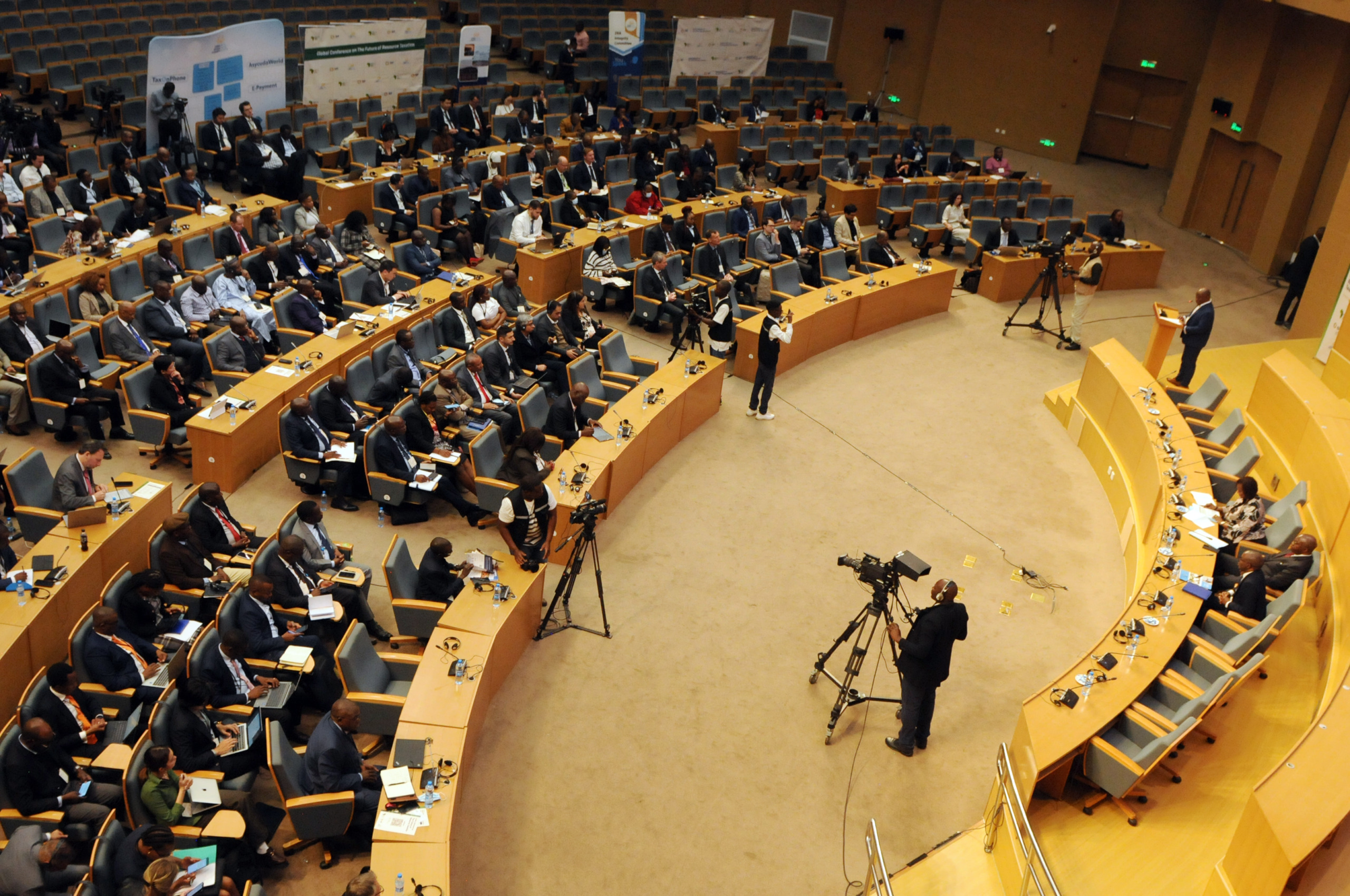
Editor’s Note: The opinions expressed here by the authors are their own, not those of Impakter.com — In the Featured Photo: Bird’s eye view of the opening ceremony of the Global Conference on the Future of Resource Taxation. Featured Photo Credit: International Institute for Sustainable Development/ENB | Diego Noguera.