
Russia’s invasion of Ukraine has highlighted the urgent need for EU member states to phase out risky energy dependencies.
Such dependencies weaken the government’s negotiating power at diplomatic tables, and have serious economic consequences. Estimates by the think tank Bruegel revealed that European gas purchases bring into Kremlin’s coffers an average of about 400 million euros a day, including some 92 million euros from Italy. An issue that is far from being irrelevant, with many arguing that Europe is financing Putin’s war and failing to be truly effective in imposing sanctions.
The EU sends USD 450 million a day to Russia for oil and USD 400 million per day for natural gas, according to calculations by analysts at the Bruegel think tank in Brussels.https://t.co/DPruXhdyYO
— Financial Express (@FinancialXpress) April 21, 2022
In this context, Europe seems to have a clear plan: REPowerEU, a strategy developed in March 2022 by the European Commission to address the energy crisis and put an end to the dependence on Moscow “well before” 2030. The plan aims at diversifying supplies and accelerating renewables and energy efficiency, with a view to decreasing European dependence on fossil fuels.
The European Commission’s plan also seems to correctly combine the concepts of energy and climate security, highlighting that European gas demand is expected to fall by 40% in 2030 compared to 2021.
The energy crisis, however, is not the only challenge Europe is facing. As the latest IPCC report warned, equally urgent is the response to the climate crisis.
Last week, the #IPCC released the third part of its Sixth Assessment Report, looking at ways to limit & prevent human-caused emissions that contribute to #globalwarming.
“It’s now or never, if we want to limit warming to 1.5°C." – IPCC Working Group III Co-Chair Jim Skea pic.twitter.com/R3wH7fVRcM
— IPCC (@IPCC_CH) April 11, 2022
European governments, frightened by a shutdown of gas taps by Moscow, as happened in late April for Poland and Bulgaria, and driven by the need to find alternative suppliers, have identified the Mediterranean as a region — mainly Algeria and Egypt — of primary importance for gas supplies.
Algeria and Egypt must become strategic partners in the gas-to-clean transition. To do this, first and foremost the share of renewables in the electricity mix within these two countries must be significantly increased. This would make more gas available for export to Italy and Europe.
In this sense, it is important to note that electricity generation in Algeria depends almost exclusively on gas (in Egypt oil and hydro are a much larger component). Increasing the share of renewables in the electricity mix to 20% in one year would “free up” 11.5 bcm of gas for export (7.9 bcm in Egypt and 3.7 bcm in Algeria).
In Algeria, the world’s fifth-largest gas-flaring country, 13.5 bcm of gas released from industrial processes such as oil extraction — gas that would otherwise get flared (burned and wasted) or vented (released into the atmosphere) — could be added to the country’s potential gas exports.
Adding these last 13.5 bcm of natural gas to the 11.5 bcm of gas “freed up” for export through renewable electricity generation, and taking into account the two countries’ remaining export capacities, would thus result in 24.5 bcm of extra gas available for export.
Initiating the green transition in the energy sector in North African countries involves complex challenges, including deep regulatory reforms, availability of significant financial resources, and deployment of technological expertise.
A good practice may be the Partnership for Just Transition signed by the European Commission (with France, Germany and the United Kingdom taking the lead) with South Africa at COP26 in Glasgow. This partnership intends to initiate the transformation of South Africa’s energy sector and accelerate its exit from coal.
Ensuring a just transition is a priority for the EU, both at home and abroad.
With a Just Energy Transition Partnership, the 🇪🇺, 🇺🇸, 🇬🇧, 🇩🇪, and 🇫🇷 aim to support South Africa to faster phase-out of coal and develop renewables. #EUatCOP26 #COP26
— European Commission (@EU_Commission) November 2, 2021
Today, the European Union and its member states bordering the Mediterranean could offer support for the creation of similar collaborative platforms to secure know-how and drive public, private and philanthropic investment to undertake an accelerated process toward a clean and just energy transition in line with the climate ambitions of the recipient countries.
Algeria and Egypt can be the first two Mediterranean countries to build this form of strategic partnership with. Given its geographic, political and diplomatic profile, Italy in particular could play a leading role in coordinating European support for the energy transition in Algeria, together with the European Commission.
Establishing a partnership between Europe and the Mediterranean for the gas-to-clean transition would benefit both European and North African countries.
Through stable partnership relations, Europe would obtain increased gas supplies — a total of 24.5 bcm — thus covering a significant portion of the additional supplies identified by the REPowerEU plan.
For Algeria and Egypt, exporting greater quantities of gas at current prices (which are expected to remain high over the next two years) would allow for greater revenues than those obtained on the domestic market, where subsidies remain (especially in the Algerian case) that turn into unproductive public spending.
New investments in expanding gas production and its transportation would commit Europe in the long run and would make the EU dependent on a region, the Mediterranean, with high geopolitical fragility and risks of supply disruption.
Related Articles: EU to Cut Reliance on Russian Gas With New Plan | REPowerEU: The EU’s Plan to Rapidly Reduce Dependence on Russian Energy and Tackle the Climate Crisis
Investments in the Mediterranean energy transition, however, would be valuable in the long term as they would help reshape the region’s socio-economic systems in a more inclusive manner while sheltering governance systems from the destabilizing consequences of diminishing oil & gas rents resulting from European decarbonization.
Finally, through the development of renewables, mitigation policies are put in place, identified as necessary by the latest IPCC report to prevent global warming from exceeding the Paris Agreement targets.
Indeed, the Mediterranean is particularly exposed to the impacts of climate change such as sea-level rise, which endangers coastal ecosystems, human settlements, infrastructure and tourism, as well as water scarcity and soil drying, which threaten agriculture, water supply for housing, and industry.
These impacts can lead to economic, social and political instability, with consequences for Europe as well.
It seems clear that the benefits of a gas-to-clean transition strategy for the Mediterranean are manifold. Europe, by taking advantage of existing infrastructure, especially that of Italy and Spain, would be able to secure in the short to medium term up to 40% of new gas supplies to offset the dependence on Russian gas.
The renewables sector represents a unique opportunity to boost employment through project development, manufacturing, transportation and logistics, sales, construction, installation and maintenance.
Partnerships such as those sought with Algeria and Egypt are currently under consideration by the German G7 presidency. In view of the G7 presidency in 2024, Italy could contribute to this reflection by committing to progressively build a Partnership for a gas-to-clean transition in the Mediterranean.
The Russian invasion of Ukraine has called into question the effectiveness of economic interdependence in maintaining peace, asserting that relationships of interdependence and Europe’s role in the world need to be revised. Energy security cannot be separated from climate security, for which a resilience strategy must be put in place.
With gas-to-clean transition partnerships, starting with its Southern Neighborhood, Europe and its member states have the opportunity to integrate energy security and climate security while strengthening Europe’s position in the world.
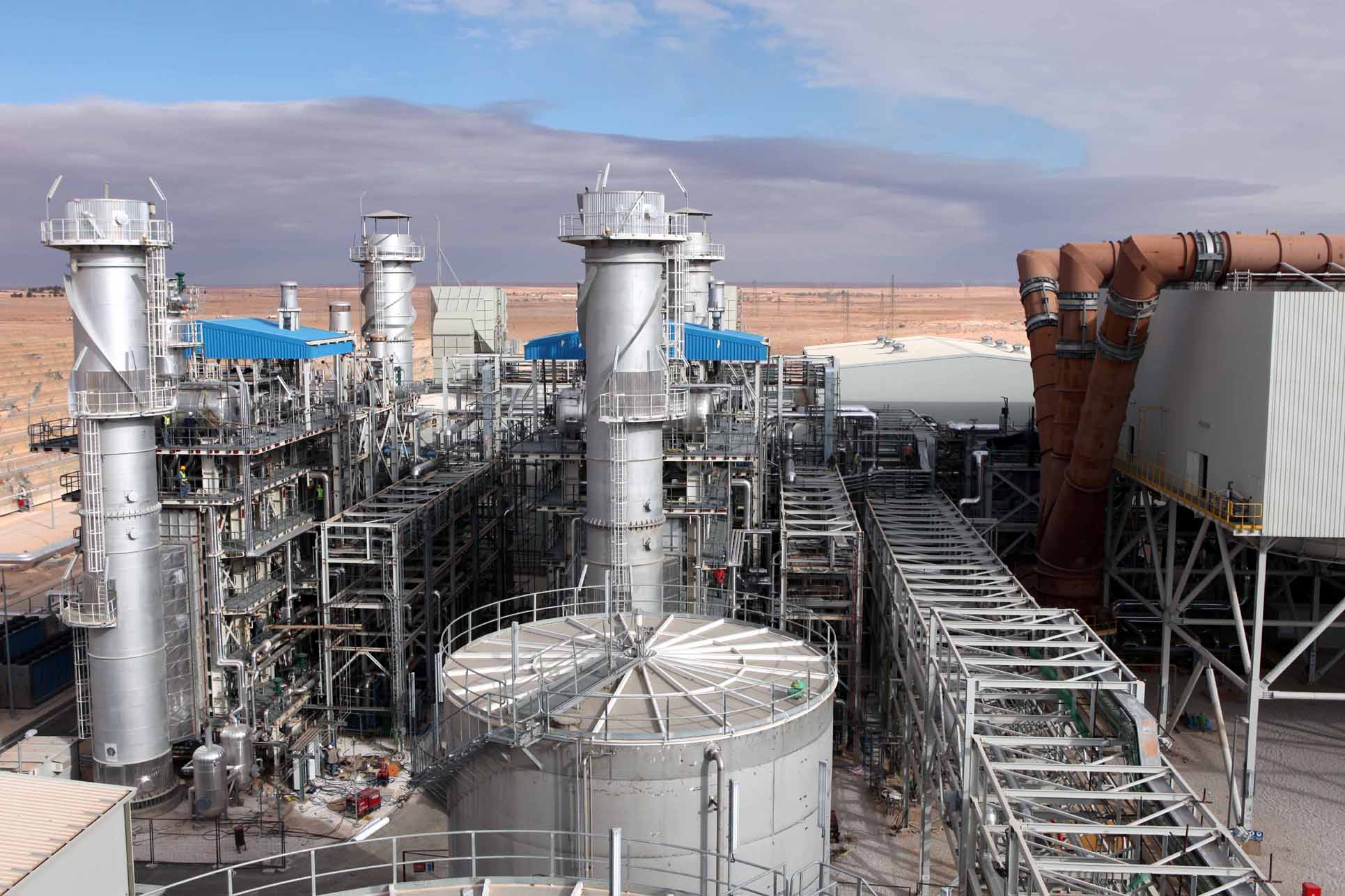
Editors Note: The opinions expressed here by Impakter.com columnists are their own, not those of Impakter.com — In the Featured Photo: The Hassi R’mel power plant in Algeria. Featured Photo Credit: Wikimedia Commons.