Subsidies have long been debated: criticized for distorting markets and harming the environment, yet embraced to build green industries, protect people, and compete in global markets. They’re impossible to ignore and hard to reform.
As we celebrate the 20th anniversary of the International Institute for Sustainable Development’s Global Subsidies Initiative, we asked our experts how thinking on government support has shifted over the decades and where the conversation is taking us next. Here’s what they told us.
Trend 1: Exposing Harm From Subsidies Beyond Market Distortion
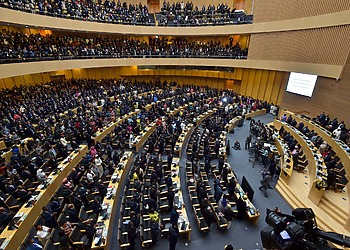
When the World Trade Organization (WTO) was created in 1995, subsidies took centre stage in global trade rules. Economic thinking of the time was clear: subsidies were distortions that pushed prices below their “true” cost, shielded inefficient industries, and discouraged innovation.
As Shruti Sharma, Lead at IISD Energy, recalls: “There was no climate or inequity agenda in this conversation. The main concern was just fiscal discipline and efficiency.”
The debate zeroed in on unfair competition from major agricultural subsidizers. “Agriculture subsidies were creating oversupply and lowering global prices. The aim was to level the playing field,” notes IISD policy analyst Facundo Calvo. This concern contributed to shaping the WTO Agriculture Agreement, which introduced the first global rules to curb trade-distorting farm support and improve market access for agricultural products.
By the late 1990s, the debate broadened. Scholars and environmental groups began asking not only whether subsidies distort markets, but whether they cause environmental harm.
“We began assessing subsidies — distorting or not — based on the harm they caused.”
Think tanks and civil society stepped in, and IISD’s Global Subsidies Initiative became a leading voice calling out environmentally harmful support. Analysts started assessing subsidies not just by their production and trade effects, but by their impact on people and nature — whether through deforestation, pollution, increased emissions, collapsing fisheries, or unhealthy food systems.
Trend 2: Shifting Subsidies to Fix Market Failures
When subsidies are viewed through lenses other than those of pure economic efficiency, however, complexity enters the story. They can harm ecosystems, but they can also protect people and drive innovation.
Food systems are a clear example. Subsidized cheap food can undercut farmers when prices fall too low, yet the same support can improve food security by lowering the cost of food for poor consumers in net food-importing developing countries. As Facundo Calvo puts it: “Lower prices can be good or bad depending on whom you ask: producers or consumers. Remove all agricultural subsidies, and you risk food insecurity, rising poverty, and malnutrition.”
This understanding shifted the debate from eliminating subsidies to repurposing them toward public goods: resilient agriculture, healthier diets, and sustainable production.
“We are entering a promising phase in which reforming domestic public support to better serve nature and livelihoods is open for discussion among farmers, policymakers, and other relevant actors.”
— Cristina Larrea, IISD Director of Agriculture, Food, and Sustainability Initiatives.
Brazil, for example, is reforming agricultural subsidies to support low carbon practices, regenerative agriculture and reforestation. Malawi is reforming its agricultural input subsidy to scale the use of organic fertilizers. Meanwhile in India, state governments are reforming electricity subsidies for agriculture and the scale up of solar-powered irrigation.
“We are entering a promising phase in which reforming domestic public support to better serve nature and livelihoods is open for discussion among farmers, policymakers, and other relevant actors,” says Cristina Larrea, IISD’s Director of Agriculture, Food and Sustainability Initiatives.
Trend 3: Subsidies as a Green Industrial Policy Tool
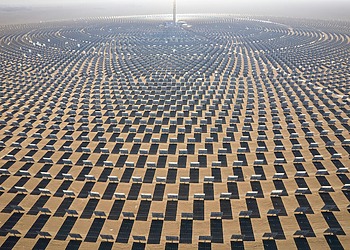
The energy sector shows how green industrial policy can drive global market shifts. Germany’s early renewable support created demand when solar was still expensive. China then subsidized solar manufacturing at a massive scale — first for export, then at home. Costs collapsed, installations soared, and clean power became competitive.
Tara Laan, IISD’s Energy Lead, notes: “It’s been a real positive for the planet — solar is now affordable and available at scale. As electric vehicles and renewables expand,” she adds, “subsidies for fossil fuels like gasoline, diesel, and gas are likely to decline over time.”
This model is now being replicated across clean technologies, from batteries and electric vehicles to hydrogen and heat pumps. Governments are increasingly using subsidies not only to correct environmental externalities, but also to build domestic industries, secure supply chains, and capture the economic benefits of the energy transition.
Trend 4: The Rise of Global Subsidy Races
Green industrial policy has accelerated innovation and deployment at a pace that market forces alone were unlikely to deliver — but it has also intensified concerns about subsidy races and trade tensions. A series of shocks, including the COVID-19 pandemic, Russia’s invasion of Ukraine, recent shifts in the United States’ trade policy, and the scale and strategic orientation of Chinese state support to industry, have reinforced another role for subsidies: geopolitical insurance.
Governments are now intervening not only to secure markets, but also to secure supply chains, reduce dependence on foreign manufacturing, and retain value-added production and jobs within their borders. These subsidy races risk deepening global inequities. Countries with large fiscal space can attract investment and shape emerging industries, while poorer economies struggle to keep up.
“Wealthy economies compete with subsidy packages. Those with fewer resources turn to local-content requirements or trade restrictions to develop domestic capacity,” says Alice Tipping, IISD’s Director of Trade and Sustainable Development.
Ivetta Gerasimchuk, IISD’s Energy Director, sees this moment as a fundamental reversal in the global subsidy narrative: “The table has flipped. For years, developing countries were urged to reform subsidies under a neoliberal lens. Today, they’re seeing it’s the rich economies who pump unprecedented subsidies into global markets, while the developing world has been reforming theirs for fiscal pressure reasons.”
Related Articles
Here is a list of articles selected by our Editorial Board that have gained significant interest from the public:
Trend 5: Tackling Environmental Challenges through Targeted Global Regulation
Does today’s surge in subsidy competition mean the world has abandoned efforts to discipline them? “The context is certainly challenging, but not entirely bleak,” says Nathalie Bernasconi-Osterwalder, noting that in the last few years, meaningful steps have been taken to curb inefficient and environmentally harmful subsidies.
The WTO’s Agreement on Fisheries Subsidies marked a historic breakthrough: the first global rules targeting subsidies that contribute directly to overfishing and overcapacity. The Agreement on Climate Change, Trade and Sustainability includes rules specifically on fossil fuel subsidies, using a novel way to calculate the balance between fossil fuel subsidies and carbon pricing. Beyond trade, new signals are emerging in public international law. The International Court of Justice recently issued an advisory opinion stating that fossil fuel subsidies may constitute an unlawful act when they undermine states’ climate obligations.
Together, these developments suggest that even as subsidy use expands for strategic and industrial goals, the international system is slowly building guardrails to constrain the most damaging forms of government support.
As countries navigate environmental objectives, industrial competitiveness, and fiscal pressures, subsidy reform is increasingly being used as a powerful tool to steer economies toward new models.
What’s Next?
The debate ahead is less about whether subsidies should exist, but how to discipline harmful ones and reform others to serve public goals.
Part of this debate is going on at the WTO. According to Alice Tipping, what the WTO needs now is “a reset of the rules governing how governments can intervene to shape trade.” Without clearer guidance, she warns, there’s a real risk that countries will increasingly work around existing rules as they intervene more directly in their economies.
“We need a system that distinguishes legitimate public-interest subsidies from beggar-thy-neighbour measures, recognizing intent, preventing unfair advantage and environmental harm, and protecting trading partners,” says Nathalie Bernasconi-Osterwalder.
** **
This article was originally published by the International Institute for Sustainable Development (IISD) and is republished here as part of an editorial collaboration with the IISD. It was authored by Shruti Sharma, Facundo Calvo, Nathalie Bernasconi-Osterwalder, Tara Laan, Alice Tipping, Ivetta Gerasimchuk, Cristina Larrea, and Paulina Resich.