Every year, our planet generates a certain amount of biological resources. And every year for the past half-century (at least), humanity has been using more resources than the Earth is able to generate (for the given year).
The date when we officially cross this threshold — i.e., when we have used all the resources the Earth can generate for that year — is marked by the Earth Overshoot Day. This year, the day arrived on July 28.
Today is #EarthOvershootDay
Now, we’ve used up all the natural resources our 🌎 can generate in 2022
This year, it falls on the same day as #NatureConservationDay, reminding us that we need to live within the limits of what nature can give us 🌱
Time to #MoveTheDay #ForNature
— EU Environment (@EU_ENV) July 28, 2022
Today, in 2022, we are taking so much from our planet and so rapidly that we would need another three-quarters of the Earth to make up for the resources we will have used by the end of the year.
In other words, we are currently living like we have 1.75 Earths.
But of course, it wasn’t always like this. There was a time in the not-too-distant past when humanity was still taking less than the Earth could give. In fact, this was the case throughout most known history.
Earth Overshoot Day: Measurements
According to the Global Footprint Network, the award-winning international research and non-profit organization that calculates the Earth Overshoot Day, the date is arrived at by:
“[D]ividing the planet’s biocapacity (the amount of ecological resources Earth is able to generate that year), by humanity’s Ecological Footprint (humanity’s demand for that year), and multiplying by 365, the number of days in a year.”

Since 1971, with the exception of 2021 due to Covid, there hasn’t been a single year when humanity took less or as much as the Earth was able to give.
On the contrary, humanity has used more and more of the Earth’s resources every year since 1971, with the Earth Overshoot Day falling earlier and earlier each year.
While in 1971 it fell in December, very close to the year-end, in 1991 it fell in October, in 2011 in August, and now, in 2022, Earth Overshoot Day fell on July 28.
📆 Here’s how #Earth 🌍 #OvershootDay has changed over the last 50 years.#MoveTheDatehttps://t.co/Akx1w7aRoG pic.twitter.com/iJCiKS3uKN
— Global Footprint Network (@EndOvershoot) July 27, 2022
The resources we use for the rest of the year following Earth Overshoot Day inflict serious damage on our planet. And the earlier this happens, the worse the damage.
July 28 is as early as this has ever happened since measurement began in 1961.
“It’s like if you spent all your money by July 28, and then the year you live off deficit spending. It’s actually even more serious because with money, you can print or borrow it. With resources, we can borrow from the future as well, but we cannot print them,” Global Footprint Network Founder and President Mathis Wackernagel told Deutsche Welle.
As DW summarized, “[f]rom now on, we are borrowing from the future.”
Moving the date
Fortunately, there’s still a lot we can do to “move the date.”
🌍🌏🌎 Today is this year's #EarthOvershootDay. There is immense #PowerOfPossibility in the countless existing #solutions that are ready to be deployed at scale. With them, we can make ourselves more resilient and #MoveTheDate of Earth #OvershootDay.https://t.co/jrBEM1yf4p pic.twitter.com/O21PnLFVNX
— Global Footprint Network (@EndOvershoot) July 28, 2022
As the Global Footprint Network explains, “[t]hrough wise, forward-looking decisions, we can turn around natural resource consumption trends while improving the quality of life for all people.”
The transformation, they argue, is not only possible but also economically beneficial. More importantly, it is “our best chance for a prosperous future.”
Related Articles: Toward Planet and Species’ Sustainability: ‘A Road Not Taken’? | Planet Earth: Averting ‘A Point Of No Return’?
As to implementing the necessary changes needed, the non-profit has created a platform to highlight ways to improve resource security across five key areas that are “shaped by our individual and collective choices”:
Healthy planet, Cities, Energy, Food, and Population.
Called “Power of Possibility,” the Global Footprint Network’s platform offers an abundance of “effective and affordable solutions to #MoveTheDate of Earth Overshoot Day” that is practically impossible to lay out in one article. But you can explore the solutions in more detail and find out by how many days each of them can move Earth Overshoot Day by following this link.
In his interview for DW, Wackernagel highlighted some of the policy measures that can help Germany in particular, but other countries too, illustrating to what extent:
- “Financing decarbonization could buy 22 more days;
- implementing smart city design could buy another 29 days;
- placing a price of $100 USD (€98.50) per ton of carbon would buy another 63 days; and
- the global adoption of a structure like the EU’s Green New Deal would buy another 42 days.”
That’s about five months in total: It would move the needle back to December, where it was when we started keeping count of Earth Overshoot Day.
Note that these measures would need to be implemented on a national scale (or global in the case of the EU Green New Deal) to have the desired effect.
But small changes can help, too, Wackernagel adds. Some of these, which he says could push back Earth Overshoot Day by a few days, include:
- “lowering speed limits,
- air-drying laundry,
- changing household lights to LEDs,
- wearing more sustainable clothing, and
- cutting out meat for just one day a week.”
These are things we all can do, as citizens and consumers. As his organization encouragingly concludes, “The past does not necessarily determine our future. Our current choices do.”
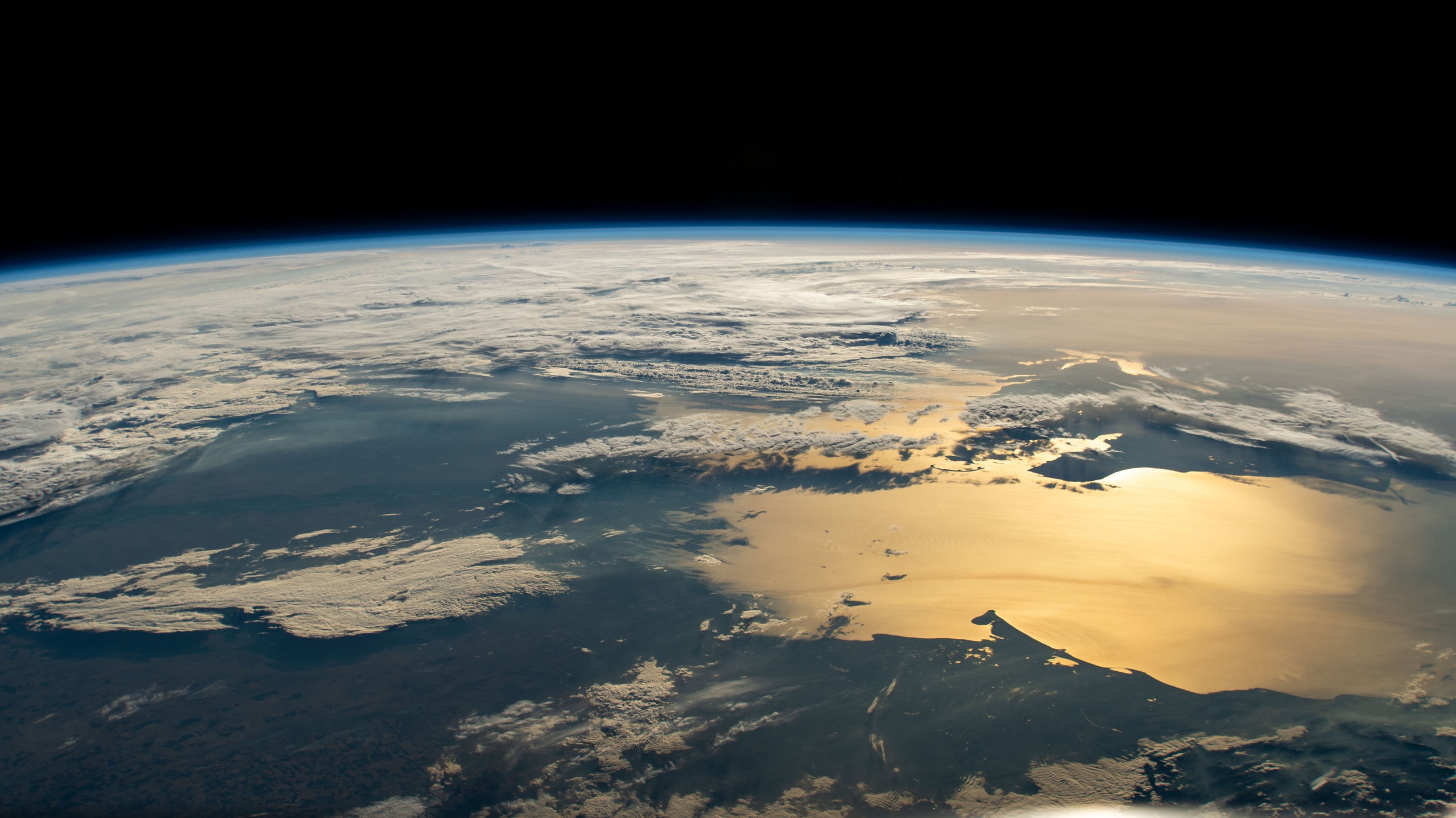
Editor’s Note: The opinions expressed here by the authors are their own, not those of Impakter.com – In the Featured Photo: Planet Earth as seen from the International Space Station as it was orbiting on a southwest to northeast trek 262 miles above Turkey near the Black Sea coast. Source: NASA.